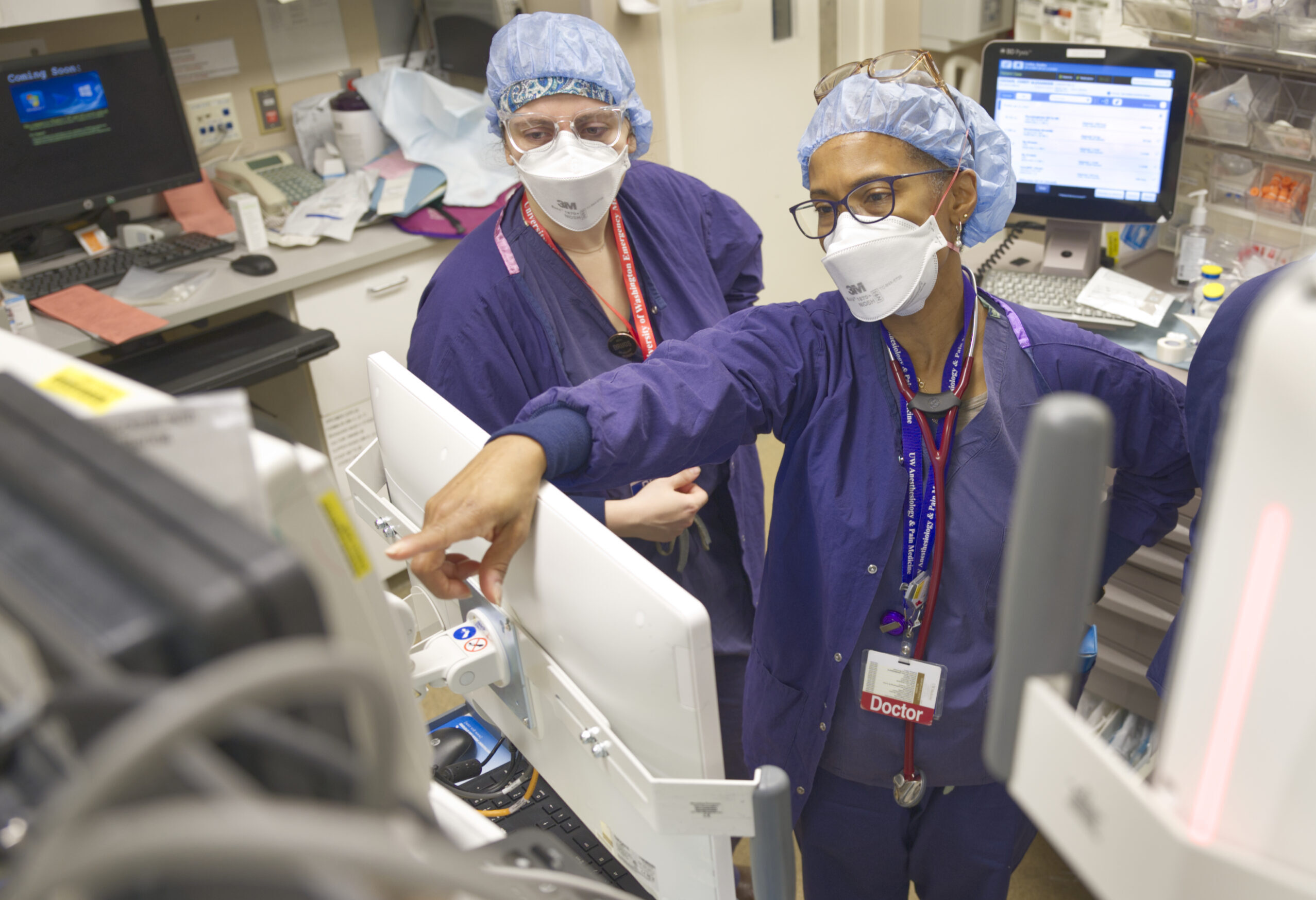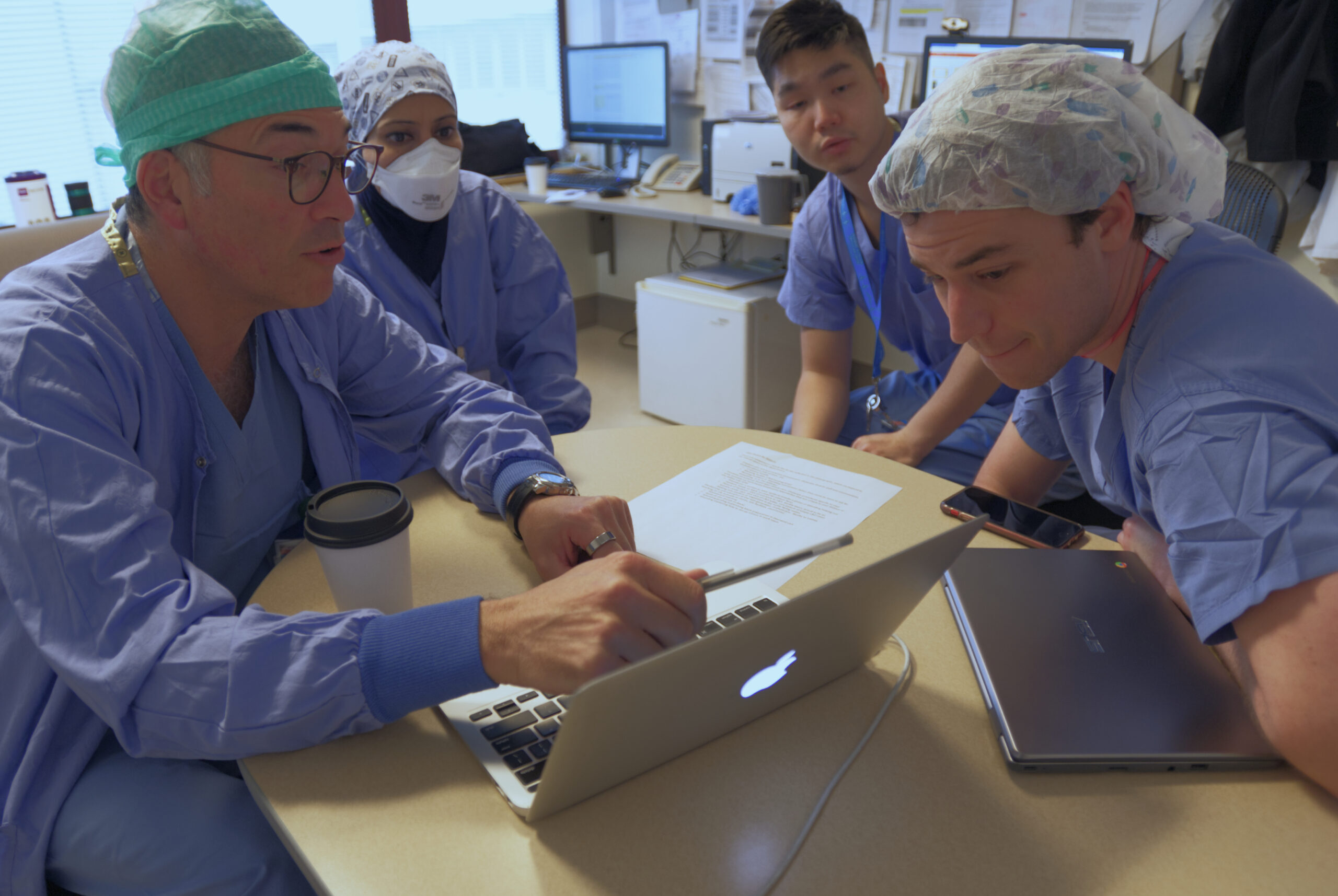
The University of Washington Division of Pain Medicine offers weekly TelePain services, an audio and videoconference-based consultative knowledge network of interprofessional specialists with expertise in the management of challenging chronic pain problems. The goal is to increase the knowledge and skills of community practice providers who treat patients with chronic pain.
Broadcast each Wednesday, 12:00pm — 1:30pm PST, UW Medicine TelePain conducts these collegial interactive videoconferences, which include:
You are invited to present your difficult chronic pain cases to our TelePain panel of specialists whose expertise spans pain medicine, internal medicine, anesthesiology, rehabilitation medicine, psychiatry, addiction medicine, and nursing care coordination. You are welcome to ask questions, even if you don't present a case.
The TelePain program significantly increases access to interprofessional experts who provide real-time support in the care and treatment of the most challenging chronic pain patients. It also improves outcomes and patient and provider satisfaction over geographically dispersed areas, including rural, tribal, suburban, urban, and safety net populations. This program also supports the university's goal of extending pain care expertise throughout Washington, Wyoming, Alaska, Montana, and Idaho.
TelePain helps meet the need for access to pain management specialist consultations that are now required by the Washington State Department of Health regulations for opioid prescribing. They specifically endorse the use of such innovative consultative approaches for chronic non-cancer pain patients with high risk and/or poor outcomes related to the use of high dose opioids.
TelePain is one of many domains within the UW Medicine Telehealth division, which was first established in 2001. Using telehealth to improve pain care was first piloted at UW in 2006 as part of a project in American Indian communities, funded by HRSA's Office for the Advancement of Telehealth. In 2009, it was expanded through an NIH grant to include rural hospitals and clinics. In 2011, the UW Division of Pain Medicine's program merged in an ongoing collaboration with the University of New Mexico's Project ECHO (Extension for Community Health Outcomes), first inspired by Sanjeev Arora MD. To learn more about UNM's ECHO projects, visit http://echo.unm.edu/. UW Medicine TelePain shares Project ECHO's continuing mission to safely and effectively treat chronic, common, and complex diseases in rural and underserved areas, and to monitor outcomes of this treatment.
[to top]
Weekly didactic presentations for primary care providers occur between 12:00-12:30pm during each broadcast followed by a brief question and answer period. Slides, articles, and references from these presentations are made available to participants.
The curriculum includes core topics (each is presented twice/year), and supplemental topics (each is presented once/year ):
| Core topics: | Supplemental topics: |
|---|---|
|
|
[to top]
Fax a completed Pain Medicine Case Consultation Request Form* to 206-598-4576 12:00pm on the Monday before the broadcast.
*Complete the entire form in advance of your presentation, including patient responses to the UW Pain Tracker tool within the form. This will improve the quality of our evaluation of your patient. The data will be shared and analyzed by all of our pain management experts. Follow-up and review of your patient's progress will be scheduled with you as necessary, again using the Pain Tracker tool.
All personally identifiable health information will be de-identified and we will assign a confidential ID number to your case. When you are called on to present the live case at the TelePain broadcast, all parties will refer to the patient only by the confidential ID number.
[to top]
To receive CME credits, participants will be asked quarterly to evaluate the TelePain sessions they attended. CME credits are awarded annually.
The University of Washington School of Medicine is accredited by the Accreditation Council for Continuing Medical Education to provide continuing medical education for physicians.
The University of Washington School of Medicine designates this live activity for a maximum of 78 AMA PRA Category 1 Credit(s)™. Physicians should claim only the credit commensurate with the extent of their participation in the activity. (Each session is 1.5 credits)
OBJECTIVES: Upon completion of this activity, attendees should be able to:
[to top]
Please feel free to contact any one of us, should you have questions or need assistance.
For questions about participating in the TelePain program, and about CME credit, contact:
Cara Towle, RN MSN
Director, Telehealth Services
University of Washington School of Medicine
206-459-7956
ctowle@uw.edu
Rande Gray
Videoconferencing Support
Pager 206-587-8903
Cell 206-459-7946
rgray@uw.edu
"UW TelePain is a remarkably effective video conference-based consultative network providing tertiary center/university level expertise to assist community providers (both primary and specialty) in the management of complex and challenging chronic pain problems. I practice in Lewis County where I am the lone pain specialist. I am thus the recipient of some very difficult chronic pain referrals from my colleagues and in the past I have often felt like I was by myself at the end of a very long rope. Yet thanks to UW TelePain, I can join in a lively, interactive session where I can gain access to expert second opinions and collegial advice on tough cases. I have come to truly look forward to Wednesdays now!"
"I have found these conferences to be very helpful in helping me maintain and increase my knowledge and skills needed to treat the complex chronic pain patients that I see in my community practice. This allows me real time access to multidisciplinary experts capable of providing helpful recommendations to assist me in caring for these most challenging patients."
Gregory T. Carter MD MS, Centralia, WA
“The teleconferences are a huge asset for me, as a mid-level working in a rural setting. I get some tough cases to manage – people on astronomical doses of opiates and benzodiazepines together. I wanted to know more about morphine-equivalent dosing. Providers don’t always know what to do, and these sessions let you know you’re not alone. As you listen to other doctors presenting cases and diagnoses, you hear something and wonder, ‘Why didn't I think of that?’ You're always learning.”
Rachel Stappler, PA-C, Coos Bay and Medford, Oregon
“Their presentations are very up-to-date, so you get the latest on how to manage patients with chronic pain: Do the physical therapy, do the tapering, lab and x-ray studies. They talk about complementary care like acupuncture, exercise, massage, even chiropractic – because if you’re telling patients that medication will be less, you want to give them something else.
We inherit these patients who are already at a higher dose, so we’re kind of stuck. How do we turn it around and get opioid-dependent or addicted folks back to more appropriate dosing? The UW faculty gave me the tools to be firm and establish that opioid levels need to come down. They gave me confidence in my direction.”
Ron Bergman, MD, Port Angeles, WA
[to top]