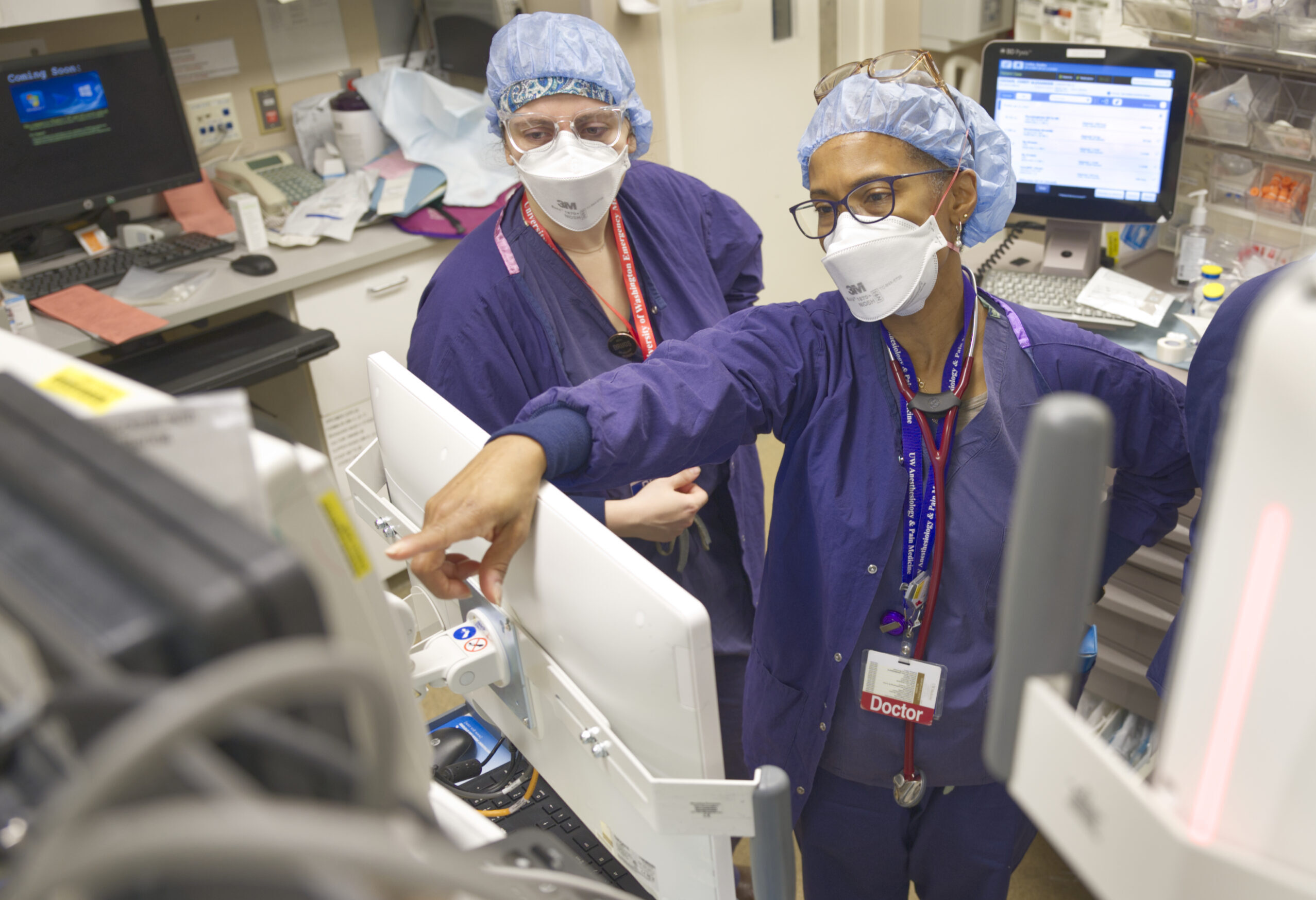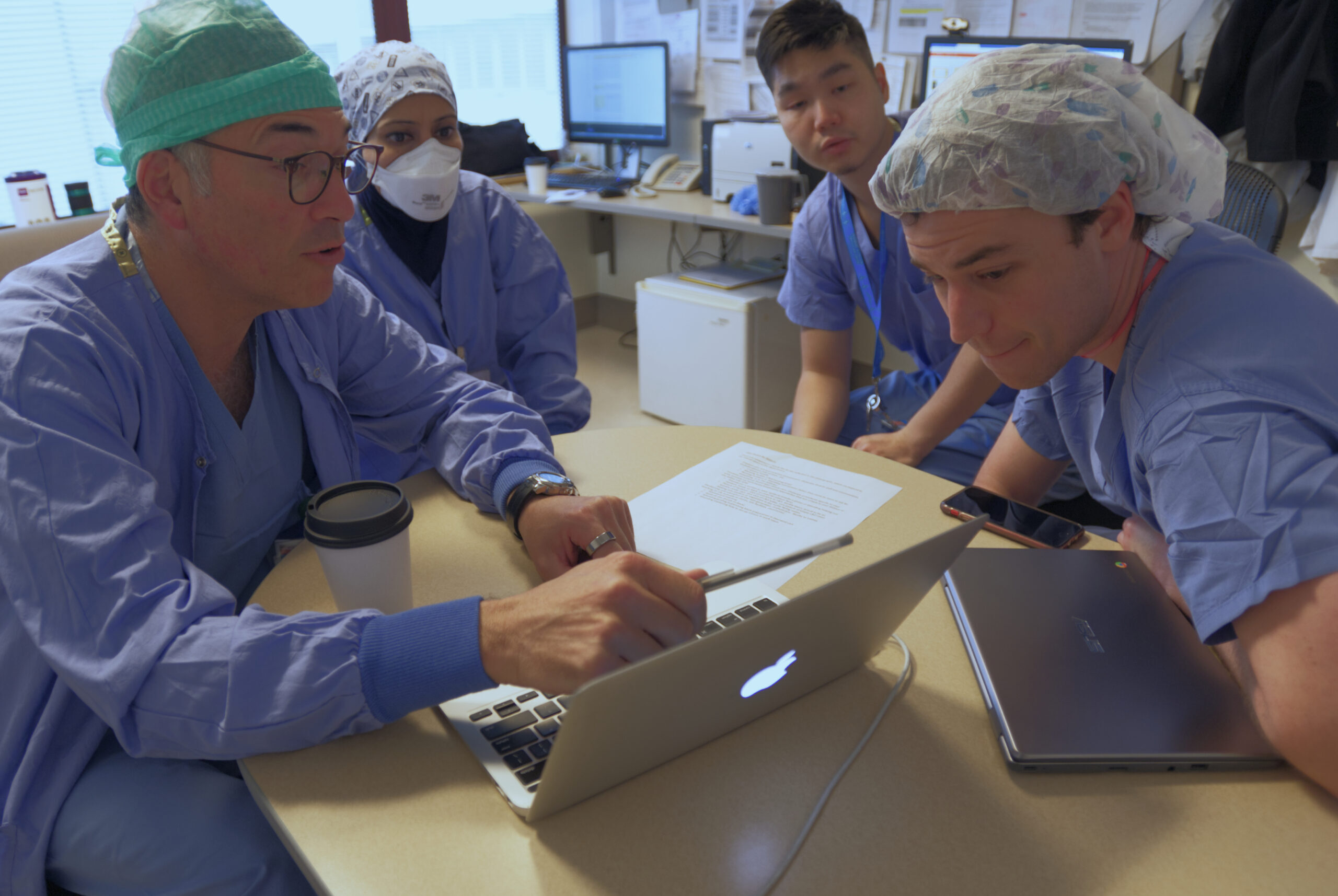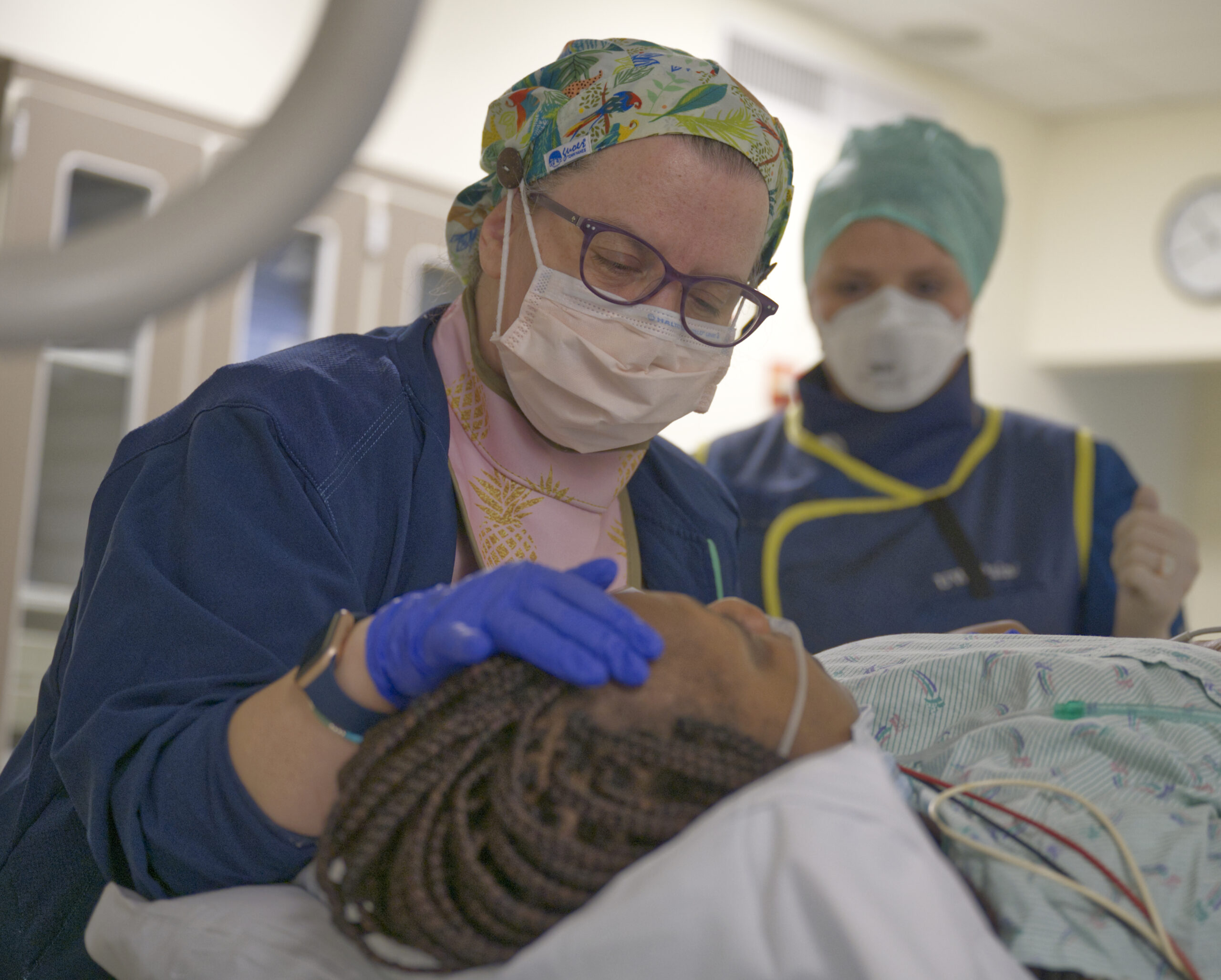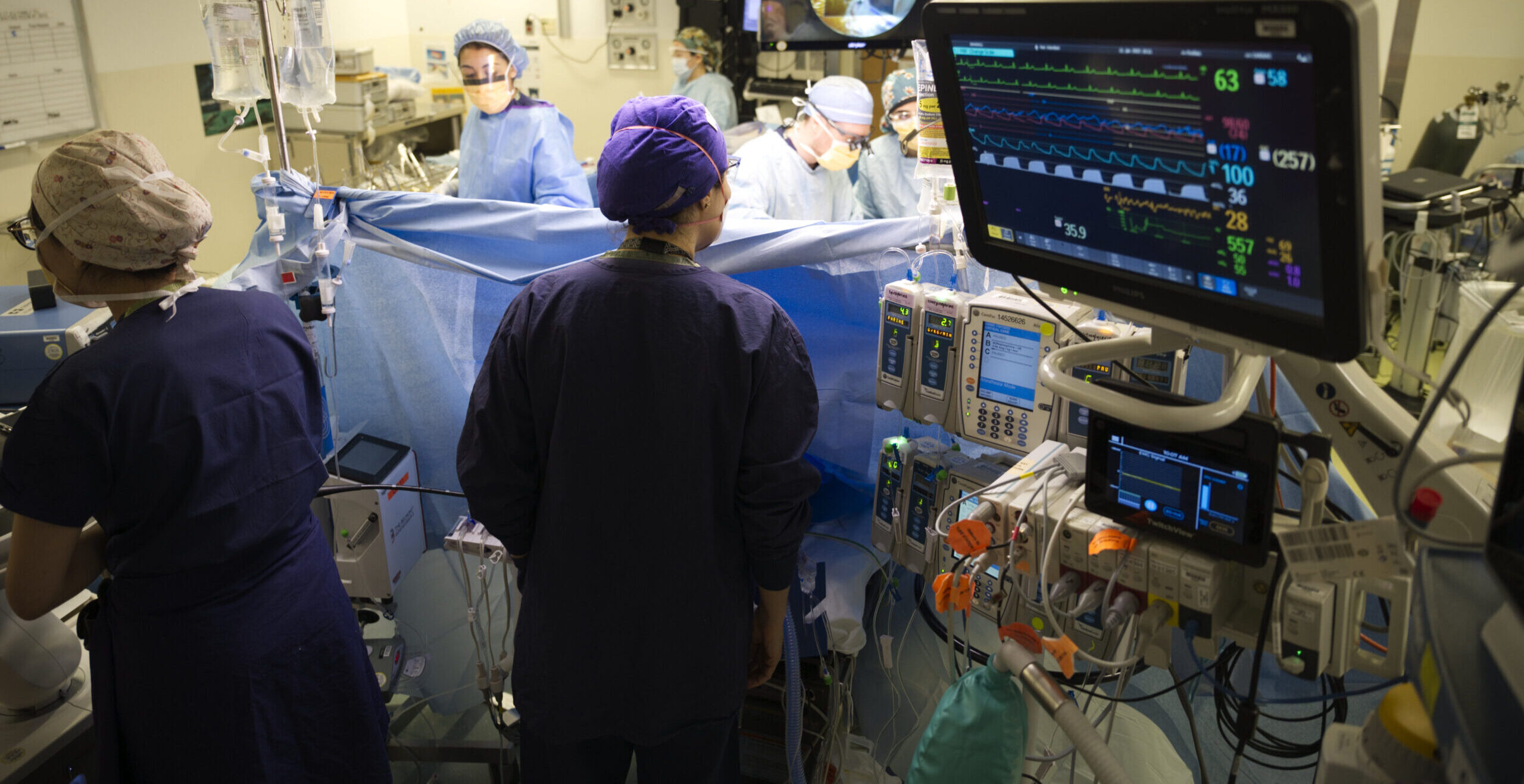
The primary goal of the fellowship is to provide a "hands-on" clinical experience in all aspects of perioperative trauma care, including:
In the operating room the fellow will be exposed to all types of trauma anesthesia/trauma surgery, including injuries to the head, spine, extremities, chest, and abdomen, with additional emphasis on pediatric trauma, burns, regional anesthesia for trauma, and trauma analgesia. This experience is supplemented with a variety of scheduled conferences and clinical rounds at Harborview Medical Center (HMC), most of which are interdisciplinary and emphasize the importance of the trauma anesthesiologist's role as a member of interdisciplinary trauma team. In addition, opportunities are provided for fellow participation in a variety of ongoing clinical research projects and related academic activities. The specific fellow responsibilities and departmental expectations for the 12-month fellowship period are outlined below, and should be reviewed with the fellowship director at the beginning of the fellowship year to assure that all requirements are met in a reasonable time frame.
In addition to the introductory meeting with the fellowship director, additional meetings are required on a quarterly basis. The purpose of these meetings is to assure completeness of the fellow's experience (i.e., fill in missing gaps in clinical operating room experience), to plan non-clinical time activities, to discuss problem areas, and to career plan. Evaluation of the fellow will be through both formal (written) and informal (verbal) communication between the fellow and attending staff/fellowship director/hospital chief/department chairman on a regular basis.
The fellowship consists of 60% educational time and 40% ‘attending/faculty clinical time’.
In general, the fellow's educational time commitment is 60%, translating into an educational responsibility of 138 days per year. Fellows will satisfy this educational requirement in the following ways:
The fellow's attending/faculty clinical time commitment to the Department of Anesthesiology & Pain Medicine is 40%, translating into a clinical responsibility of 92 days per year, plus three night or weekend calls per month. Fellows will satisfy this clinical requirement in the following ways:
Vacation time is 23 days.
An educational allowance of $1.500 will be granted. Additionally the department will pay for the ATLS student course.
When assigned to the operating room or PRS, the fellow will perform the usual duties expected for that service. Time off will not be given on those days for the purposes of attending interdisciplinary conferences or rounds, unless prior arrangements have been made by the fellow.
The fellow's "non-clinical" or "research time" (~1 day /week) can be utilized for a number of both required and optional education activities as described below. For individuals desiring a greater emphasis on research activities, non-clinical time can be increased by mutual agreement made in advance.
By virtue of the fact that HMC is the only Level I trauma center in the Washington, Wyoming, Alaska, Montana, and Idaho (WWAMI) region, a highly organized prehospital trauma care/transport system is utilized. Locally, the Seattle Fire Department's "Medic One" division is a field paramedic/transport service that is nationally recognized. Their training and supervision is a primary responsibility of Dr. Michael Copass and assisted by other HMC physicians, including Anesthesiology & Pain Medicine Departmental faculty. Medic One paramedics provide primary trauma assessment in the field, as well as aggressive field trauma care including endotracheal intubation, peripheral and central venous line placement, and stabilization of spine and extremity fractures prior to and during transport. Observation of the crucial, life-saving role played by these individuals in the field and during transport is a priority of the fellowship experience. Therefore, the fellow will ride with and observe Medic One paramedics for at least two (2) weeks during the year, completing a 12-hour shift on each occasion.
On the regional scale, Airlift Northwest is the primary medical air-transport service serving patients in Alaska, Montana, Idaho, and Washington, delivering patients to HMC and four other Puget Sound hospitals. The service operates two fixed-wing (jet) aircrafts out of Seattle, WA and Juneau, AK and four rotary-wing aircrafts out of Seattle, Olympia, Arlington and Bellingham, WA. Although physicians are occasionally included on certain specialized transports, flights are typically staffed with two specially-trained, critical care flight nurses with the same skills/responsibilities as described for the paramedics.
Scene transports and interhospital transfers together result in over 2500 rotary-wing and 700 fixed-wing transports annually. Air transport plays a key role in issues of both trauma triage and trauma outcome, and familiarity with the basic elements of air transport of trauma victims is a priority of the fellowship experience. Therefore, the fellow will be strongly encouraged to fly with and observe Airlift Northwest flight nurses on at least four (4) occasions during the year, completing a 12-hour shift on each occasion..
The HMC Emergency Trauma Center is the only Level 1 (adult and pediatric) Trauma Center in the WWAMI region, and receives both adult and pediatric acute trauma and burn patients, as well as interhospital transfers via Airlift Northwest from other smaller hospitals in the region. HMC's position in providing such comprehensive trauma care results in a large patient census. In 2008 15,780 trauma patients (1258 pediatric) were evaluated, resulting in 6,147 trauma admissions (756 pediatric) to HMC. The Center is under the direction of Dr. Eilleen Bulger (Director of HMC Emergency Services), Dr. Susan Stern (Emergency Medicine) and Dr. Gregory Jurkovich (Surgery), and operates under a regimented and protocol-driven team approach to trauma care that relies heavily on the guidelines outlined in the American College of Surgeons' (ACS) Advanced Trauma Life Support (ATLS) course. It is here where the specific roles played by the general surgeons, subspecialty surgeons, nurses, paramedics, blood services personnel, radiologist, clinical laboratory, and anesthesiologist are learned and practiced to maximize efficient trauma management and patient outcome.
Because the details of the trauma team approach in the emergency room are best learned with repetitive, intense exposure to acute trauma management, the fellow will spend one month in the HMC Emergency Trauma Center (preferably in the busy summer months). During this time, the fellow will function in the role of surgical house staff, together with the "Trauma Surgery Fellow" and under direction of the Emergency Department or Trauma surgery attendings, evaluating and treating minor trauma, as well as participating in all major trauma resuscitation cases. Depending on the fellow’s performance and evaluations, the fellow may be given the opportunity to be "Acting Trauma Doctor"..
The structured, trauma team approach to the acute management of major trauma is learned in the ATLS course offered by the ACS to both practicing physicians and house staff at HMC several times annually. The two-day course provides didactic, demonstration, and interactive teaching of the ATLS skills/principles, and is taught by ACS-certified instructors in surgery, anesthesiology, and other subspecialties. The fellow will be strongly encouraged to take this course at HMC (as early in the year as possible) and pass the certification examination. The cost of the course will be borne by the Department.
A variety of clinical rounds and clinical conferences are offered by both the Department and other trauma-related services at HMC on a regular basis. Attendance at these conferences is not mandatory, but rather it is recommended that the fellow attend each conference at least once, and then return to those that are most useful, depending on announced topic, fellow availability, and specific interests of the fellow. A partial conference list follows.
Trauma fellows are expected to share teaching responsibilities in the monthly Trauma Anesthesia Conference and in education for paramedics and flight nurses. Topics will include ATLS, trauma airway management, blood transfusion and other trauma related topics.
In addition to these formal sessions, a recommended reading list will be distributed at the beginning of the year. The fellow is encouraged to discuss these readings with the appropriate subspecialty attendings throughout the year.
| Conference | Day | Time | Location |
|---|---|---|---|
| Anesthesiology & Pain Medicine Grand Rounds |
Wednesday | 6:30-7:30 | UWMC D-209 |
| Trauma Conference (Surgery) | Monday | 12:00-13:00 | HMC R&T 113 |
| Burn Rounds | Thursday | 12:00-13:00 | HMC 9EH Conf. Room |
| Neurotrauma Conference | Alternate Thursdays | 6:00-7:00 | HMC Board Room |
| HMC Anesthesia QA | Alternate Thursdays | 6:00-7:00 | HMC Board Room |
| Trauma Anesthesia Conference | once monthly | 16:00-17:00 | HMC Board Room |
The rotations are based on the clinical commitment and the fellow’s interests. Most of the rotations will be performed in consecutive weeks. The table below and the times are estimations based on demand and scheduling. Each rotation should consist of at least 5 days and no more than 30 days. Fellows will be post-call after clinical commitment night shifts in the operating room.
The limited amount of non-clinical time defined for the year dictates somewhat specific opportunities for research and other scholarly activities. Because of the limited non-clinical time available, the fellow should consider these opportunities carefully, and choose one (or two) for which they are highly motivated.
These opportunities include:
By virtue of being a member of the faculty of the University of Washington School of Medicine, an unlimited list of potential learning opportunities is made available to the fellow. The fellow is encouraged to use this year to their best career advantage by utilizing these opportunities offered by both the Department and the University. The fellowship director can direct you to the appropriate department and personnel to do this, but only if you speak up and make your intentions known.
The curriculum for the trauma anesthesia fellowship is designed for 12 months.
Foreign medical graduates in interested in the fellowship need to prove that they graduated from a medical school accepted by the world health organization (WHO), successfully completed a residency in Anesthesiology and are holding an unrestricted license to practice medicine in their country of residence.
In limited and exceptional cases, the Department of Anesthesiology and Pain Medicine will sponsor a H1B-visa for highly qualified candidates.
In such cases, completion of all three steps of the USMLE are required. The candidate must be able to communicate proficiently in English and the department may require TOEFL certification for graduates if their native language is other than English. Since the visa application process takes a minimum of six months, foreign nationals are encouraged to apply for a fellowship position at least six month to one year ahead of the anticipated start date.
The applicant should first send an electronic copy of their CV, indicating their visa or resident status, along with a brief description of their interests in trauma anesthesia and career goals, to the trauma fellowship director and the fellowship coordinator by email. Our fellowship committee will review this initial information, and if the individual is found to be a competitive applicant, we will ask for a formal application, including letters of reference and further required documentation.
The application process for all the faculty fellowships requires that interested applicants send the following information:
Baya D. Walls
Faculty Fellowship Program Assistant
Department of Anesthesiology & Pain Medicine
University of Washington, Box 356540
1959 NE Pacific Street
Seattle, WA 98195-6540
phone: 206-221-3017 / fax: 206-543-2958
e-mail: anesfell@u.washington.edu
![]() |
Andreas Grabinsky, MD Harborview Medical Center, Box 359724 |