 Ruth Anderson is a lecturer in the Department of Computer Science at the
University of Virginia. She has a B.S. in Mathematical Sciences: Computer
Science from the University of North Carolina at Chapel Hill and a MS in
Computer Science from the University of Washington - Seattle. Her
research interests include parallel computing and computer science
education research.
Ruth Anderson is a lecturer in the Department of Computer Science at the
University of Virginia. She has a B.S. in Mathematical Sciences: Computer
Science from the University of North Carolina at Chapel Hill and a MS in
Computer Science from the University of Washington - Seattle. Her
research interests include parallel computing and computer science
education research.
|
| Dennis Bouvier's research interests include computer graphics, animation,
visualization, and computer science education. He has taught intro
programming, data structures, databases, software engineering, programming
language design, operating systems, and a few other courses. Dennis
currently holds an Assistant Professor of Computer Science position at Saint
Louis University and is a member of ACM SIGCSE and ACM SIGGRAPH.
|
| Sue Fitzgerald is an associate professor of computer science at
Metropolitan State University, a non-residential university which targets
returning adult students. Sue earned the MS in Computer Engineering at
Iowa State University and the PhD in Computer Science and
Telecommunications from the University of Missouri-Kansas City. She spent
ten years developing software before turning to academia in 1987.
While serving a six-year term as department chair, Sue introduced the BS in
Computer Science at Metropolitan State and managed over 300% growth in
enrollments in computing courses. She now turns her attention back to
teaching and research. Her research interests include computer science
education, retention and assessment.
|
 Alicia Gutschow is an Assistant Professor in Information Systems
Technology at Blue Ridge Community College in Weyers Cave, Virginia. She
joined the department in fall 2001. Her previous experience includes five
years in industry as a Systems Analyst focusing on Client-Server Performance,
Networking, and Security Issues. She holds a M.S. in Computer Science and a
M.Ed. in Reading Education from James Madison University. She has taught
courses in Systems Design and Development, Database Management, and Networking
Technologies. Currently, she is developing Computer Security courses for the
community and the college’s Administration of Justice program as well as a new
course in Introductory Programming Logic, Design, and Techniques. Her research
interests include computer science education techniques effective with adult
students and with students at a distance, the use of physical and virtual
manipulatives in the college classroom, the role of natural language theory,
learning theory, and biological modeling in computer program design and
artificial intelligence systems.
Alicia Gutschow is an Assistant Professor in Information Systems
Technology at Blue Ridge Community College in Weyers Cave, Virginia. She
joined the department in fall 2001. Her previous experience includes five
years in industry as a Systems Analyst focusing on Client-Server Performance,
Networking, and Security Issues. She holds a M.S. in Computer Science and a
M.Ed. in Reading Education from James Madison University. She has taught
courses in Systems Design and Development, Database Management, and Networking
Technologies. Currently, she is developing Computer Security courses for the
community and the college’s Administration of Justice program as well as a new
course in Introductory Programming Logic, Design, and Techniques. Her research
interests include computer science education techniques effective with adult
students and with students at a distance, the use of physical and virtual
manipulatives in the college classroom, the role of natural language theory,
learning theory, and biological modeling in computer program design and
artificial intelligence systems.
|
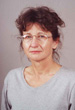 Susan Haller's research areas are natural language processing,
interactive discourse, and text planning. She also is involved in research
projects to attract and retain women in computer science
and related technical areas of study. She teaches courses in programming
languages, artificial intelligence, and operating systems.
Susan Haller's research areas are natural language processing,
interactive discourse, and text planning. She also is involved in research
projects to attract and retain women in computer science
and related technical areas of study. She teaches courses in programming
languages, artificial intelligence, and operating systems.
|
 Diane Horton is a Senior Lecturer in Computer Science at the University
of Toronto, where she has been teaching for 9 years. For the past year,
she has spearheaded the largest curriculum renewal in the department's history,
and she would like to use these curriculum changes as a testbed for research
in computer science education. Diane is known to students for her
down-to-earth way of explaining things, and to colleagues for perpetual
lineups of students outside her door. She is a 3-time winner of the
department's award for teaching excellence.
Diane Horton is a Senior Lecturer in Computer Science at the University
of Toronto, where she has been teaching for 9 years. For the past year,
she has spearheaded the largest curriculum renewal in the department's history,
and she would like to use these curriculum changes as a testbed for research
in computer science education. Diane is known to students for her
down-to-earth way of explaining things, and to colleagues for perpetual
lineups of students outside her door. She is a 3-time winner of the
department's award for teaching excellence.
|
 Gary Lewandowski is an Associate Professor in the Department of
Mathematics and Computer Science at Xavier University in Cincinnati,
Ohio. He has a B.S. in Mathematics (University of Chicago) and a
Ph.D. in Computer Science (University of Wisconsin-Madison). Gary's
research interests include parallel and distributed computing,
scheduling algorithms, graph coloring, and computer science
education. Most recently he has conducted empirical investigations into
the chaos-and-mirth problem, utilizing multiple children to achieve
optimality in O(lg n) time. He has also been investigating methods
(e.g. assignments, classroom activities) of encouraging students to
become risk-taking problem solvers.
Gary Lewandowski is an Associate Professor in the Department of
Mathematics and Computer Science at Xavier University in Cincinnati,
Ohio. He has a B.S. in Mathematics (University of Chicago) and a
Ph.D. in Computer Science (University of Wisconsin-Madison). Gary's
research interests include parallel and distributed computing,
scheduling algorithms, graph coloring, and computer science
education. Most recently he has conducted empirical investigations into
the chaos-and-mirth problem, utilizing multiple children to achieve
optimality in O(lg n) time. He has also been investigating methods
(e.g. assignments, classroom activities) of encouraging students to
become risk-taking problem solvers.
|
 Raymond Lister. In 1992, after six years subsisting on irregular teaching jobs,
Raymond Lister completed a PhD in Artificial Intelligence, at Sydney
University, Australia. The experience left him with a low opinion of
machine learning but a high opinion of human learning. In 1994, he took
up his first full time teaching position, at the Queensland University of
Technology, Brisbane Australia. After four years there, he taught for
three years at the University of Western Sydney, before joining
the University of Technology (Sydney) in February 2001. This
semester is his 11th (out of 15) teaching first year programming. In
the last two years, he has published two Australian national conference
papers and two international conference papers on IT education,
concerning aspects of the teaching of programming to first year students.
Raymond Lister. In 1992, after six years subsisting on irregular teaching jobs,
Raymond Lister completed a PhD in Artificial Intelligence, at Sydney
University, Australia. The experience left him with a low opinion of
machine learning but a high opinion of human learning. In 1994, he took
up his first full time teaching position, at the Queensland University of
Technology, Brisbane Australia. After four years there, he taught for
three years at the University of Western Sydney, before joining
the University of Technology (Sydney) in February 2001. This
semester is his 11th (out of 15) teaching first year programming. In
the last two years, he has published two Australian national conference
papers and two international conference papers on IT education,
concerning aspects of the teaching of programming to first year students.
|
 Renee McCauley is an Associate Professor in the Computer
Science Department at the College of Charleston.
Renee holds a B.S. in Secondary Mathematics Education (Louisiana
State University), a M.Ed. in Administration and Supervision
(Louisiana State University) and both the M.S and Ph.D. in Computer
Science (University of Southwestern Lousiana). With Sally Fincher,
she edits the journal Computer Science Education. Her scholarly
interests include formal and programming languages, accreditation
and curriculum issues in computer science.
Renee McCauley is an Associate Professor in the Computer
Science Department at the College of Charleston.
Renee holds a B.S. in Secondary Mathematics Education (Louisiana
State University), a M.Ed. in Administration and Supervision
(Louisiana State University) and both the M.S and Ph.D. in Computer
Science (University of Southwestern Lousiana). With Sally Fincher,
she edits the journal Computer Science Education. Her scholarly
interests include formal and programming languages, accreditation
and curriculum issues in computer science.
|
 John McTaggart is in his seventeenth year of teaching undergraduate
Computer Science. From 1985 to 2000 he was at Grand View College in Des
Moines, Iowa. In addition to teaching, he was Department Chair for
Computer Science, developed courses in Computer Graphics, Ethics and
Professionalism for Computer Science, and Networking Fundamentals, and
worked on assessment and curriculum issues for the Department. John is
now at Drake University, teaching computer science courses and pursuing
a Doctorate in Curriculum and Instructional Technology and Computer
Science at Iowa State University. He is active in the Association of
Computing Machinery (ACM) Special Interest Group in Computer Science
Education (SIGCSE). John's return to school is through the support of
Drake University. He is working on a Doctorate in Curriculum and
Instructional Technology with a minor in Computer Science. Still being
formulated, his research focus is in the application of Artificial
Intelligence to learning.
John McTaggart is in his seventeenth year of teaching undergraduate
Computer Science. From 1985 to 2000 he was at Grand View College in Des
Moines, Iowa. In addition to teaching, he was Department Chair for
Computer Science, developed courses in Computer Graphics, Ethics and
Professionalism for Computer Science, and Networking Fundamentals, and
worked on assessment and curriculum issues for the Department. John is
now at Drake University, teaching computer science courses and pursuing
a Doctorate in Curriculum and Instructional Technology and Computer
Science at Iowa State University. He is active in the Association of
Computing Machinery (ACM) Special Interest Group in Computer Science
Education (SIGCSE). John's return to school is through the support of
Drake University. He is working on a Doctorate in Curriculum and
Instructional Technology with a minor in Computer Science. Still being
formulated, his research focus is in the application of Artificial
Intelligence to learning.
http://www.drake.edu/mathcs/mctaggart/
|
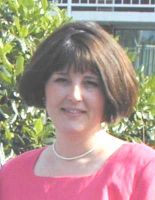 Briana B. Morrison is an assistant professor in the School of Computing and Software Engineering at Southern Polytechnic State University which is located in Marietta, Georgia, just outside of Atlanta. She holds an M.S. in Computer Science from SPSU and a B.S.E. in Computer Engineering from Tulane University. Before joining the academic ranks in 1994, she worked for IBM for seven years in the role of Staff Programmer. Briana specializes in teaching the introductory programming sequence--Computer Science I, Computer Science II, and Data Structures. Occasionally she can branch out and teach other courses such as Applications Programming and the Senior Capstone course. She is actively involved in the undergraduate curriculum committee and the accreditation committee. She has served as the student ACM chapter faculty advisor and is currently the chapter co-advisor for the Women in Computing (ACM-W) chapter. Briana’s research interests include computer science education, especially in the introductory programming sequence, the use and effectiveness of closed labs in computer science education, and recruiting and retaining women in computing.
|
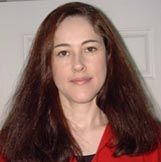 Laurie Murphy is an Assistant Professor in the Computer Science and
Computer Engineering Department at Pacific Lutheran University in
Tacoma, Washington. Prior to coming to PLU she was an instructor at the
University of Mississippi and obtained her M.S. in Computer Science from
Vanderbilt University. Her areas of interest related to CS-Education
research include attracting and retaining women students, group and
cooperative learning, teaching to different learning styles, and
classroom and curricular assessment. Most recently she has taught
Introduction to Computer Science, Data Structures, Programming
Languages, Design and Analysis of Algorithms and Unix System Design.
Laurie Murphy is an Assistant Professor in the Computer Science and
Computer Engineering Department at Pacific Lutheran University in
Tacoma, Washington. Prior to coming to PLU she was an instructor at the
University of Mississippi and obtained her M.S. in Computer Science from
Vanderbilt University. Her areas of interest related to CS-Education
research include attracting and retaining women students, group and
cooperative learning, teaching to different learning styles, and
classroom and curricular assessment. Most recently she has taught
Introduction to Computer Science, Data Structures, Programming
Languages, Design and Analysis of Algorithms and Unix System Design.
|
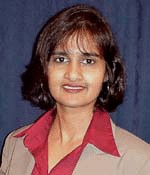 Christine Prasad is a Lecturer in the School of Computing and Information Technology at the UNITEC Institute of Technology in Auckland, New Zealand. She currently teaches Computer Programming to first year undergraduates. Christine majored in Computer Science and Pharmacology for her Bachelor of Science Degree then went on to do Honours in Computer Science at Monash University in Australia. She has been teaching in the tertiary sector for about 6 years in the areas of Programming, Databases, Multimedia, Project Management, and Systems Analysis. Prior to moving to New Zealand, she taught in the Fiji Islands firstly at the University of the South Pacific then at the Central Queensland University's International Campus. She has also worked as an Analyst/Programmer and User Support Consultant. She is currently involved in research into Alternative methods of Teaching Computer Programming at an introductory level, as well as Information Systems Project Management in South Pacific Island Nations. Her other research interest include Artificial Intelligence in the area of Counselling Systems, and Health Informatics.
|
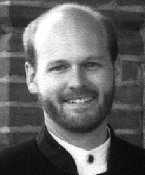 Brad Richards is an Assistant Professor in the Computer Science
department at Vassar College. Brad holds B.A. degrees in Physics and
Computer Science (Gustavus Adolphus College), an M.Sc. in Computer
Science (University of Victoria, Canada), and a Ph.D. in Computer
Science (University of Wisconsin, Madison). In addition to Computer
Science Education, Brad's interests include parallel and distributed
programming, parallel architectures, computer networks, and formal
methods.
Brad Richards is an Assistant Professor in the Computer Science
department at Vassar College. Brad holds B.A. degrees in Physics and
Computer Science (Gustavus Adolphus College), an M.Sc. in Computer
Science (University of Victoria, Canada), and a Ph.D. in Computer
Science (University of Wisconsin, Madison). In addition to Computer
Science Education, Brad's interests include parallel and distributed
programming, parallel architectures, computer networks, and formal
methods.
http://www.cs.vassar.edu/~richards
|
 Kate Sanders is an Assistant Professor in the Mathematics and Computer
Science Department at Rhode Island College in Providence, Rhode Island. She
received an A.B. in classics from Brown University, a J.D. from Harvard
University, and a Ph.D. in computer science from Brown University, with a
thesis on artificial intelligence and law. Besides AI and law, her research
areas include case-based reasoning and computer science education. She has
taught intro programming, computers for nonmajors, advanced data structures,
artificial intelligence, discrete math, databases, software engineering,
programming language design, machine learning, and natural language
processing.
Kate Sanders is an Assistant Professor in the Mathematics and Computer
Science Department at Rhode Island College in Providence, Rhode Island. She
received an A.B. in classics from Brown University, a J.D. from Harvard
University, and a Ph.D. in computer science from Brown University, with a
thesis on artificial intelligence and law. Besides AI and law, her research
areas include case-based reasoning and computer science education. She has
taught intro programming, computers for nonmajors, advanced data structures,
artificial intelligence, discrete math, databases, software engineering,
programming language design, machine learning, and natural language
processing.
|
 Terry Scott is an associate professor of Computer Science at the
University of Northern Colorado. He teaches undergraduate computer science
courses and really likes CS 0 (a breadth first course taught using
TCL/TK), CS 2 (taught using C++/MFC), Computer Architecture/Digital Logic,
and Programming Languages. Latest language additions are Python and
XML. I have a Ph.D in physics from the University of Wyoming and an MS in
Computer Science from Kansas State University. My primary research
interest is in computer science education (how can I teach better?).
Terry Scott is an associate professor of Computer Science at the
University of Northern Colorado. He teaches undergraduate computer science
courses and really likes CS 0 (a breadth first course taught using
TCL/TK), CS 2 (taught using C++/MFC), Computer Architecture/Digital Logic,
and Programming Languages. Latest language additions are Python and
XML. I have a Ph.D in physics from the University of Wyoming and an MS in
Computer Science from Kansas State University. My primary research
interest is in computer science education (how can I teach better?).
I live in Greeley, Colorado, with my wife, 17 year old son, 2 golden
retrievers, a cat, 3 birds, lots of fish and a snake (my son's). I love to
bike, hike, garden and haven't met many jokes that I didn't like. I broke
my back last year in an accident and lean forward somewhat. With surgery,
planned for Christmas break, I should be as good as new.
|
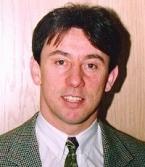 Dermot Shinners-Kennedy is a lecturer in the Department of Computer Science
and Information Systems at the University of Limerick, Ireland. He holds a
Bachelor of Business Studies from the University of Limerick and an MSc in
Information Technology from the University of Ulster, Northern Ireland. His
research interests include theories of learning; metaphorical and analogical
reasoning; developing mental models; novice and expert knowledge;
programming languages and environments; user interfaces and universal
access.
Dermot Shinners-Kennedy is a lecturer in the Department of Computer Science
and Information Systems at the University of Limerick, Ireland. He holds a
Bachelor of Business Studies from the University of Limerick and an MSc in
Information Technology from the University of Ulster, Northern Ireland. His
research interests include theories of learning; metaphorical and analogical
reasoning; developing mental models; novice and expert knowledge;
programming languages and environments; user interfaces and universal
access.
|
 Lynda Thomas is a Senior Teaching Fellow at the University of Wales,
Aberystwyth. Born in Cardiff, she returned to Wales by a somewhat
ciruitous route that took in a BSc and MSc in mathematics at McMaster
University in Canada, an MSc in Computing from Southern Illinois
University, and 15 years of teaching at Carroll College in Wisconsin.
Lynda received her PhD from the University of Wales where her research
was in the area of Object Oriented Design and Notation. This naturally
led her to questions about problem solving and how it is affected by
different learning styles and modes of representation. She is currently
particularly interested in pair programming and how its success relates
to learning style preference.
Lynda Thomas is a Senior Teaching Fellow at the University of Wales,
Aberystwyth. Born in Cardiff, she returned to Wales by a somewhat
ciruitous route that took in a BSc and MSc in mathematics at McMaster
University in Canada, an MSc in Computing from Southern Illinois
University, and 15 years of teaching at Carroll College in Wisconsin.
Lynda received her PhD from the University of Wales where her research
was in the area of Object Oriented Design and Notation. This naturally
led her to questions about problem solving and how it is affected by
different learning styles and modes of representation. She is currently
particularly interested in pair programming and how its success relates
to learning style preference.
http://users.aber.ac.uk/ltt
|
| Suzanne Westbrook is a Senior Lecturer in the Computer Science
Department at the University of Arizona. In her quest to see all of
Arizona, she came to Tucson in 1999 after six years at Northern Arizona
University in Flagstaff. She has a B.S. in Computer and Information
Sciences (University of South Alabama) and an M.S. and Ph.D. in Computer
Science (University of Southwestern Louisiana). Suzanne's research
interests have included multiparadigm programming and software analysis,
but are currently centered on issues in computer science education
related to increasing and maintaining diversity in our CS classes.
|
 Carol Zander is a Senior Lecturer and founding faculty in the Computing
& Software Systems program at the University of Washington, Bothell.
She joined UWB in 1996 from Seattle University, and has also been on
the faculty at Colorado State University and the University of Maine.
Carol holds an A.B. in Mathematics (San Diego State University), an
M.S. in Mathematics (University of Colorado), and an M.S. and Ph.D.
in Computer Science (Colorado State University). Her research started
with distributed artificial intelligence, but currently she has interests
in OOP and programming languages, and her most enjoyable research comes
from her currently unsophisticated computer science education research.
Her primary joy comes from teaching to which she has been rewarded with
three teaching awards.
Carol Zander is a Senior Lecturer and founding faculty in the Computing
& Software Systems program at the University of Washington, Bothell.
She joined UWB in 1996 from Seattle University, and has also been on
the faculty at Colorado State University and the University of Maine.
Carol holds an A.B. in Mathematics (San Diego State University), an
M.S. in Mathematics (University of Colorado), and an M.S. and Ph.D.
in Computer Science (Colorado State University). Her research started
with distributed artificial intelligence, but currently she has interests
in OOP and programming languages, and her most enjoyable research comes
from her currently unsophisticated computer science education research.
Her primary joy comes from teaching to which she has been rewarded with
three teaching awards.
http://faculty.washington.edu/zander/
|
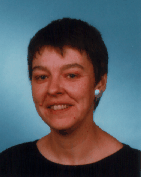 Sally Fincher is a Lecturer in the Computing Laboratory at the
University of Kent at Canterbury, where she heads the Computers
and Education Research Group. Sally holds a B.A. in Philosophy &
Computer Science (University of Kent, UK) and an M.A. in English
(Georgetown, Washington DC). Sally is Editor of Computer Science
Education, jointly with Renee McCauley. Her principal research areas
are Computer Science Education and patterns and pattern languages,
especially patterns for HCI.
Sally Fincher is a Lecturer in the Computing Laboratory at the
University of Kent at Canterbury, where she heads the Computers
and Education Research Group. Sally holds a B.A. in Philosophy &
Computer Science (University of Kent, UK) and an M.A. in English
(Georgetown, Washington DC). Sally is Editor of Computer Science
Education, jointly with Renee McCauley. Her principal research areas
are Computer Science Education and patterns and pattern languages,
especially patterns for HCI.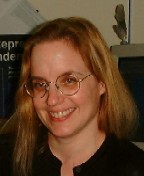 Marian Petre is a Reader in the Computing Department at the Open
University and holds an Advanced Research Fellowship awarded by the
UK's Engineering and Physical Sciences Research Council. Until
recently, she was Director of the Centre for Informatics Education
Research (CIER) at the Open University. Marian holds a B.A. in
Psycholinguistics (Swarthmore College) and a Ph.D. in Computer Science
(University College London, UK). Her principal research areas are
expert reasoning and representation in the design of computer systems,
and Computer Science education. She lectures internationally on
empirical methods.
Marian Petre is a Reader in the Computing Department at the Open
University and holds an Advanced Research Fellowship awarded by the
UK's Engineering and Physical Sciences Research Council. Until
recently, she was Director of the Centre for Informatics Education
Research (CIER) at the Open University. Marian holds a B.A. in
Psycholinguistics (Swarthmore College) and a Ph.D. in Computer Science
(University College London, UK). Her principal research areas are
expert reasoning and representation in the design of computer systems,
and Computer Science education. She lectures internationally on
empirical methods.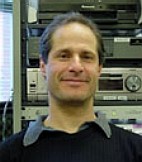 Josh Tenenberg is an Associate Professor in the Computing and Software
Systems program in the newly established Institute of Technology at
the University of Washington, Tacoma. He joined UWT in 2000 from
Indiana University South Bend, where he was the Associate Chair for
Computer Science in the Department of Mathematics and Computer
Science and was a member of the Faculty Colloquium on Excellence in
Teaching. Josh holds a B.M. in Music (San Francisco State University),
and a M.S. and Ph.D. in Computer Science (University of Rochester).
His research interests have included automated planning and reasoning,
reinforcement learning, and temporal logic. Most recently, he has been
investigating cognitive models of computer program comprehension.
Josh Tenenberg is an Associate Professor in the Computing and Software
Systems program in the newly established Institute of Technology at
the University of Washington, Tacoma. He joined UWT in 2000 from
Indiana University South Bend, where he was the Associate Chair for
Computer Science in the Department of Mathematics and Computer
Science and was a member of the Faculty Colloquium on Excellence in
Teaching. Josh holds a B.M. in Music (San Francisco State University),
and a M.S. and Ph.D. in Computer Science (University of Rochester).
His research interests have included automated planning and reasoning,
reinforcement learning, and temporal logic. Most recently, he has been
investigating cognitive models of computer program comprehension.