|
||||||
| School of Medicine • University of Washington • Box 357735 • 1705 NE Pacific St • Seattle WA 98195 | ||||||
 |
|
|
|
|||
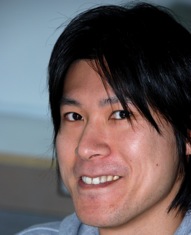
About Hidetada Hirakawa Dr. Hirakawa is from Japan. He holds a BA in Chemistry from Hiroshima University, and an MA and a PhD in Pharmaceutical Sciences from Osaka University. He performed postdoctoral research at the Institute of Scientific and Industrial Research at Osaka University, where he studied the gene regulation of drug resistance and virulence in Escherichia coli. In 2008 he moved to the University of Washington to continue postdoctoral research. Dr. Hirakawa has been awarded postdoctoral research fellowships from the Cell Science Research Foundation, the Uehara Memorial Foundation and Japan Society for the Promotion of Science.
|
|
Research Dr. Hirakawa has a great interest in understanding microbe-host interactions and their environmental life styles. Based on his interest, he chose quorum sensing research for his postdoctoral studies. Recently, Drs Schaefer, Harwood and Greenberg discovered that the phototrophic bacterium Rhodopseudomonas palustris produces a new class of quorum sensing signals, p-coumaroyl-HSL. Unlike previously described fatty acyl-HSLs, the p-coumaroyl side chain is derived from an exogenously provided plant metabolite, p-coumarate, rather than from endogenous bacterial fatty acid synthesis intermediates. He is focusing on understanding how p-coumaroyl-HSL is generated and how it is sensed. He has identified and characterized the receptor for the p-coumaroyl-HSL signal since he joined Greenberg lab. He is currently working on understanding proteins involved in the metabolism of p-coumarate and p-coumaroyl-HSL. Understanding this novel signal system may help us to further understand the mechanism of quorum sensing as well as to understand how bacteria interact with plants and/or animals in their environment.
|
||||
Hidetada Hirakawa, Ph.D.
|
||||||
 |
||||||