|
||||||
| School of Medicine • University of Washington • Box 357735 • 1705 NE Pacific St • Seattle WA 98195 | ||||||
 |
|
|
|
|||
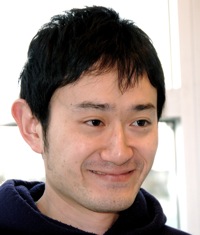
About Kenichi Oinuma Dr. Oinuma started his career in Science in 2000 in Dr. Teruhiko Beppu’s lab, Nihon University, Japan. After earning a B.S. he moved to Dr. Michihiko Kobayashi’s lab, University of Tsukuba, Japan, where he studied the reaction mechanism of aldoxime dehydratase, a novel heme-containing enzyme involved in the C-N triple bond formation. In 2006, he earned a Ph.D. in Agricultural Science. After a year of post-doctoral training in Dr. Kobayashi’s lab, he moved to the Greenberg lab as a JSPS (Japan Society for the Promotion of Science) Postdoctoral Fellow for Research Abroad where he has been studying quorum sensing in Pseudomonas aeruginosa.
|
|
Research P. aeruginosa has two well-studied acyl-homoserine lactone (AHL) synthase-receptor pairs, LasI-R and RhlI-R. In addition, genome sequencing of this organism revealed a third AHL receptor, QscR. Unlike the other receptors, QscR does not have a genetically linked AHL synthase. QscR responds to the same AHL as LasR (3OC12), but there are some fundamental differences between these proteins: 1. QscR binds signal reversibly, whereas LasR binds signal tightly; 2. QscR shows a broader signal specificity than LasR and responds not only to 3OC12 but also to several different AHLs that are not produced by P. aeruginosa.
|
||||
Kenichi Oinuma, Ph.D.
|
||||||
 |
||||||