








CISB students intern with Pacific NW Advisors

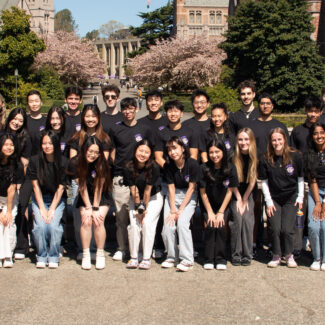
Pacific NW AdvisorsCameron Geisler, Carl Mars and Matt Sink, Certificate of International Studies in Business (CISB) students, recently completed internships with the Latin American Division of Pacific Northwest Advisors, an international network of global business advisors. Stephen Murphy, senior advisor for Latin America, said it was “a pleasure working with these talented students.”

As an intern, Geisler created a slide presentation concerning Mexico, NAFTA and CAFTA. He conducted extensive research, including research to ascertain who the business “movers and shakers” are in Mexico. He also investigated which international firms and Washington state organizations have invested in Mexico. He presented his findings to the Board of Directors of the US-Mexico Chamber of Commerce (Seattle) where he received much critical acclaim as well as feedback. He also presented to a group from Seattle University that were going to visit Mexico on a service trip.

Mars worked on a presentation about “Doing Business in 21st Century South America,” in which he emphasized the nuances of business in Brazil, Colombia, Chile, Peru and Argentina. He presented to the international team of the Washington State Department of Commerce and the Marine Resource Group of Saltchuk, Seattle’s largest private equity firm.

Sinks’ work focused on Brazil, including a presentation about the future of Brazil which highlighted infrastructure, business and investment opportunities for Washington state firms. He presented at Skagit Valley College’s “Global Fest 2013.”

Learn more about the Foster School’s Certificate of International Studies in Business Program.


Posted by masses - June 13th, 2013 - 0 comments - Permalink


Students present to Allrecipes

Guest post by Lisa Anton and Travin Keith, Foster School and CISB Custom Track students

AllrecipesAfter winning the grand prize in the 2013 CISB Foreign Market Strategy Project, the Foster School’s Certificate of International Studies in Business Custom Track students presented their case at the office of Allrecipes on April 11. The students presented in front of a large number of Allrecipes employees and successfully defended their presentation for about an hour, earning compliments from the audience. Their performance was even compared to that of consultants who have presented in the past.

The prize for best teamwork went to the Japanese Track and prize for best presentation to the U.S. Track/Australia team.

Their proposal was to form a strategic alliance with Homeplus, the second largest retailer in South Korea, to provide their content as an additional service to their already-existing E-commerce. Users would be able to look up recipes online provided by Allrecipes and be able to purchase the ingredients on the same page from Homeplus with Allrecipes getting a percentage of the revenue. They also suggested that Allrecipes perform joint marketing projects with Homeplus in order to promote the service.

In addition to presenting to Allrecipes, the Custom Track also received an office tour from VP Patricia Smith and Senior Product Manager Vasantha Kostojohn. This experience was really enjoyable, as the office seemed more like an open community center than the headquarters of a major international recipe site. The décor was open and colorful, adorned with national flags, sticky notes from different team projects, and fun posters with cute animals and motivational quotes. The atmosphere was personal, warm, and mirrored the positive attitude that radiated off all of the staff members present. The track was also able to get a sneak peek of a mobile app that Allrecipes is gearing to launch next year and learned from the lead project manager about its development.

Overall, the Allrecipes office was as colorful and creative as its website, and it was a truly great experience to be able to go behind the scenes of such an innovative company.

Learn more about the Foster School’s Certificate of International Studies in Business Program.


Posted by masses - June 12th, 2013 - 0 comments - Permalink


Authentic ramen receives rave reviews

Guest post by Christopher Comley, CISB French Track student

Kukai Owners, Brandon Ting and Nuri Aydinel The first time Foster School alumni Brandon Ting (BA 2009) and Nuri Aydinel (BA 2009) met in class, they didn’t even talk. However, both joined the U.S. track of the Certificate of International Studies in Business program (CISB), and from there began the conversations that would lead to close friendship and a thriving business.

Along with Jessmin Lau, (UW BA 2010), the two are owners of Kukai Ramen and Izakaya, a Japanese noodle restaurant that opened in Bellevue in December and has already garnered widespread praise.  Seattle Magazine recently featured the restaurant in its “Best Restaurants” issue.

“We enjoy when our customers tell us dining in Kukai is the best ramen experience they have had,” Ting said.

It is the first U.S. location of the Kukai Ramen franchise, which has several other locations in Japan.

The restaurant is on a mission to provide “really good ramen to Americans,” Ting said.

The owners first became interested in ramen when they saw how popular it was becoming around the world.

“People are getting to know ramen and are becoming huge fans of it. We saw that the ramen fans in Seattle (and most of the U.S.) don’t get to enjoy a bowl of authentic ramen,” Ting said.

Facing such a culinary deficiency, the owners began preparations to satisfy the ramen needs of the Seattle area. They traveled to Japan several times, searching for the perfect ramen to bring back, and eventually came across Kukai. Media publications claimed customers who didn’t normally like ramen liked the ramen from Kukai.

“That got us curious so we went to try it,” Ting said.

The owners discovered Kukai had a special cooking method for the ramen, which made it more palatable to the Japanese market and potentially the American one as well. After deciding which ramen to use, the owners began preparations to open a franchise in the U.S., a process which took two years. In reaching its goal to provide authentic ramen to the American market, the owners needed authentic ingredients, but they encountered several FDA obstacles. Under FDA regulations, all ingredients have to be from a certified manufacturer. Originally, Kukai’s ingredients were not FDA approved, but the owners decided the authenticity was worth the price.

“We actually got the manufacturer certified under U.S. standards in order to import the ingredients,” Ting said.

Ting attributes the success of the restaurant to the lengthy planning process.

“We had several changes to our plan, which involved a lot of analyzing and calculating. The long and thorough planning and preparation process was the real key to our ‘rapid’ success,” Ting said.

With plans to open up 30 to 50 more Kukai restaurants across the country, Seattleites won’t be the only ones enjoying warm bowls of authentic ramen.

Learn more about the Certificate of International Studies in Business Program.


Posted by masses - June 11th, 2013 - 0 comments - Permalink


Collaborating for increased opportunities: A new BEDC partnership to further develop minority-owned businesses nationwide

Michael Verchot, Director of the UW BEDC (left), stands with NMSDC President Joset B. Wright (center) and Shelley Stewart, Jr., the Vice Chairman of the NMSDC Board of Directors.

Michael Verchot, Director of the UW BEDC (left), stands with NMSDC President Joset B. Wright (center) and Shelley Stewart, Jr., the Vice Chairman of the NMSDC Board of Directors.

The National Minority Supplier Development Council, Inc.® (NMSDC®) and the University of Washington’s Business and Economic Development Center (UW-BEDC) announced a partnership agreement to further the development of minority-owned businesses across the US on May 22nd at the NMSDC’s annual Minority Business Leadership Awards Dinner Dance in New York City.

This partnership joins together the nation’s premier organization committed to the growth and development of Asian, Black, Hispanic and Native American-owned companies with the nation’s most comprehensive business school center dedicated to the growth of minority-owned firms and businesses in low- and moderate-income communities.

“This agreement will provide minority business enterprises a new opportunity at one of the country’s leading institutions that supports minority business development,” said NMSDC President Joset B. Wright. “It will allow us to enhance MBEs’ ability to meet the needs of their customers. We are delighted with our new relationship, and we look forward to many years of success for NMSDC, for the University of Washington, but most importantly, for our certified MBEs.”

Jim Jiambalvo, Dean of the UW Foster School of Business, expressed similar excitement about this partnership.  “We recognize the NMSDC’s pioneering role in growing minority-owned firms across the US. The work of the council and its member corporations has done more to create opportunities for business growth and wealth creation in communities of color than just about any organization in the last 40 years. We’re proud to be partnering with them so that collectively we can do more than either of us could do independently.”

The partners will begin their collaboration by growing the Foster School’s six-year-old Minority Business Executive Program. This Program has a track record of success in growing minority-owned businesses from across the U.S. JBE Enterprises, an NMSDC-certified firm based in South Carolina, participated in the 2012 Minority Business Executive Program. Richard Ellison, the company’s Vice President and a graduate of the Program attributes its ability to cross the $40 million revenue threshold in part to what firm representatives learned in this Program.

NMSDC and the Foster School will launch a pilot program in June. NMSDC corporate members will select a few MBEs to participate in the program. Ms. Wright will be the commencement speaker at the University’s 2013 graduation ceremony on June 21 in Seattle.

The National Minority Supplier Development Council advances business opportunities for certified Asian, Black, Hispanic and Native American business enterprises and connects them to corporate members.  One of the country’s leading corporate membership organizations, NMSDC was chartered in 1972 to provide increased procurement and business opportunities for minority businesses of all sizes. The NMSDC Network includes a National Office in New York and 36 Regional Councils across the country. There are 3,500 corporate members throughout the network, including most of America’s largest publicly-owned, privately-owned and foreign-owned NMSDC companies, as well as universities, hospitals and other buying institutions. The Regional Councils certify and match more than 16,000 minority-owned businesses with member corporations that want to purchase their products and services.


Posted by Christy Hansen - June 6th, 2013 - 0 comments - Permalink


Seeking enlightenment: a Business Certificate Program graduate’s reflections

Guest post by Jeffrey Chon, graduate of BEDC’s Seattle Business Certificate Program

The Business & Economic Development Center (BEDC)’s Seattle Business Certificate Program (BCP) has recently wrapped up after six weeks of educational coursework and with over sixty graduates. We have invited graduates from the BCP to reflect on their experience of the Program; this is the first in the series written by Jeffrey Chon, Sole Proprietor of Jun Hong’s Kung Fu Club in Seattle.

chonI’ve always been a passionate martial artist and my goal is to never work a day in my life. You see, I’m not “working” if I love what I do. Coming from a family of martial artists, deciding to open my own studio was a breeze. However, after four years of operation, I’m ready to grow my business so that I could focus on teaching instead of worrying about money.

I’ve been a student of kung fu since I was eight. I’m a secular disciple of the Shaolin Temple, and a gold medalist in three different countries. Now I’m able to teach the discipline and philosophies that I’ve learned through Jun Hong’s Kung Fu Club. Through Jun Hong’s Kung Fu Club, students attain better health and fitness by learning the importance of both physical and mental strength through sports and meditation.

Auspiciously, a longtime friend directed me to the Foster School’s Business & Economic Development Center (BEDC), where I participated in their Business Certificate Program.  Held once a week for six weeks, professionals from all fields would come together to give lectures, covering everything from marketing to liability. My classmates, who are professionals themselves, were able to share their experiences, lead class discussions and propose insightful questions. Those questions and concerns were met with direct and in-depth answers. In short, all professionals who seek further knowledge and education can benefit from these seminars.

“Know thy self, know thy enemy. A thousand battles, a thousand victories.”  ~Sun Tzu

As a small business owner, sometimes we do things for the business with the idea that it will be beneficial, but without the understanding of “why.” During every class I would say to myself, “That’s what I do!” and I began re-applying what I’ve been already doing, but with a deeper understanding of the fundamentals. Within two weeks, I was able to bring nine new students to my business.

To me, it was the missing piece to the puzzle. These classes take what we do as business owners and provide us with the skills to further expand our minds and better our businesses.  Simple questions such as, “Does it work? Why or why not? What are other people doing? What do customers respond to?” helped me understand what areas I need to improve on. Sometimes finding success can be as simple as asking the right questions.

As business owners and professionals, we are always keeping long-term and short-term goals in mind. These classes allow you to re-calibrate what’s important and focus on future goals; not only for your business, but for your life. The professors help you ask the right questions, fellow classmates provide you with networking opportunities, and the synergy created in the class paves the way to endless ideas. I know that the Business Certificate Program will be a priceless and lasting benefit to my business.

You have to prepare yourself for when you’re blessed with an opportunity. As Sun Tzu once said, “opportunities are multiplied as they are seized!”


Posted by Christy Hansen - June 3rd, 2013 - 0 comments - Permalink


BPC Bonanza

Guest post by Claire Koerner, co-founder of nomON and Foster School class of 2014
nomON is a randomized food delivery app. Claire and the rest of the nomON team competed in the 2013 UW Business Plan Competition and made it into the Sweet 16 round. In this guest post, Claire reflects on the BPC experience and lessons learned.

nomON for blog postnomON’s Business Plan Competition (BPC) journey drew to a close on May 23 at the Awards Dinner amid friends, mentors, and fans. After two months of hard work, we were all very eager to reach the culmination of the event, and be able to look back at all we have learned along the way. At the beginning of the BPC, we had a 7 page executive summary that was absolutely gorgeous (thanks to Tarryn!) but with some major holes. Our financials were complete estimates, we had yet to sort out credit card processing, and much of our plan was built upon assumptions. After advancing to the investment round, we had the chance to perfect our 2 minute pitches for judges, create nomON swag, and start raising hype about the brand. But it was when we advanced to the Sweet 16 (yay!!) that the learning really began: we met with multiple coaches and mentors – thank you Sanjay Kumar, Craig Sherman, Emer Dooley, Charles Seybold and several others along the way- who helped us find and fill the holes in our business. nomON went from being a quirky mobile app cobbled together at Startup Weekend to a real business with well thought out financial projections (you should see the spreadsheets), a solid partnership with ordr.in, and an entirely new user interface. What a roller coaster! Although we didn’t advance to the Final Four, nomON is now armed with a full 15 page business plan, an investor slide deck, and most of all, important insights and truths about our business. Thank you to the Buerk Center for Entrepreneurship and everyone who helped us during this process. We are excited to move forward with the business, continue learning and improving, and most of all…bring nomON to you soon!

Top 5 things we learned:

  1. Businesses are hard- the to do list keeps growing, no matter how many things you check off
  2. Pitch to everyone- you never know who is going to have a random genius insight
  3. All it takes to keep a designer happy is free-flowing white chocolate mochas with extra whip
  4. Practice makes perfect
  5. Businesses are fun- the deeper you go, the more you learn, and the more you love your team :)

The nomON team:
Claire Koerner – Business Administration (Marketing)
Stephanie Halamek – BA (Finance)
Tarryn Marcus – BA (Entrepreneurship)
Evan Cohen – Informatics
William Voit – Electrical Engineering


Posted by ellenp2 - May 29th, 2013 - 0 comments - Permalink


Roei Ganzarski named Global Business Advisory Board Chair

Ganzarski HeadshotRoei Ganzarski is President and COO of BoldIQ. He is the Chair of the Global Business Center’s Global Business Advisory Board and holds an MBA from the Foster School.

Tell us a bit about BoldIQ. How did it come about, and what is your role in the company?

Thomas Edison once said: “There’s a way to do it better – find it”. At BoldIQ we find it for our global customers every day. We are a developer and provider of software platforms enabling real-time, optimal and actionable solutions for resource utilization, operations management, and disruption recovery, in complex business environments. Using our proprietary technology, our customers experience net operating savings of 4% to 16% and an increase in revenue-generating capacity of ~10%. Beyond ongoing real-time optimized planning, our platform provides on-the-fly change management from an entire systems perspective.

We originally developed our robust operations management platform and our optimization engine to support an innovative new air carrier: DayJet Corporation. We worked for 5 years developing systems and algorithms to support the very complex world of air taxi – no fixed schedule; constantly changing customer demand and requirements; variable unpredictable working environment including changing weather; multiple resources required to deliver each service; and a multitude of legal and operating constraints. This required complex automation and significant optimization, solving a large problem in seconds, multiple times a day, every day.

As president & COO, I am responsible for the day-to-day operations of the company, our growth, and our business.

 How did you become interested in global business?

My father worked for an international container shipping company and I spent my childhood in Asia watching him grow the business. We then returned to our homeland in Israel where I continued watching him grow the business throughout the world. I was intrigued and fascinated by his ability to talk to a political leader in China in the morning, solve an operational  problem in Italy in the afternoon, and then contend with the daily business of ships and crews scattered across the seven seas, all in complete calm and as  second nature. I was privileged to grow up in an environment where ‘global’ was simply the norm, and I was hooked.

 You serve on 3 advisory boards. What do you like about advising, and what direction would you like to take the Global Business Advisory Board in now that you’re the chairman?

I have been fortunate to experience a lot from a global perspective, both as a youngster, and a business leader working for companies like Boeing and BoldIQ, and I now feel that it is my duty to share that experience and knowledge with others so that we, as a whole, can continue to get better. Moreover, I am finding that I am learning just as much as I am imparting, which is what this is all about- always learning and always getting better.

As chair of the board, I would like to see us, the business community, take a more active role in the global education of our next generation’s leaders. My plan as chair is to help drive that forward. Seattle and the Pacific Northwest have an abundance of global companies – leaders in their respective markets and industries. We have globally known brands like Starbucks, Boeing, Costco, Amazon, and Microsoft to name but a few. We also have an abundance of less known brands that are global leaders in their fields. We must take advantage of that to the best of our abilities and help shape what tomorrow’s leaders need to know and need to be able to do, to continue the legacy that we are creating for them today. It is not just about jobs and internships. It is about shaping the academic and experiential programs that our students should go through to prepare for the world of global business. I would like to see the board take a more active role in this influence, and see the school and professors take a more active role in seeking out that real-world guidance from us.

 What would you tell students about the world of global business?

I would say that there is no longer such a thing as global business. I would say that today, the world of any business is global whether we like it, or plan it, or not.  Be it on the supply side (parts, materials, goods, or software engineers); be it in the customer base; be it in sourcing support or services; or even in the hiring of our employees – everything today has some element of global in it. So I would say get ready for an amazing environment of business that is making the world smaller and smaller and with that driving the need for an expanded knowledge and understanding of the world and the people in it. Your time at university is an amazing opportunity to experience, experiment, learn and try new things that later you may not get a chance to. Use the time wisely and fully and enjoy the journey.


Posted by svernam - May 28th, 2013 - 0 comments - Permalink


Giving back: BEDC alumna Stacy Nagata

StacyNagataStacy Nagata was one of the first participants in the Student Consulting Program (SCP) and experienced the start of what has become the BEDC’s signature program. As an undergraduate in the business school in 1999, Stacy had been president of the University Management Consulting Association and competed in a number of case competitions. She knew she wanted to go into consulting but didn’t have any experience. Participating in the Student Consulting Program (then known as the Business Assistance Program) gave her the real-world experience she needed to land her first consulting job at LEK.

From the start, Stacy felt that she was ahead of her colleagues: She had practical knowledge, tactical abilities and could see the big picture, skills she had learned through the Student Consulting Program.

Stacy also knew that the Internet was going to dramatically change business. She became fascinated with companies such as RealNetworks and Amazon that were just taking off when she graduated college in 1999. The power of technology in media and business became her passion and eventually led her to jobs in the entertainment industry, including West Coast Integration lead for the NBC Universal merger.

Key to her work at NBC/Universal was the question- how does technology impact the entertainment industry? Stacy worked to make content available digitally, helping launch the website Hulu, which involved creating an entirely new business model.  Helping shape the future of entertainment was exciting, but Stacy decided that she missed Seattle and knew that a move back to her hometown would give her the chance to give back to the community.

Stacy returned to Seattle in 2012 to work for Xbox. Her new role will be to take interactive gaming to the next level, and as a former gamer, she thinks she’s up to the challenge.  She also began to support several organizations that helped jumpstart her career.  She is a board member of the Seafair Foundation, where she served as an ambassador in High School. She’s also serving as an Alumni Mentor for the BEDC’s Student Consulting Program, helping the next-generation of business leaders.

Through mentoring student teams Stacy has realized that she can make a big difference in students’ lives. And she learns from the students, noting that they have a much higher level of sophistication than students of 14 years ago.  She has some advice for them too: “Just because you are young doesn’t mean you don’t have great ideas”.

And she is proud to see how much Foster has grown in 14 years. Programs such as SCP enable students to have experiential education and greatly enhance the classroom learning. “That’s the magic of Foster,” says Stacy. “There just isn’t enough time in the day for the many opportunities available.”


Posted by Christy Hansen - May 28th, 2013 - 0 comments - Permalink


Foster Idea Lab participants brainstorm sustainable solutions

Looking for a challenge? How about trying to cut total emissions from the global commercial aviation fleet in half—even as it doubles from 20,000 to a projected 40,000 planes—by 2050.

That tall order is the very real pledge of the world’s aviation industry.

And leading the quixotic charge is the Boeing Company, whose Bill Glover provided the keynote for the 2013 Foster Idea Lab, a kind of high-level sustainability brainstorming session hosted by Net Impact at the University of Washington Foster School of Business.

Glover, the vice president of global business development and policy at Boeing Commercial Airplanes, offered a portal into his firm’s efforts to produce more efficient, lower-emitting aircraft through innovative on-board technologies, smarter materials and an all-out push to develop a jet-worthy renewable fuel.

He recounted Boeing’s catalytic effort to drive the first successful biofuel-powered commercial airplane flight, and its legacy in thousands of subsequent test, demonstration and commercial biofueled flights in the past few years.

“Now we need to industrialize it,” Glover said. “Make this work on an industry-wide scale to drive down the carbon footprint of aviation. That’s one of the great opportunities that we have. We’re at the beginning, and we have a long way to go.”

High-level brainstorm

Facing the big challenges of sustainability was the theme of the Idea Lab. Some 40 senior sustainability officers from a wide range of companies huddled with each other and with Foster MBA students to cross-pollinate solutions to the challenges of their organizations to operate more sustainably. Among the organizations participating were Microsoft (the Idea Lab sponsor), Boeing, Starbucks, Amazon, T-Mobile, the Bill & Melinda Gates Foundation and many others.

The event was organized by the Foster School’s chapter of Net Impact, the international MBA organization devoted to inspiring a new generation to use their careers to tackle the world’s toughest social and environmental problems.

National Champs

Foster MBAs won the national Net Impact Case Competition in 2011 and 2013, and reached the finals in 2012. At the Idea Lab, Gabe Jones, Ryan Scott and Chris Walker of the winning team reported on the school’s most recent victory this past February at the University of Colorado.

The case challenged student teams to navigate Newmont Mining’s efforts to begin mining gold in a fictional African nation. The Foster team’s winning solution was centered on the creation of a Trusted Partners Program—a kind of independent escrow account managed by Newmont executives, stakeholders from local and national government, and NGO partners—that would manage profit sharing to benefit both company shareholders and local residents in the areas of environmental, social and educational.

The plan was simple, feasible and implementable. Said Scott: “The question we kept asking ourselves was, what will the board do next week? After we finish our presentation, can the board actually act on this? I think that’s what earned us the win.”

Water, plastics, and dirty data

Foster Net Impact’s faculty advisor Elizabeth Stearns closed the event with a bracing reminder of our rampant overuse of water, plastics and “dirty” data.

The senior lecturer pointed out the tens of gallons of water it takes to produce a cup of coffee or glass of wine, the hundreds of gallons to produce a t-shirt or can of beer, and the thousands to produce a pair of blue jeans or a bar of chocolate.

And she challenged anyone who produces packaging to consider the effect of plastics—300 million tons produced annually, 90 percent of which can be recycled but only 10 percent that is recycled.

Stearns called for a new paradigm. “It’s not enough to recycle,” she said. “We should be focusing on upcycling—the cradle-to-cradle creation of something for the expressed purpose of later being reused, perhaps as something else.”

As for dirty data, Stearns reported that the computing industry and the “cloud” are consuming 623 billion kilowatts of energy and 5.5 billion gallons of water annually, producing 50 million tons of toxic e-waste, and emitting 680 million tons of carbon dioxide emissions—2-3 percent of the world’s total emissions.

“We have to start rethinking our business processes in every industry,” she said. “If we don’t, we won’t have a business.”

But Stearns also pointed out that there are “lots of wonderful solutions out there.” As exemplars, she cited Singapore’s successful gray-water-to-drinking-water company NEWater, the collapsible, upcyclable container used by Japan’s I LOHAS, and the comprehensively sustainable Belgium-based cleaning products company Ecover.

“When you work in sustainability, it’s easy to feel that there isn’t a way out, that the situation is hopeless,” Stearns said. “But the people in the room are already convinced that we have to do things more sustainably. We just have to know that we can do things more sustainably.


Posted by masses - May 24th, 2013 - 0 comments - Permalink


$68,220 awarded to UW Business Plan Competition winners

PureBlue Grand Prize

Grand Prize winner Pure Blue Technologies with Michael Bauer, president of the Herbert B. Jones Foundation

May 23, 2013 – Seattle’s Bell Harbor buzzed with energy as a record $68,220 in seed funding was awarded to winners of the 2013 UW Business Plan Competition.

Over 250 Judges, coaches, and team members gathered at the 16th annual Business Plan Competition Awards Dinner. After a celebration of Artie and Sue Buerk’s $5.2 million naming gift for the Center, Kabir Shahani, CEO of Appature, gave a funny and heartfelt keynote speech, offering these words of wisdom: “Entrepreneurship is a platform for your life, and that platform lets you do anything you want to do. If you want to change the world, you can do it. The only question is ‘how many times over?’”

Shahani’s words were taken to heart, especially by the winning teams, who will be using their seed funding to move their business a few steps closer to reality.

The UW Business Plan Competition is produced by the Buerk Center for Entrepreneurship at the Foster School of Business.

 Winners

$25,000 Grand Prize – Pure Blue Technologies (UW)
Fossil fuel production generates 882 billion gallons of contaminated “produced water” per year in the US alone. On average, for every barrel of oil extracted in the US, 8 barrels of contaminated water are extracted to the surface. Pure Blue Technologies has developed a contaminated water treatment system that uses visible light photo disinfection technology to produce disinfected water for beneficial reuse.
Pure Blue Technologies won second place at this year’s UW Environmental Innovation Challenge.

Team:Jaffer Alali, MS Environmental Engineering; Adam Greenberg, BA Finance and Entrepreneurship;  Michael Lee, MS Mechanical Engineering; Alan Luo, PhD Physics; Sep Makhous, PhD Electrical Engineering; Ryan Vogel, BA Finance and Entrepreneurship; Ian Tan, BA Finance; Nicholas Wang, BA Chemical Engineering


Z Girls Second Place

Z Girls

$13,220 Second Place Prize – Z Girls (UW)
Studies show that adolescent girls who participate in sports  are more self-confident, get better grades, are less likely to engage in at-risk behaviors, and are more likely to go to college. Unfortunately, by age 14, girls drop out of sports at twice the rate of boys. Z Girls has developed a sports-based curriculum that gives girls ages 11-14 the opportunity to develop skills like goal-setting, positive self-image, and healthy nutrition habits through team programs and summer camps.

Final Round Judge Steve Singh, CEO of Concur, remarked, “Z Girls is an inspiring business lead by some amazing founders that could be doing anything in life. Incredible.”


Team:  Libby Ludlow, JD and Technology Entrepreneurship Certificate; Jacob Dudek; Jilyne Higgins


PolyDrop Finalist Prize

PolyDrop with Craig Sherman of Wilson Sonsini Goodrich & Rosati

$5,000 Finalist Prize – Poly Drop (UW)
Conductive coating is used to move electrostatic charge across a surface (like the surface of an aircraft), so that it does not accumulate and interfere with electronic equipment or cause sparks that can lead to fire. PolyDrop has created a conductive polymer additive for paints, primers and coatings that is lighter, more affordable, longer lasting, and has better adhesion than other products on the market.

Team: Michele Chaffee, MBA; Olga Hrechka, BS Chemical Engineering; Heather Milligan, BS Chemical Engineering


NIA Wheel Finalist Prize

NIA Wheel with Jesse Proudman, CEO of Blue Box

$5,000 Finalist Prize – NIA Wheel (SPU)
NIA Wheel found that 5,596,000 people in the US are paralyzed. 360,000 of those are quadriplegic – confined to a wheelchair with very limited control over their mobility. The NIA (Neurological Impulse Actuator) wheelchair is activated and controlled by the brain function of the user, eliminating the disconnect between mental capability and physical disability of quadriplegics and others who have lost mobility.

Team: Sergey Kisel, BS Electrical Engineering; Clarence Rieu, BS Electrical Engineering; Aryn Schatz, BA Business Administration; Jessica Way, BA Economics


Best Idea Prizes

$2,500 Best Technology Idea – PolyDrop (UW)
PolyDrop offers conductive polymer additives for paints, primers and coatings with a significantly lower level of particle loading. Integration of PolyDrop into current production lines of existing formulations is simple and dramatically improves usage lifetime, adhesion and mechanical properties of your product. Team: Michele Chaffee, MBA; Olga Hrechka, BS Chemical Engineering; Heather Milligan, BS Chemical Engineering

$2,500 Best Service/Retail Idea – Z Girls (UW)
Z Girlsmeasurably improves girls’ participation rates in sports by teaching young female athletes skills like positive self-talk, goal-setting, and body image through coaching and camps. Team: Libby Ludlow, JD Law; Jacob Dudek; Jilyne Higgins

$2,500 Best Sustainable Advantage – Pure Blue Technologies (UW)
Pure Blue Technologiesis developing a novel industrial water treatment solution that’s more efficient at a lower cost. Team: Jaffer Alali, MS Environmental Engineering; Adam Greenberg, BA Finance and Entrepreneurship; Michael Lee, MS Mechanical Engineering; Alan Luo, PhD Physics; Sep Makhous, PhD Electrical Engineering; Ryan Vogel, BA Finance and Entrepreneurship; Ian Tan, BA Finance; Nicholas Wang, BA Chemical Engineering

$2,500 Best Innovation Idea – InsuLenz (UW)
InsuLenz is developing a “smart” polymer contact lens to provide a bio-responsive and needle-free insulin delivery platform for diabetics. Team: Nick Au, PhD Medicinal Chemistry; Karen Eaton, PhD Bioengineering; Caleb Gerig, MBA; Craig McNary, MBA; Mohammed Minhaj, MBA; Renuka Ramanathan, PhD Bioengineering

$2,500 Best Consumer Product Idea – iHome3D (UW)
iHome3Dis a mobile app that allows realtors to create a virtual tour and floor plan of a property, in minutes. Team: Nelson Haung, MBA; Aditya Sankar, PhD Computer Science/Engineering

$2,500 Best Cleantech Idea – Biomethane (BGI/WWU/UW)
Biomethanecreates greenhouse-gas-negative vehicle fuel from dairy waste. Team: Jessica Anundson, MBA; Branden Audet, MA Policy Studies; Kathlyn Kinney, MBA; Colby Ochsner, MBA

$5,000 AARP Prize for low-income senior service – NIA Wheel (SPU)
NIA Wheelproduces and sells a brain wave controlled power wheelchair.Team: Sergey Kisel, BS Electrical Engineering; Clarence Rieu, BS Electrical Engineering; Aryn Schatz, BA Business; Jessica Way, BA Economics


Posted by ellenp2 - May 24th, 2013 - 0 comments - Permalink