Global Business

Social media judo

Monday, October 29th, 2012

Guest post by Ryan Loren, Foster MBA 2013 and president of the Global Business Association
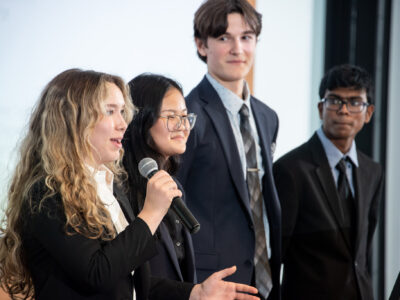
He attended the “Social Media: For Your Business?” roundtable, which was hosted by the Japan-America Society and Foster Global Business Center.   

Social Media: For Your Business?As any MBA student will tell you, networking is a must, but finding the time is tough. Meeting the right people, connecting with the right organizations—all are factors in where to spend your “extra” time.

For me, “Social Media: For Your Business?” was a no brainer; I had to go. Having spent nearly seven years living and working in Japan, as well as interning over the summer at one of the world’s largest PR and ad agencies (that also has a big social media team), I knew this would be a good opportunity to network and meet industry leaders who work internationally, have a connection to Japan, and are involved in social media.

Companies represented in the panel discussion were Starbucks, Microsoft, Ivy Worldwide, PSPINC, Nikkei Concerns, and Niconico. Each company representative gave a 10–15 minute presentation on their social media strategy and the impact social media has had on their organizations.

I learned effective social media strategy is about leverage, or as Nick White, partner and general manger of Ivy Worldwide, a word-of-mouth social media marketing consultancy firm, called it, “social media judo.” He said if your firm is going to have an effective strategy, you need to:

  • Listen.
  • Contribute on other sites.
  • Publish your own content and make sure to link back, cite, and propagate.
  • Don’t sell, rather soft sell your product or service.
  • Listen even more.

Seems simple, but in the ever changing social media world, it is anything but simple. The buying process has changed, the customers are changing, and the frameworks that we have grown to love/hate in our MBA studies are changing. Thankfully, events like these allow real-time perspective from industry leaders in organizations many of us will end up working for one day. The opportunity to meet, mingle, exchange business cards, and practice your elevator pitch with the panel and other attendees is a great way to go that extra mile and make genuine connections. You never know how or when you might come across the same people when searching for an internship, or in my case, a job.

Former Schwab CMO and “mad woman” illuminates “talk to Chuck” case study in MBA advertising class

Monday, May 21st, 2012
 
It’s Thursday afternoon, and in one of the University of Washington Foster School of Business classrooms, former Charles Schwab Chief Marketing Officer Becky Saeger was talking to MBA students about the experience of digging deep to revitalize a major brand. As the architect and marketing protagonist of the integrated “Talk to Chuck” campaign platform, Saeger had plenty to offer the students on this Harvard Schwab Case.

Former Schwab CMO Becky Saeger (middle) with Associate Dean Dan Turner and Senior Lecturer Elizabeth Stearns

She discussed the importance of the big picture marketing process. From there the focus was on the decision metrics, advertising strategy and execution, and ultimately how that contributed to Schwab’s overall brand objectives.

Saeger’s also great in her capacity as guest lecturer, which was her role in Marketing 540, taught by Elizabeth Stearns, senior lecturer. Saeger brings to life the lay of the land at Schwab. The year was 2004 and the CEO who hired her was replaced by Charles “Chuck” Schwab himself, reclaiming his role as CEO of the $4.2 billion company he founded in 1971. Saeger reinforced the problem as described in the Harvard case, on the potential for losses and eroding customer loyalty, as the company struggles to fulfill its promise to the individual investor.

Following Professor Stearns’ lead, Saeger asked as many questions as she answered. One interesting aspect of this class is that Stearns does not play the role of professor—but rather that of a marketing client. Students have formed teams acting as advertising agencies vying for Stearns’ business. There’s very little handholding – and that’s good, because as any marketing agency veteran will attest, clients expect initiative and brilliance. The students demonstrated considerable chutzpah—one memorable moment occurring when a student agency, Drapers’ Disciples, turned down Saeger’s request for an additional $50 million budget with their excellent ROI analysis.

In the end Saeger won out with exceptional rationale; moreover, she proved success.

This teaching model brings intense realism into the classroom, as do guests like Becky Saeger.  There was an exhilarating quality to the session, and an overwhelming sense that Foster MBAs are getting the best of rigor where it intersects relevance to their futures.

As a side note, there was some irony that the ‘agency’ challenging Saeger’s budget request was “Draper’s Disciples.” As it turns out, she began her career at Ogilvy & Mather in NY, where she made a name for herself with global brand campaigns for American Express, among other clients. A true Madison Avenue prodigy.

Foster students win 2012 international marketing case competition

Thursday, March 22nd, 2012

On March 3, 2012, an undergraduate case competition team from the University of Washington Foster School of Business won the Intercollegiate Marketing Competition held at Simon Fraser University in Vancouver, Canada. Eight teams were tasked with developing a marketing plan for Zajak Ranch, a non-profit summer camp for disabled children.

Looking to become financially self-sustaining while attracting the next generation of donors and corporate sponsors, the camp had asked students to find ways to increase revenues during the winter months while also signing reoccurring monthly donors in the younger demographic. Teams were given only three hours to deliberate, design a full presentation and practice before immediately giving a 20-minute presentation with 15 minutes of Q&A. Only four teams would then move on to the final round where they would present in front of a panel of judges consisting of marketing professionals, members of the camp’s management, as well as the managing member of the Zajak family.

Foster’s team consisted of Allen Kuceba, Alex Diaz and Caitlin Snaring, all members of the American Marketing Association student organization. Kuceba is a senior with a focus in finance and entrepreneurship, Diaz is a senior focused on marketing and communications and Snaring is a junior focused on marketing and accounting. The three were selected from a pool of applicants from the UW American Marketing Association.

“I am extremely proud of this team. They worked hard practicing case analysis and presentation skills. With only three hours to prepare, they demonstrated the ability to critically analyze a business problem and develop a viable solution,” says faculty advisor Leta Beard, who coached the students.

University of Washington celebrates state’s top minority businesses

Monday, December 12th, 2011

The Business and Economic Development Center at the University of Washington Foster School of Business honored seven outstanding minority-owned companies from around the state at the 13th annual UW Minority Business of the Year Awards on December 8.
 
“Tonight’s award winners represent the incredible entrepreneurial spirit that makes this country great. They represent a wide variety of industries, operating locally, nationally and internationally,” said Michael Verchot, executive director of the Business and Economic Development Center. “Some have grown consistently through the economic downturn while others suffered short-term difficulties but have rebounded quickly. What unites them is the combination of a visionary leader who sees opportunities, a laser-like focus on meeting their customer needs, and their ability to build a strong management team.”

Foster School Dean Jim Jiambalvo wrote in a Puget Sound Business Journal article, “With job creation being top priority among both politicians and voters, I’m proud to say that the University of Washington Foster School’s Business and Economic Development Center is doing its best to stimulate economic growth.”

Proceeds of the awards event fund minority-student scholarships and support minority-business development.

Sam & Jenny, Inc. | William D. Bradford Minority Business of the Year
Sam & Jenny is one of the largest waste-paper exporters in the United States. With offices in Bellevue and in Seoul, Korea they currently provide Korea with 80% of its recycled products. In 2010, their revenues exceeded $62 million.

Revel Consulting | King County Minority Business of the Year
With 2010 revenues of $25 million, Revel Consulting is a leading business management consulting firm based in Kirkland. For four consecutive years, it has been named one of the nation’s fastest growing companies by Inc. magazine and one of the Pacific Northwest Region’s Fastest Growing Private companies for the past three years by the Puget Sound Business Journal.

Del Sol Auto Sales | NW Washington Minority Business of the Year
Located in Everett and in operation since 1995, Del Sol Auto Sales specializes in buying, selling and repairing used vehicles for the general public. Their 2010 revenues were $6.5 million.

Sister Sky | NE Washington Minority Business of the Year
Sister Sky, on the Spokane Indian Reservation, manufactures and distributes natural bath and body care products inspired by Native American herbal wisdom. With 2010 revenues of $500,000 the company announced a new distribution partnership in the fall of 2011 that will enable it to distribute products to major national hotel chains beginning in 2012.

Hughes Group, LLC | SW Washington Minority Business of the Year
The Tacoma-based Hughes Group is a logistics contract management company that focuses on moving people and things from one location to the next, in any part of the world. They handle every step along the way, from planning to coordinating and managing the move. Their revenues for the 2010 fiscal year were $6.8 million, a 72% increase from 2009.

Indian Eyes, LLC | SE Washington Minority Business of the Year
100% women-owned Indian Eyes, LLC specializes in equipment logistics, employee resource and construction management services. Headquartered in Pasco, Indian Eyes also has offices in Colorado and Virginia. Its 2010 revenues increased by 78% over 2009 reaching $22 million.

Macnak Construction, LLC | Rising Star Award
Macnak Construction, a licensed general contractor since 2007, works on a variety of construction disciplines including new building and bridge construction and remediation primarily for Department of Transportation projects. Macnak has grown their revenues by 375% in the last three years.

Study abroad photo contest winners 2011

Thursday, December 8th, 2011

A picture is worth a thousand words. Every year University of Washington Foster School of Business undergraduate and MBA students study and work abroad as part of their business degree and sometimes the best way to convey the value of those experience is through a photo. The UW Global Business Center held a competition for the best student photos of 2011 travels. Here are the 1st and 2nd place winners in two categories – titles, captions, descriptions written by students:

  1. Foster Abroad: Photo that inspires others to study abroad or makes a statement about the student experience abroad
  2. My Global Lens: Views uniquely accessible to students living abroad – social issues, cultural interactions, city scapes, landscapes, etc.

Foster Abroad – 1st Place (tie): Olivia Arguinchona, undergraduate 
India

Good morning India!
This picture was taken at the Taj Mahal at around 6 AM in the morning. I don’t think there is any other place where I could have been so awake at this hour in the morning.

Experience abroad: This exploration seminar focused on women leadership and entrepreneurship in a country where women are commonly oppressed. Looking back on all I experienced, India has become a symbol of resilience for me. I met so many women who had found a way to lift themselves and their family out of desperate poverty, or who were, in poverty, surviving and planning for the future of their children. Our group delved into the topic of microfinance, something I know hope to pursue once receiving a degree.

Foster Abroad – 1st Place (tie): Olga Kachook, undergraduate
Johannesburg, South Africa

Shadows of Us
Biking through Soweto, one of South Africa’s most culturally rich and diverse townships.

Experience abroad: Life abroad beats to a different drum- restaurants serve food at a snail’s pace, transportation is a chaotic adventure, and many things are lost in translation. Sometimes these changes were exhilarating, and sometimes they were frustrating, but most of the time they just made you stop and question things you take at face value back home. The differences between places and cultures are what usually stand out, but ultimately studying abroad shows you both sides of the coin- not just differences but similarities too. Discovering our similarities to people half way across the world is what makes travel exciting.

Foster Abroad – 2nd Place: Stephan Chung, undergraduate
Cork, Ireland

Reppin’ the DUBYA after win #1
The first of many. UW’s Ireland Exploration Seminar representing the dawg pack in Ireland following our season opening win against the Eastern Eagles. Photo location: Kinsale Harbour

Experience abroad: I decided to go on this business summer exploration to Ireland after hearing raving reviews from everyone I ever talked to who went on the trip. We spent an amazing three weeks visiting large national business and touring Ireland’s cities, towns, and beautiful natural landscape. The Charles’ Fort at Kinsale Harbour where this picture was taken offered breathtaking views of the coast and an interesting piece of Irish history.

My Global Lens – 1st Place: Amanda Hamilton, undergraduate
Ahmedabad, India

Who Runs the World? (Girls)
Empowering a girl empowers the world. Providing education and opportunities to girls around the world is the key to the future. Location: A small, rural village outside Ahmedabad

Experience abroad: Traveling to India was the biggest eye-opener ever. The culture shock and awe-inspiring experience was, at times, overwhelming, but left me thinking so much more deeply about the issues going on in this world. Seeing the stark contrast between the rich and poor and meeting all these amazing women who are taking what they were given and being empowered to be the change in their own lives and communities is so entirely humbling and inspiring. It was amazing to see the people and programs who are truly trying to make a difference by empowering these women and giving them opportunities to affect change around them. The woman in this picture was part of a case study where we went and met with a group of women in a village who had been given solar lanterns and clean cookstoves to improve their lives and daily work.

My Global Lens – 2nd Place: Siena Cairns, undergraduate
Valdivia, Chile

Trapped Miners: 33+
Crawling deep into the suffocating tunnels of Cerro de Potosí showed me there were more than 33 miners living in the dark. Location of photo: Potosí, Bolivia

Experience abroad: The week I arrived in Chile was the week that 33 miners became trapped in the north. Although this was significant international news, it was hardly the only cause for attention across the nation. At that same time, leaders of the indigenous minority, the Mapuche, were entering their second month of a hunger strike and protesters were gathering blocks away from my university. In the midst of national turmoil, Chile was approaching its 200 year celebration as a nation and an election year. I was swept into all of this, and slowly over meals with my host family, classroom discussions, and chats with local friends, my understanding of Chile’s political, social, and cultural history grew until I really began to understand the weight of these pressing issues around me.

Touring the mines and engaging with miners was one of these eye opening experiences. The miners taught me how life in the mines is so demanding that there comes a day when you know little else. In this sense, they become trapped in those deadly tunnels, unable to leave the only lifestyle they know. When I left home to learn Spanish, I never expected to return with such an understanding of this foreign culture too.

See all photos submitted for the contest. Judges included nearly 30 faculty and staff members. Learn more about MBA and undergraduate study and work abroad opportunities via the Global Business Center.

Global study: Looking at Cyprus & Greece through different cultural lenses

Thursday, September 29th, 2011

Guest blog post by Aspasia Bartell, UW Foster School of Business MBA student

Selected from a nationwide candidate pool, second-year Foster MBA student Aspasia Bartell traveled to Cyprus and Greece this summer with the American Hellenic Institute Foundation, a Washington, DC-based, Greek-American think tank. During the trip she had the opportunity to study current foreign policy issues and the business environments in Greece and Cyprus. The delegation met with the President of Greece, ambassadors, Greek and Greek-American business leaders and other dignitaries.

We began our trip in Cyprus, a divided country since the 1974 conflict between Turkey and Greece. Northern Cyprus remains under the control of Turkish military forces, a situation regarded as an illegal occupation denounced in several United Nations Security Council resolutions. The Greek-Cypriot government in the south wants to reunify the island, but attempts to reach a solution to the dispute have so far been unsuccessful. This situation has created hardships for the Cypriot people; for example, thousands have lost their homes and businesses as a result of the occupation and continued division.

Despite the division, the Cypriot economy is doing quite well. Over the past decade Cyprus has become a magnet for Foreign Direct Investment. The Greek-Cypriot government has taken specific measures to help drive investment including putting in place a low 10% corporate tax rate and a no withholding tax policy as a means to make investing in Cyprus as simple as possible.

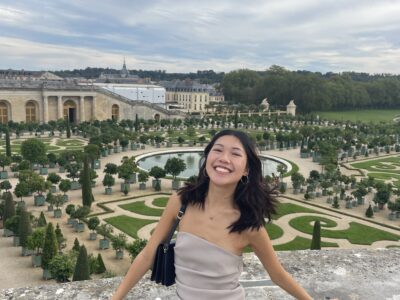
UW Foster School MBA student Aspasia Bartell in Athens, Greece

UW Foster School MBA student Aspasia Bartell in Athens, Greece

Next, we visited Greece in the midst of its worst financial crisis in history.

In Athens we met with Dr. Miranda Xafa, Alternate Executive Director at the Board of the International Monetary Fund, who explained the economic crisis in greater depth. She discussed how Greece has taken out the largest loan in the history of humanity. Its debt has been downgraded to junk status. Greece is more than likely to default.

Xafa then spoke about actions Greece needs to take to make progress. She spoke on how Greece needs foreign direct investment and that this investment should be from private capital. She spoke further on how the country needs to focus on its tourism and shipping industries, which make up approximately 30% of its GDP. She also believes that officials should take a thorough look at the size of its public sector.

One of the business leaders we met with was Dennys S. Plessas, Vice President of Business Development Initiatives for Europe, the Middle East, and Africa, for Lockheed Martin Aeronautics Co. He told us that Greece needs to isolate and to focus on its competitive advantage moving forward. He says the country needs to focus on exports of certain products as well as expanding its education system.

The political turmoil that accompanies this economic crisis has made addressing policy issues in Greece more difficult.

Greek officials are also dealing with an ongoing diplomatic dispute with their northern neighbor, the former Yugoslavian Republic of Macedonia (FYROM), over the name “Macedonia” itself. The Greek government maintains that the Republic of Macedonia should include a qualification such as “northern” to differentiate itself from the neighboring Greek region also called Macedonia.  While Greek and Macedonian officials continue to debate the issue, the UN has agreed to accept any final agreement the two countries are able to reach.

Also, relations with Turkey still remain strained due to an increasing number of Turkish flyovers in Greek airspace. As a result, Greece finds it necessary to continue to spend a large amount of its GDP on its military, while those funds are badly needed elsewhere.

UW Foster School MBA student Aspasia Bartell meets Greek President Karolos Papoulias

UW Foster School MBA student Aspasia Bartell meets Greek President Karolos Papoulias

We were fortunate to meet with Dr. Karolos Papoulias, the President of Greece.  President Papoulias used our visit as opportunity to thank President Obama for his political help with the financial crisis. He ended our meeting with a powerful message that the Greek people possess an incredible amount of strength and ambition and they will emerge from this crisis.

This trip was a phenomenal experience that illustrated how the world is becoming increasingly interconnected and that the business leaders of both today and tomorrow need to have an international view. During this trip I saw how leaders from different countries often view situations through their own cultural lens. The ability to recognize this and to attempt to see issues from the cultural viewpoint of another leader is an important skill when working in the international sphere.