Posts Tagged ‘study abroad’

Study abroad photo contest winners 2012

Tuesday, November 13th, 2012

Over 250 University of Washington Foster School of Business undergraduate and MBA students studied or interned abroad last year. These photos and short descriptions are a small taste of the transformative educational experiences these students have each year. The UW Global Business Center held a competition for the best student photos in two categories: 1) Foster Abroad: Photo that inspires others to study abroad or makes a statement about the student experience abroad; 2) My Global Lens: Views uniquely accessible to students living abroad – social issues, cultural interactions, cityscapes, landscapes, etc.

Here are the first and second place winners in each category. Enjoy them!

1st Place Foster Abroad: Chris Comley, Undergraduate; Montpellier, France

Bon Appetit, Au Revoir
Friends dining at an enchanting garden cafe, enjoying a final lunch of quiche, iced tea, and peaches and cream before the magic of a summer in the Midi ends

Experience abroad: Summer in the south of France afforded many luxuriant opportunities. Among the best were afternoons spent dining in this tiny garden area tucked discreetly behind an antiques shop where good food and company created moments to savor. The photos captures the ironic laughter of our final lunch at the cafe, a day before the end of the program.

2nd Place Foster Abroad: Ashley Matsumoto, Undergraduate; Kobe, Japan

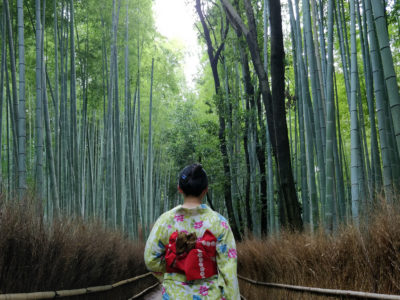
Becoming Japanese
During summer in Japan, Yukata (summer version of kimono) is the Japanese traditional-wear for festivals and other events, but my fellow Foster friend and I decided one day near the end of our semester that we wanted to just explore the beauty of Kyoto and make memories together. We had hundreds of photos taken of us and are probably now in those tourists’ photo albums, who were shocked when we spoke to them in English – though we had been speaking the language the entire time there, this day in look we also finally became “Japanese.”

Experience abroad: Studying abroad was the most exciting, amazing, memorable experience of my life. Time became something I thought about every day. At home, most of my time was devoted to school, commute, family, friends, etc. But in Kobe, I was starting completely fresh with no established routine – and it was almost like time was something I now had complete control over, and /I/ could decide how I wanted to use it. My choice was to focus on everything happening in the here and now, so that I would never regret not doing something during these 6 months that I knew I would forever pine for but never get back no matter how many times I return to Japan. And when I look at my thousands of photos and think on the memories with the amazing friends I was able to make, I am happy to say that I regret nothing. And, I am heading back to Japan as soon as absolutely possible!

1st Place My Global Lens: Roda Barket, Undergraduate; Longji, China

Craving Fresh Air
Figuratively, craving the freshness and uniqueness of China. Literally, craving the fresh air in Longji after experiencing the pollution in Beijing and Shanghai.

Experience abroad: I had the most incredible experience of my life. Being an African immigrant young woman, I never thought I would have the opportunity to go to such an “exotic” country as China. I use the word “exotic” because I’m often referred to as exotic by Americans but never quite understood it until China. I never had the chance to go to a place or learn about a culture that was so unfamiliar to me. I had no idea what to expect. I loved every minute of my experience, it was life transforming for me and inspiring to many of the people I knew who also considered China exotic.
2nd Place My Global Lens: Alex Birch, Undergraduate; Pingyao, China

A Land That Time Has Forgotten
To describe urban and rural China as “180 degrees” from each other, would be an understatement. As much as we think of the progression made today, the rest of the world is still trying to catch up.

Experience abroad: I was able to explore many different areas in Asia while studying abroad in Shanghai. My program took me to the ancient city of Pingyao, the first city to have China’s first national bank. Here, I was able to witness rural China, something that I could never have imagined prior to arriving to the city. It truly made me realize that this is how a significant portion of the world still lives. Over my 3 months, I was able to experience the extreme ends of Chinese culture, the most modern and most dated, something I will never forget and always will cherish.

See all photos submitted for the contest. Judges included over 30 faculty and staff members. Learn more about MBA and undergraduate study abroad opportunities at the Foster School.

Study abroad photo contest winners 2011

Thursday, December 8th, 2011

A picture is worth a thousand words. Every year University of Washington Foster School of Business undergraduate and MBA students study and work abroad as part of their business degree and sometimes the best way to convey the value of those experience is through a photo. The UW Global Business Center held a competition for the best student photos of 2011 travels. Here are the 1st and 2nd place winners in two categories – titles, captions, descriptions written by students:

  1. Foster Abroad: Photo that inspires others to study abroad or makes a statement about the student experience abroad
  2. My Global Lens: Views uniquely accessible to students living abroad – social issues, cultural interactions, city scapes, landscapes, etc.

Foster Abroad – 1st Place (tie): Olivia Arguinchona, undergraduate 
India

Good morning India!
This picture was taken at the Taj Mahal at around 6 AM in the morning. I don’t think there is any other place where I could have been so awake at this hour in the morning.

Experience abroad: This exploration seminar focused on women leadership and entrepreneurship in a country where women are commonly oppressed. Looking back on all I experienced, India has become a symbol of resilience for me. I met so many women who had found a way to lift themselves and their family out of desperate poverty, or who were, in poverty, surviving and planning for the future of their children. Our group delved into the topic of microfinance, something I know hope to pursue once receiving a degree.

Foster Abroad – 1st Place (tie): Olga Kachook, undergraduate
Johannesburg, South Africa

Shadows of Us
Biking through Soweto, one of South Africa’s most culturally rich and diverse townships.

Experience abroad: Life abroad beats to a different drum- restaurants serve food at a snail’s pace, transportation is a chaotic adventure, and many things are lost in translation. Sometimes these changes were exhilarating, and sometimes they were frustrating, but most of the time they just made you stop and question things you take at face value back home. The differences between places and cultures are what usually stand out, but ultimately studying abroad shows you both sides of the coin- not just differences but similarities too. Discovering our similarities to people half way across the world is what makes travel exciting.

Foster Abroad – 2nd Place: Stephan Chung, undergraduate
Cork, Ireland

Reppin’ the DUBYA after win #1
The first of many. UW’s Ireland Exploration Seminar representing the dawg pack in Ireland following our season opening win against the Eastern Eagles. Photo location: Kinsale Harbour

Experience abroad: I decided to go on this business summer exploration to Ireland after hearing raving reviews from everyone I ever talked to who went on the trip. We spent an amazing three weeks visiting large national business and touring Ireland’s cities, towns, and beautiful natural landscape. The Charles’ Fort at Kinsale Harbour where this picture was taken offered breathtaking views of the coast and an interesting piece of Irish history.

My Global Lens – 1st Place: Amanda Hamilton, undergraduate
Ahmedabad, India

Who Runs the World? (Girls)
Empowering a girl empowers the world. Providing education and opportunities to girls around the world is the key to the future. Location: A small, rural village outside Ahmedabad

Experience abroad: Traveling to India was the biggest eye-opener ever. The culture shock and awe-inspiring experience was, at times, overwhelming, but left me thinking so much more deeply about the issues going on in this world. Seeing the stark contrast between the rich and poor and meeting all these amazing women who are taking what they were given and being empowered to be the change in their own lives and communities is so entirely humbling and inspiring. It was amazing to see the people and programs who are truly trying to make a difference by empowering these women and giving them opportunities to affect change around them. The woman in this picture was part of a case study where we went and met with a group of women in a village who had been given solar lanterns and clean cookstoves to improve their lives and daily work.

My Global Lens – 2nd Place: Siena Cairns, undergraduate
Valdivia, Chile

Trapped Miners: 33+
Crawling deep into the suffocating tunnels of Cerro de Potosí showed me there were more than 33 miners living in the dark. Location of photo: Potosí, Bolivia

Experience abroad: The week I arrived in Chile was the week that 33 miners became trapped in the north. Although this was significant international news, it was hardly the only cause for attention across the nation. At that same time, leaders of the indigenous minority, the Mapuche, were entering their second month of a hunger strike and protesters were gathering blocks away from my university. In the midst of national turmoil, Chile was approaching its 200 year celebration as a nation and an election year. I was swept into all of this, and slowly over meals with my host family, classroom discussions, and chats with local friends, my understanding of Chile’s political, social, and cultural history grew until I really began to understand the weight of these pressing issues around me.

Touring the mines and engaging with miners was one of these eye opening experiences. The miners taught me how life in the mines is so demanding that there comes a day when you know little else. In this sense, they become trapped in those deadly tunnels, unable to leave the only lifestyle they know. When I left home to learn Spanish, I never expected to return with such an understanding of this foreign culture too.

See all photos submitted for the contest. Judges included nearly 30 faculty and staff members. Learn more about MBA and undergraduate study and work abroad opportunities via the Global Business Center.

Global study: Looking at Cyprus & Greece through different cultural lenses

Thursday, September 29th, 2011

Guest blog post by Aspasia Bartell, UW Foster School of Business MBA student

Selected from a nationwide candidate pool, second-year Foster MBA student Aspasia Bartell traveled to Cyprus and Greece this summer with the American Hellenic Institute Foundation, a Washington, DC-based, Greek-American think tank. During the trip she had the opportunity to study current foreign policy issues and the business environments in Greece and Cyprus. The delegation met with the President of Greece, ambassadors, Greek and Greek-American business leaders and other dignitaries.

We began our trip in Cyprus, a divided country since the 1974 conflict between Turkey and Greece. Northern Cyprus remains under the control of Turkish military forces, a situation regarded as an illegal occupation denounced in several United Nations Security Council resolutions. The Greek-Cypriot government in the south wants to reunify the island, but attempts to reach a solution to the dispute have so far been unsuccessful. This situation has created hardships for the Cypriot people; for example, thousands have lost their homes and businesses as a result of the occupation and continued division.

Despite the division, the Cypriot economy is doing quite well. Over the past decade Cyprus has become a magnet for Foreign Direct Investment. The Greek-Cypriot government has taken specific measures to help drive investment including putting in place a low 10% corporate tax rate and a no withholding tax policy as a means to make investing in Cyprus as simple as possible.

UW Foster School MBA student Aspasia Bartell in Athens, Greece

UW Foster School MBA student Aspasia Bartell in Athens, Greece

Next, we visited Greece in the midst of its worst financial crisis in history.

In Athens we met with Dr. Miranda Xafa, Alternate Executive Director at the Board of the International Monetary Fund, who explained the economic crisis in greater depth. She discussed how Greece has taken out the largest loan in the history of humanity. Its debt has been downgraded to junk status. Greece is more than likely to default.

Xafa then spoke about actions Greece needs to take to make progress. She spoke on how Greece needs foreign direct investment and that this investment should be from private capital. She spoke further on how the country needs to focus on its tourism and shipping industries, which make up approximately 30% of its GDP. She also believes that officials should take a thorough look at the size of its public sector.

One of the business leaders we met with was Dennys S. Plessas, Vice President of Business Development Initiatives for Europe, the Middle East, and Africa, for Lockheed Martin Aeronautics Co. He told us that Greece needs to isolate and to focus on its competitive advantage moving forward. He says the country needs to focus on exports of certain products as well as expanding its education system.

The political turmoil that accompanies this economic crisis has made addressing policy issues in Greece more difficult.

Greek officials are also dealing with an ongoing diplomatic dispute with their northern neighbor, the former Yugoslavian Republic of Macedonia (FYROM), over the name “Macedonia” itself. The Greek government maintains that the Republic of Macedonia should include a qualification such as “northern” to differentiate itself from the neighboring Greek region also called Macedonia.  While Greek and Macedonian officials continue to debate the issue, the UN has agreed to accept any final agreement the two countries are able to reach.

Also, relations with Turkey still remain strained due to an increasing number of Turkish flyovers in Greek airspace. As a result, Greece finds it necessary to continue to spend a large amount of its GDP on its military, while those funds are badly needed elsewhere.

UW Foster School MBA student Aspasia Bartell meets Greek President Karolos Papoulias

UW Foster School MBA student Aspasia Bartell meets Greek President Karolos Papoulias

We were fortunate to meet with Dr. Karolos Papoulias, the President of Greece.  President Papoulias used our visit as opportunity to thank President Obama for his political help with the financial crisis. He ended our meeting with a powerful message that the Greek people possess an incredible amount of strength and ambition and they will emerge from this crisis.

This trip was a phenomenal experience that illustrated how the world is becoming increasingly interconnected and that the business leaders of both today and tomorrow need to have an international view. During this trip I saw how leaders from different countries often view situations through their own cultural lens. The ability to recognize this and to attempt to see issues from the cultural viewpoint of another leader is an important skill when working in the international sphere.

Part 2 of 2: MBA study tour in Peru – Machu Picchu, microfinance, stocks, adventure

Monday, April 4th, 2011

Guest post by Oliver Huslid, Evening MBA student

peru2011Machu Picchu
We took a bus, a train, and then a bus again to reach the top of Machu Picchu Mountain where the ruins are. My headache left me, which is fortunate since the first thing I did upon arrival is sprint across the ruins to get my name on the list for the Huaynu Pichu hike. Only 300 visitors are allowed at a time and I wanted to catch up with my classmates who had taken earlier buses than I. The climb forces me to do a solid hour of stair-stepping but rewards me with a majestic view of the Machu Picchu ruins.
 
Microfinance and women entrepreneurs
Our first company visit is with Credivision, a WorldVision-owned microfinance company focused on lending to women in Peru. They have medium-sized operations, having fewer than 200 active accounts but always expanding. A stringent application process ensures high-quality borrowers on their portfolio and a high repayment rate. A minimum of 10 women are required to apply for a loan together as a group—this is to encourage the borrowers to help each other out with their businesses, whether it’s giving advice or pooling funds. Because they’re on the hook together, they will often cover for each other’s payments should one borrower’s business fail and peer pressure the delinquent individual into solvency.

Peru_stocks_0971Peru stock exchange
We visit the stock exchange, a nondescript commercial building in one of the business districts of town. The presenter is regrettably too incoherent for me to learn anything, though I do recall from an earlier presentation that Peru’s stock market is over half mining capitalization. Their goal is to merge with Colombia’s stock exchange, which is dominated by textiles, and Argentina’s stock exchange, which is dominated by services, to create a unified and diversified stock market.
 
Paragliding over Peru
On my last day, I go paragliding off the cliffs of Lima by the shoreline. For the first time, I’m able to see across the endless city of Lima, home to 8 million, and I immediately forget all that’s on my mind. I look down the coast until the beach meets the horizon and begin to feel very relaxed. The paragliders and I head back to the hotel and meet up with our classmates, all of whom venture into the city for one last shopping adventure. Feeling tranquil, I instead opt to lay by the waterfall pool, dozing off to the sunset, waiting for the hour that I must board the plane to whisk me away from my Peruvian dream.

Oliver is one of many University of Washington Foster School of Business MBA students who studied abroad in 2011. Learn more about MBA study and work abroad opportunities.

Part 1 of 2: MBA study tour in Peru – Coffee, copper, economics

Monday, April 4th, 2011

Guest post by Oliver Huslid, Evening MBA student

Peru_0097Silicon Valley of Peru
Microsoft Peru rents space from an unassuming office building in the heart of the city. Because this particular satellite branch only does Sales, it does not have the need for a sprawling complex like that in Redmond.  The immediate surrounding area has a new and modern feel to it. The architecture of the buildings showcases their glass and clean concrete. Because Microsoft’s neighbors include HP, Cisco, Oracle, and Google, it’s no wonder they call this area the “Silicon Valley of Peru.”

Coffee co-op
We visited Café Villa Rica, a co-op of coffee-growers in the Villa Rica region. Headquarters were located inside an unmarked office building in a sleepy residential area of Lima. Café Villa Rica is a privately owned and privately funded since local banks do not trust farmland as good collateral for loans.  They grow, pick, and process their own beans to ensure quality. Unfortunately, Peru does not yet have a big coffee-drinking culture, so most of their beans are exported to coffee-drinking nations like the United States. Café Villa Rica sells about 60% of its beans to Starbucks, where their acidic, earthy beans are mixed with Kenyan beans to balance out some flavors for Starbucks’ customers.

Copper mining
We walk around the corner to visit the headquarters of Southern Peru Copper Corporation, a copper mining corporation with extraction sites in Peru and Mexico. The copper industry enjoys high margins and an accelerating demand from developing countries like China. Year over year EBITDA is in the triple billions for this particular company despite issues with strikes, corrupt unions, and increasing environmental backlash.

Though recent demand slowed in 2009 due to lagging construction needs in the global sphere, demand has picked up pace again in 2010. As one of the largest mining companies in the world, Southern Peru Copper Corporation mines a diversity of minerals and metals, like molybdenum, zinc, and others.

Peru’s national economy
We began one day with a visit to the Ministry of Foreign Relations, where we are treated to an exposition on the strengths of Peru’s economy.

Many of the charts convey dramatic increases of key exports in the past decade, highlighting Peru’s rapid expansion and growing presence in the global trade arena. Peru’s modern approach to global economics has earned it crucial free trade agreements with a large number of countries, including the United States and much of Europe. The impact of these decisions has improved the standard of life for Peruvians substantially, as evidenced by the poverty level dropping from 50% to about 35% over the past decade.

One major weakness of Peru’s economy that they are trying to remedy is overreliance on exporting to the United States and other developed nations. The other major weakness of Peru’s economy is heavy saturation of mining companies. This trait of the Peruvian economy makes it vulnerable to fluctuating commodity prices for metals and minerals.

Oliver is one of many University of Washington Foster School of Business MBA students who studied abroad in 2011. Learn more about MBA study and work abroad opportunities.

Generosity of women leaders in India

Wednesday, November 17th, 2010

Guest blog post by Cate Goethals, UW Foster School of Business lecturer

Women Leadership Trip - India 2010I first noticed it on the plane before I even reached Mumbai when I sat next to a woman who owned a handicraft business. I told her I was bringing a group of 22 students to India. “Come to my home,” she said. “Let me cook for you.” Her sister-in-law, who ran a different business, came to sit in our row. “Please let me host your group,” she said.

University of Washington students and I (their faculty trip organizer) had set out to study women’s leadership in India. I expected the accomplished women we met to be powerful, visionary, confident, charismatic, any number of traits. What I had not anticipated was generosity.  Extreme generosity. The more responsibility someone had, the more time and attention and respect they gave us.  Some more examples:

  • Rohini Nilekani, who runs a multimillion-dollar foundation in Bangalore and is known as “the Melinda Gates of India,” spoke to us and then had to go to a meeting.  After the meeting, she returned and gave us another hour of her time.  Half of that was spent asking us for our ideas.
  • Poorvi Chothani, well-known attorney often seen on Mumbai TV, not only agreed to brief my group on women and the law in India – but went on to spend many more hours organizing a special session of the Ladies Wing (!) of the Mumbai Merchants Chamber to gather dozens of women in our honor. She turned what could have been a personal platform into an exchange of ideas.
  • Veena Mankar, leading banker and co-founder of microfinance institution Swadhaar, had to cancel our visit to go to a funeral. She then rearranged her schedule and spent more than an hour driving across Mumbai to meet with us at our hotel early one morning. “Young people have the best ideas,” she told me. “I talk to them whenever I can.”
  • Amma, “the hugging saint” and most well-known female spiritual guru in the world, heard that we were rushed through our first session with her. Although she hugged thousands of other people that day, she invited us for a second session, asked that we sit at her feet and personally answered our questions about women’s leadership. Then she asked her swami to give us back the money we paid to stay at her ashram. “Students should have pocket money,” she said.
  • Women of the world-famous Self Employed Women’s Association greeted each of us several times with a personal flower, a special bindi (red dot pressed with rice on our foreheads to nourish our spirits) and a bit of sugar to eat.

I was struck by this generosity on nearly every visit.  It may be part of Indian culture, it may be related to gender, it may be a function of the exceptional people we saw.  In any case, it is an overlooked and undervalued leadership trait – and one that is infectious, making the students and I want to give back…and give elsewhere…and do it again, creating new cycles of generosity even now that we’re home.  The ripples are still being felt.

Cate Goethals, University of Washington Foster School of Business lecturer and Seattle consultant, leads global business seminars and study trips focused on women and international business. She has taught at the UW Foster School for more than 20 years—including a class called “Women at the Top” that was named one of the 10 most innovative MBA classes in the country by Forbes in 2010.

The India exploration seminar abroad, called Half the Sky: Women Leaders and Entrepreneurs, included 22 graduate and undergraduate students.

Interning in rural Kenya

Tuesday, November 9th, 2010

Guest post by Nathan Whitson (UW business major graduating in 2012)

SAM_0286As part of my international studies at the UW, I desired to volunteer abroad during my college career. The summer of my sophomore year (2010) I traveled to Kenya as part of an informal internship at a small orphanage called Watoto Wa Baraka.

My time in Kenya lasted 6 weeks, but it was jam-packed with new experiences and encounters. Kenyans are wonderful. They help before you ask and smile before you can react. This attitude puzzled me, because in deep poverty, they persist and love the life that they were dealt. I quickly began drawing differences between Kenya and America, a natural process that creates unique global views.

Global conversations
Kenya was not the only thing new to me. So was everyone around me. While in Kenya, there were few Americans and many of my peers were European. I did not know what to expect, but my understanding grew as we discussed everything from politics to education. In addition to learning about Kenyan culture and society, I gained a unique understanding of different communities from around Europe. I now have a mini network of people from around the world that I can connect with in the future.

Preparing food at a Kenyan orphanage

Preparing food at a Kenyan orphanage

Making an impact
As volunteers, we spent time looking after the children, helping in the local school and hospital, aiding with laundry, harvesting and cooking food and traveling around to different communities in the area. This internship taught me what simple living really is. I am deeply humbled that I was able participate in an international internship this summer because the experience truly cannot be replicated. Kenyans are the most resilient people I have ever met, leaving me with the hope that a bit of this attitude rubbed off on me. I feel that this is true of all internships; they are gateways into the real world. Not every internship defines what your career will be, but it shines a light into what exists at that next level.

Resources
If you are thinking of interning abroad, my recommendation is to fully commit yourself to a program and go with it. A variety of great resources exist for those looking to make a difference abroad or gain experience locally. Here are a few I would recommend: Volunteer Match (opportunities abroad/locally), Intern Match (local internships) or UW Husky jobs.

Nathan Whitson is a junior at the Foster School of Business focusing on finance. He used his “summer break for something more heartfelt than simply a check every two weeks and it definitely paid off.” His Kenyan internship was organized by himself via Volunteer Match.

Women leadership in India via microfinance

Friday, October 22nd, 2010

Guest post by Cynthia Sánchez (UW English major, graduating in 2011)

I used to believe microfinance pertained only to those in the banking industry. However, I’ve discovered this is not the case. Microfinance can be utilized by many banks, but also individuals seeking to help others. I learned microfinance does more than lend money. It helps people save, build their resources and reduce their vulnerability.

Microfinance repayment gathering in India

Microfinance repayment gathering in India

Meeting with Grameen Bank in Bangalore, India allowed me to witness the difference the bank makes by giving 97% of their loans to women while they also strive to educate the next generation. Our meeting with Grameen Bank began by attending a repayment meeting. We arrived at the gathering location—encountering a few goats along the way—and entered an open space. A group of women sat leg-crossed chanting the sixteen decisions, a set of values, followed by the recitation of a vow. This was the way they commenced meetings. They welcomed us with smiles and requests to sit next to them, tapping the floor beside them to signal open spots. The women wore saris and a few cradled their children. We took our seats barefoot and watched each member sign in. Their glass and golden bangles slid up and down, synchronized to the movement of their arms.

The session was quick. The women were prepared with the money stacked in their hands, like a deck of cards. They all sat attentive waiting to hear their name to pass the payment to the lender. The money circulated, hand in hand, until it reached him. He counted the amount and recorded the amount in the borrower record sheet which contained the borrower’s picture, her name, the names of her children and spouse and dates of all the past payments.

We learned from the women that with the money they borrowed they had paid for their children’s education, started businesses, resolved personal issues and emergencies and also had the opportunity to expand their knowledge of business. Obtaining a loan from Grameen Bank had empowered them to decide what was best for their families and their future. Women who were once considered “uncredit-worthy” are now beginning to move away from poverty in a country where 41% of its population is still “unbanked”—demonstrating the difference a small loan can make.

Cynthia is a University of Washington student participant in the Foster School of Business study tour during fall quarter 2010. The trip, focused on Women Leadership in India, was organized by Foster faculty member Cate Goethals.

Business women in India and America share hope

Thursday, October 21st, 2010

Guest post by Emily Gerloff (UW business major, graduating in 2011)

“Nearly everything you do is of no importance, but it is important that you do it.” -Mahatma Gandhi

I was told that India is life-changing.  After hearing this on several occasions, I remember thinking to myself: What a strange concept. How can a country be life-changing?

After spending a month on the Half the Sky Exploration Seminar via the UW Foster School of Business, I am still unable to express exactly how India changed my life, but I know with absolute certainty that it did.

Emily (far right) sits with Indian women at a microfinance repayment gathering.

Emily (far right) sits with Indian women at a microfinance repayment gathering.

During the micro-lending meetings I expected to see poor, impoverished women with sob stories capable of making me instantaneously empty my pockets. I was surprised and relieved to find it was nothing like what I had imagined. These women did not have an ounce of desperation in their voices as they told their stories. They are an absolute testament to the power of hope and determination.  They live their lives with an innate sense of duty and purpose I can only compare to an American’s sense of equality and freedom.

Another surprise was how closely the lives of these women parallel my own. The micro-loans they receive are similar to the loans that fund my education.  I come from an underprivileged family (by American standards) and would be unable to attend college if it weren’t for the grants and loans provided to me by the government. Although I am occasionally jealous of my fellow students who will graduate with zero debt, it doesn’t change the fact that I am extremely grateful for the opportunity to better my life. I don’t think I am any less deserving of an education just because I was born into a family that couldn’t pay for one. This is a similar stance these women take regarding the micro-loans they receive. They possess gratitude and a humble belief that they deserve the right to prove their worth.

India changed my life.  I have seen first-hand the power of hope and determination and won’t deny myself the chance to see how far my own hope and determination will take me.

Emily is a University of Washington student participant in the Foster School of Business study tour during fall quarter 2010. The trip, focused on Women Leadership in India, was organized by Foster faculty member Cate Goethals.

Expanding cosmos—women in leadership study tour

Thursday, October 21st, 2010

Guest post by Melanie Sharpe, Foster MBA 2011 with a global business focus

BananaLeafIn the pre-trip brief just hours before we left for India, our professor Cate Goethals made a preparatory comment I’ll always remember as I weave my way through the world: “Becoming cosmopolitan means expanding and pushing the current boundaries and edges of your world.”

The trip to India expanded my cosmos in that very way. It exposed me to a diverse array of Indian leaders that redefined my perspective of business leadership as a woman—an aspect of business school that is largely overlooked and one I admittedly had not taken the time to consider prior to the transformative trip.

Inspiring women entrepreneurs

We encountered a colorful gamut of inspiring women. From workaholic bankers to avant-garde filmmakers to powerful lawyers and wealthy philanthropists to arguably the most influential female spiritual guru in the world to rural tree harvesters—all incredibly ambitious and driven women who seemed to have something very profound in common: They all seemed to be working to uplift others around them.

Call it social entrepreneurship or call it a compulsion to help better their community or family. Sometimes this innate desire compelled them to work 16-hour days to allow their fatherless children to have a better future. Sometimes that internal murmur told them that funding clean water was the only way to ensure the success of future generations of Indians. Sometimes that calling told them to hold and convey love to thousands of people everyday. In each instance, the evidence of that desire to give was palpable and tremendously inspiring.

TajThe pinnacle of the trip was hearing Rohini Nilekani, wife of the Infosys founder, speak at her clean water non-profit, Arghyam. Her profound statement: “Your generation no longer has the luxury of pessimism” was galvanizing. No longer can we absentmindedly guzzle water from plastic bottles or live in first-world luxury flushing away our waste with fresh water without considering the ramifications to the earth or other members of the world community. Her CEO Sunita Nadhamuni was an example of such awareness. Nadhamuni and her husband had reinvented the American business school dream of Silicon Valley wealth, prominent management positions and a constant search for “more” by transitioning their careers to work that directly helped communities of people have access to clean water.

Globally interconnected economy

The trip to India opened my world to the interconnectedness of the global economy. Imagine Dharavi: Asia’s largest slum, prominently featured in the blockbuster film “Slumdog Millionaire” as an impenetrable, crime-filled, filthy dystopia. The reality? The living conditions were certainly difficult: On average there is 1 toilet per 1,500 people! But the families inside the neat and tidy (albeit tiny) apartments were hardworking, entrepreneurial and contributing to global economic epicenters of recycling and clothes dyeing. In fact, many of the raw materials that we consume in the United States are sourced straight from Dharavi.

I left India transformed. The trip confirmed what I had suspected for my own career path: My own compulsion to serve was an innate calling that could be aligned with both business ideals and women’s leadership. Arriving at this realization completed the goal of the trip. My cosmos is expanded forever.

Melanie is an MBA student participant in the University of Washington Foster School of Business study tour during fall quarter 2010. The trip, focused on Women Leadership in India, was organized by Foster faculty member Cate Goethals.