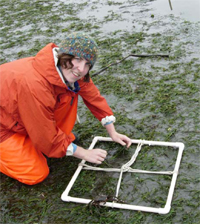
I come from a background in teaching kids about science and nature while hiking up a mountain or navigating through a teams course challenge. After a few seasons on the east and west coasts teaching outdoor environmental education, I thought about my own connection to science and how I wanted to strengthen it. I hadn’t ever felt like a scientist, so back to school for me to try out all of that science that was too intimidating before; genetics, toxicology, microbiology, and RESEARCH.
Starting on San Juan Island, I began to look at eelgrass. I spent some quality time in a kayak investigating the light environment under floating docks and compared this to experimentally derived growing light requirements for immature and adult Zostera marina. Upon my return to closer waters, I was shocked by the morphologic differences I found in Zostera marina here in the South Puget Sound. I spent the summer in Case Inlet chasing the tides, collecting data on the effect of geoduck aquaculture on native eelgrass. What does that mean? Lots of counting blades of grass in the mud and searching for tiny pinpricks marking growth- and an irreplaceable understanding of walking the talk of the ecology I have taught. My deeper questions revolve around how scientists can communicate their ideas and inspire participation from those that have been traditionally excluded. How can we create a space for those to enter that will change the face of science?
|