Hematopathology
Faculty
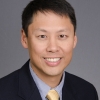
Professor | Director, Molecular Genetic Pathology Fellowship Program

Professor | Head, Hematology Division, Department of Laboratory Medicine and Pathology | Chief of Service, Harborview Clinical Laboratories | Laboratory Director, Hematology and Coagulation Laboratories, UW Medical Center - Montlake and HMC
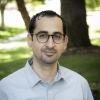
Assistant Professor

Associate Professor | Director, Developmental Hematopathology

Professor

Associate Professor
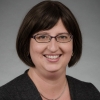
Associate Professor

Associate Professor

David Gajzer, MD
Assistant Professor

Assistant Professor
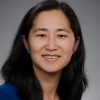
Clinical Assistant Professor

Associate Professor
Jason L. Love, MD
Clinical Associate Professor
Assistant Professor | Associate Director of Hematology/Coagulation
Ryan Morse, MD
Assistant Professor

Kikkeri N. Naresh, MBBS, DCP, MD, FRCPath
Professor | Section Head, Pathology; Clinical Research Division, Fred Hutchinson Cancer Research Center
Clinical Instructor

Assistant Professor
Clinical Assistant Professor
Associate Professor
Associate Professor | Associate Director, Hematopathology Division
Associate Professor
Mission Statement
Our mission is to be a world-class resource for testing that aids in the diagnosis and treatment of hematopoietic disorders. We provide gold-standard, accurate, and efficient services to health care providers for the benefit of patients.
Introduction
The Hematopathology Laboratory at the University of Washington offers a wide variety of testing to aid in the diagnosis of leukemias, lymphomas and other hematopoietic or immunological disorders. In addition, the laboratory is involved in research and development of diagnostic tests and their clinical application. The laboratory personnel also provide high quality teaching to residents, fellows, medical students and medical laboratory science students. Finally, the laboratory is committed to keeping community clinicians informed of new developments in this rapidly changing area of laboratory medicine.
Supervisory Staff
Eric Hoyle, MLS(ASCP)CM
Email: hoylee@uw.edu
Phone: 206.606.7070
Fax: 206.606.7127
Bethany Szydlowski
Specimen Management Supervisor
Email: betszy@uw.edu
Voice Mail: 206.606.2561
Fax: 206.606.7127
Julia Huang MLS(ASCP)CM
Research and Development Lead
Email: jhuang90@uw.edu
Phone: 206.606.7046
Alexis Fujinari, MLS(ASCP)CM
Flow Cytometry Hematopathology Lead
Email: ajf29@uw.edu
Phone: 206.606.7060
Tori Catey, MLS(ASCP)CM
Flow Cytometry Hematopathology Lead
Email: scatey33@uw.edu
Phone: 206.606.7060
Valerie Miller, MLS(ASCP)CMSCYMCM
Flow Cytometry Hematopathology Lead
Email: vafisher@uw.edu
Phone: 206.606.7060
Shannon Nesbitt, BS, MT(ASCP)
Molecular Hematopathology Lead
Email: snesbitt@uw.edu
Phone: 206.606.7070
Soraya Aalami, MB(ASCP)
Molecular Hematopathology Lead
Email: sorayaa@uw.edu
Phone: 206.606.7070
KK Panyathong
Specimen Management Lead
Email: kkpanya@uw.edu
Phone: 206.606.7060
Rachel Osborne
Specimen Management Lead
Email: rmo248@uw.edu
Phone: 206.606.7060
Stephanie Vining-Nakamura
Specimen Management Lead
Email: sicuw.edu
Phone: 206.606.7060
Colin Ramsay
Program Operations Analyst
Email: ctramsay@uw.edu
Phone: 206.606.1745
Laboratory Contact Information
Address
Hematopathology Laboratory, G7-800
Seattle Cancer Care Alliance
825 Eastlake Avenue E
Seattle, WA 98109
Phone: 206.606.7070
ABL1 mutational analysis testing on transplant patients.
UW Genetics Laboratory
University of Washington Medical Center, Room NW 275
Phone: 206.598.6429
KIT mutations in exon 8 and 17
After hours contact the hemepath fellow on call: 206.598.6190
Phone Numbers
Flow Cytometry Hematopathology: 206.606.7060
Molecular Hematopathology: 206.606.7070
Hematopathology fax: 206.606.7127
Resources
American Society of Hematology
International Clinical Cytometry Society
Academy of Clinical Laboratory Physicians and Scientists