
 |
||
          
|
Body Mass Index (BMI)-for-age Body mass index (BMI) is a calculation used for children over age 2 years. It is expressed as a ratio of weight (in kg) to height (in m) squared: 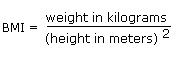
BMI can be obtained with a number of methods:
BMI-for-age is plotted on sex-specific charts to describe a child's weight and height proportionality, and can be used to monitor changes over time. BMI has been shown to be a good indicator of obesity and risk for obesity in children and adults.
There are fewer data to support the use of BMI for age as an indicator of underweight than overweight. The guideline is:
Changes in percentile channels can also indicate nutritional risk.
|
|
   |
||
| Glossary | Module Index | Home | ||