




Default


Default

Home | Contact Us | Site Index |Search UW:

About Seattle

Craniofacial, Pediatric, Maxillofacial Fellowship

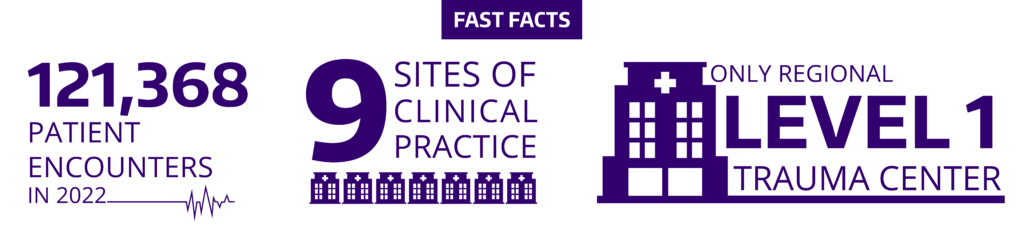
The craniofacial fellowship is based on a large clinical referral base from five states. This fellowship program is non-ACGME and non-accredited. The program has graduated thirteen craniofacial surgeons who are currently practicing in academic and private practice environments. The fellowship educational experience is intrinsically linked to the Children’s Hospital Craniofacial Center, a 40 member interdisciplinary team with coordinated clinical and academic activities. Facial trauma experience is gained at the Harborview Regional Level I Trauma Center.

Goals and Objectives for Training:

Graduates of the program will have been exposed to diagnosing and peri-operative care of a large clinical volume of both pediatric and adult congenital and acquired craniomaxillofacial abnormalities. The goal of the program is to train individuals to be competent in all aspects of surgery of the craniofacial skeleton. The fellowship experience is approximately 80% pediatric and 20% adult.

Training includes:

  1. Cleft lip and palate care and repair;
  2. Pediatric craniofacial surgery;
  3. Craniomaxillofacial trauma of all ages;
  4. Pediatric plastic surgery;
  5. Pediatric and adult acute trauma and secondary trauma reconstruction;
  6. Facial reanimation procedures
  7. Craniofacial microsurgery
  8. Distraction osteogenesis and orthognathic surgery; and
  9. Clinical research.

Teaching Staff:

There are three full time academic plastic surgery faculty in the Craniofacial program: Drs. Joseph Gruss, Richard Hopper, and Craig Birgfeld. Dr. Peter Neligan also operates with the craniofacial faculty on cases involving microsurgery and facial reanimation. The fellow will be exposed to the experiences of the interdisciplinary team of the Craniofacial Center including four craniofacial pediatricians.

Facilities:

The program is based at the Craniofacial Center at Seattle Children’s Hospital, the pediatric tertiary care center for the North West region. Adult craniomaxillofacial experience, both acquired and congenital, is treated at Harborview Medical Center, a nationally recognized level I trauma center.

Clinical and Research Components:

Clinical activity is on a supervised basis. Candidates for the fellowship must be eligible for a full Washington state license and will have faculty privileges at both hospitals. Active participation in ongoing clinical outcome studies and case series analysis is expected. Presentation of original clinical research at a national meeting is supported and expected.
Participant’s Supervisory & Patient Care Responsibilities:
As acting instructor at the University of Washington, the participant will be involved in the clinical supervision and teaching of medical students and plastic surgery residents.
Procedural Requirements:
Individuals in the program must have well-developed Plastic Surgery skills and be familiar with the full range of Plastic Surgery procedures.

Didactic Components:

Participants in the program participate in CME accredited national and regional craniofacial conferences. Attendance is expected at the weekly University of Washington Plastic Surgery Divisional Rounds.

Program Certifications:  No additional certifications.
Date of inception of fellowship: 1993
Number of fellows graduated since inception:  21
Names and current positions of your fellows over the past ten years:         


Year


Name
(city or university)


Current location


Type of practice (private or academic)

2008

Rohit Khosla, MD
Stanford University

Stanford, CA

Academic

2007

Craig Birgfeld, MD
Univ of Washington

Seattle, WA

Academic

2006

Albert Woo, MD
Washington Univ

St. Louis, MO

Academic

2005

Patrick Kelly, MD

Austin, TX

Academic

2004

Anna Kuang, MD
OHSU

Portland, OR

Academic

2003

John Girotto, MD
Univ of Rochester

Rochester, NY

Academic

2002

Arshad Muzaffar, MD
Univ of Missouri, Columbia

Columbia, MO

Academic

2001

Fred Ehret, MD

Tacoma, WA

Private

2000

Michael Whelan, MD

Lynwood, MA

Private

1999

Mark Smith, MD
Beth Israel Hosp

New York, NY

Academic

1998

John Grant, MD
Univ of Alabama

Birmingham, AL

Academic

Number of surgeons the fellow will operate with at least every two weeks: 3
Number of hospitals the fellow will operate at for elective cases: 2
Average number of OR day blocks the fellows will attend per week (report half day blocks as 0.5): 3
Number of craniofacial or cleft related clinics that the fellow will attend per week (report half day clinics as 0.5) 1.5

Description of research opportunities during the fellowship:
Basic science research is:
Encouraged                Available        Not available

Clinical research is:
Encouraged               Available         Not available

Case studies / Chapters are:
Encouraged               Available         Not available
Case components of fellowship:


Fellowship component

 # cases by fellow / 12 mo/ 2007

Craniomaxillofacial Trauma

78

Craniosynostosis-Single Suture

30

Craniosynostosis-Multiple Sutures

12

Cranioplasties

17

Intracranial Hypertelorism Corrections

3

Skull Base Tumor Approaches

3

Primary Cleft Lip Repair

14

Primary Cleft Palate Repair

18

VPI Repairs 

14

Secondary Cleft lip/nasal Revisions

39

Alveolar Bone Graft

20

Rare Craniofacial Clefts

7

LeFort I +/- Distraction

2

LeFort III/Monobloc +/- Distraction

5

Mandible Osteotomy +/- Distraction

1

Elective LeFort Osteotomies with or without BSSO  (non-cleft/non-CF syndromes)

2

Facial Paralysis

1

Microtia Reconstruction

0

Head and Neck Tumor Resection

6

Microsurgical Head and Neck Free Flaps

3

General Pediatric Plastic Surgery

51

Aesthetic Surgery

3

Program Director:
Richard Hopper, MD, Associate Professor and Chief of Service
Program Administrative Contact:
Kristi Yee
Fax:  (206) 987-3064
Email:  kristi.yee@seattlechildrens.org

Mailing Address:
Children’s Hospital & Regional Medical Center
Craniofacial Center, Division of Plastic Surgery
Dr. Richard Hopper, c/o Kristi Yee
4800 Sand Point Way
Mail Stop #W7847
Seattle WA 98105

Positions in this program are filled through the Craniofacial Match Program, http://sfmatch.org/.  Individuals applying for this program must have completed an ACGME accredited residency in and be either board certified or board eligible in Plastic Surgery and eligible to be licensed in the State of Washington.
*Deadline for application to this program: October 1st of each year for the following year's appointment. Interviews are generally held during September, October and November. *Please submit your application materials as early as possible for consideration of an onsite interview as early as September.

Duration:
Program is a one-year appointment, July 1st – June 30th.
Prerequisite Training / Selection Criteria:
Applicants have completed verified training in Plastic Surgery.
This fellowship is based at the University of Washington Hospitals including primarily the Children's Hospital Medical Center and Harborview Medical Center.
The salary for this position is commensurate with institutional guidelines relative to the educational level of the individual involved.
 
Application materials required:
Individuals wishing to apply for this program should forward the following to Dr. Richard Hopper, c/o Kristi Yee (see address below). Application materials will be accepted via email PDF (appropriate signatures must be on letters of reference, etc) to kristi.yee@seattlechildrens.org or by snail mail to the address below. Please submit the following;

  1. A formal letter of application addressed to Dr. Richard Hopper, c/o Kristi Yee, Children’s Hospital & Regional Medical Center, 4800 Sand Point Way, Mail Stop #W7847, Seattle, WA 98105. Also accepted via email PDF with required signatures on letters to Kristi.yee@seattlechildrens.org

In addition to your letter of application, please submit the following to the same address listed above;

  1. A copy of the Certificate of Registration showing your SF Match number.
  2. An updated copy of your Curriculum Vitae.
  3. A personal statement.
  4. Three letters of reference. One letter from the director of your plastic surgery program; one letter from the director of your general surgery or advanced training program; and one letter from a colleague who is familiar with your performance. Each institution submitting the letter can send via snail mail and to expedite can send via scanned PDF (showing signature) to Kristi.yee@seattlechildrens.org. Original must be mailed if sending via email PDF.

If you are selected for an interview you will be contacted via email in October. Please list your best available email address on your Curriculum Vitae.

Additional information for International Applicants:

If you are outside of the United States your fellowship application will not be submitted via SF Match. Applicants from outside the United States must be eligible for unrestricted licensure in the State of Washington. Ap[plicants will be required to supply documentation of passing scores on parts I, II clinical knowledge, II clinical skills and III of the USMLE.

Applicants are required to be in possession of a valid H-1 visa with ample time remaining to complete this fellowship program at the time in which the application is submitted. Those individuals not in possession of a valid H-1 visa with tiem remaining to complete this program at the time of interview cannot be considered for this position. Requests for UW sponsorship on an H-1B visa are reviewed on a case-by-case basis and are subject to approval by the UW GME Office and the UW Provost’s Office prior to the fellowship start date.


reviewed 12/08

© 2008 Department of Surgery