
TMMBA welcomes 6 new faculty

Sara Jones, TMMBA Assistant Director & Class of 2012

In the past year we have seen the addition of six faculty to the TMMBA teaching team.  Many of them have been repeat recipients of teaching awards and have published well-renowned research in their fields.  We’re very excited to have them as part of the TMMBA experience!  Here’s a little bit on each of our new faculty members and the courses they teach.

Jeff Barden, Assistant Professor of Management

Jeff BardenWhy do some organizations succeed while others fail?  One fundamental answer is strategy.  Students address this question during their second quarter in Competitive Strategy. Starting this year the course is taught by Jeff Barden, who has been at the Foster School since 2005.  Barden leads students through an examination of how managerial action can reinvent competition within existing industries and how the creation and implementation of strategy drives the success of business.  Check out this article for highlights from his paper on the impact of corporate acquisitions on technology adoption.

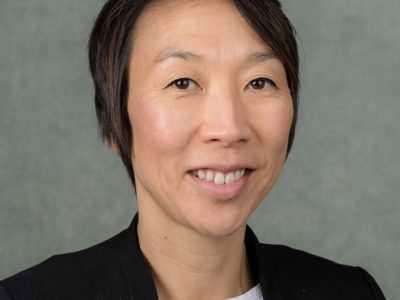
Edward Rice, Associate Professor of Finance & Business EconomicsEd Rice

Students dive into microeconomic issues their first quarter in TMMBA. Ed Rice began teaching the TMMBA Microeconomics course last quarter. He sees the course as dual purpose. First, it explains the fundamental principles of microeconomics, a theory of how agents interact in individual markets. Second, it shows students how these principles are applied to managerial decisions and firm optimization. Rice has won numerous teaching awards from his students at Foster.

Lance Young, Assistant Professor

Lance YoungLance Young takes students into the world of finance in the TMMBA Corporate Financial Strategy course. Finance deals with how individuals make consumption and saving decisions and how firms make investment and financing decisions. Through his course, Young shares interesting and useful frameworks and techniques that help students develop a competitive advantage over their peers as they progress in their careers. In 2011, Young won the PACCAR Award for Excellence in Teaching.

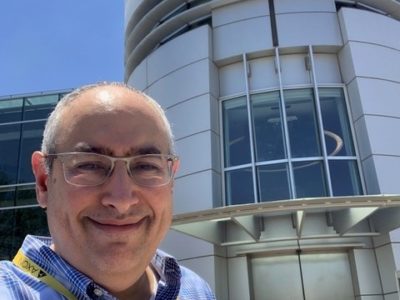
Debra Glassman, Senior Lecturer in Business Economics

Debra GlassmanDebra Glassman helps students understand the complex global macroeconomic environment in her TMMBA course, Domestic and International Economic Conditions.  Students discuss economic growth, inflation, unemployment, business cycles, fiscal policy and monetary policy. They also get a global perspective through exploration of national business systems, trade policy, the political economy of trade, and regional economic integration.  After just one quarter teaching in TMMBA, Glassman was recognized by students with the Faculty of the Quarter award.

Rebecca Lovell

Rebecca LovellLovell is a Foster alum, Chief Business Officer at GeekWire, and also teaches TMMBA’s new Venture Capital Investment Practicum. This two-day course synthesizes the TMMBA curricula with a refresher of marketing, finance, and management through the lens of venture capital investing.  The output is an all-day competition where teams analyze two businesses and present their analysis and investment decision to a panel of entrepreneur judges.

Andy Boyer

Andy BoyerAndy Boyer is also a Foster alum and co-founder of Social3i, a social media and online marketing consulting firm.  This quarter he taught a new Social Media for Managers course in TMMBA. The course familiarized students with successful social media programs and took a broad look at social media – from tactics and tools to how to use social in their business strategy.  Boyer had students contribute to a blog to share what they were learning and the progress of their class projects.


Posted by sstrobel - May 24th, 2012 - 0 comments - Permalink


Sporks + Social Media = Help for students in India

Guest post by Kevin Croy, TMMBA Class of 2012

I’m posting on behalf of my TMMBA team: the Sporks (class of 2012).  One of our classes this sixth (and final!) quarter presented us with an opportunity to use social media to raise awareness for a cause that is important to us.

MAI SchoolWe had many ideas about which cause to support, but the MAI School in India resonated with the team.  Our teammate, Krishnan, told us about the non-profit school his grandfather founded in India over 60 years ago.

Over the years, the school has done a lot with very little.  They provide a 1st-10th grade education to hundreds of children per year, despite their constrained resources.  The regional educational authorities pay teachers’ salaries, but not any other expenses like furniture or facility maintenance.

Krishnan’s grandfather is almost 100 years old, so Krishnan’s mother currently handles the day-to-day operations of the school.  When we asked her how we could help, she told us that the benches and desks were about fifty years old and needed to be replaced.

The estimated cost to replace the benches and desks is approximately $5,000 USD.  We knew it would be challenging, but we made it our goal to use social media to raise enough money to replace the benches and desks for the students at MAI.

So far, we’ve raised $1,172 of our $5,000 goal!  If you’d like to help us reach our goal by making a donation, you can donate through our FundRAZR account: http://fnd.us/c/9IST9

Donating money is not the only way to help.  You can help us raise awareness by following us on Twitter at @maischool and liking us on Facebook http://facebook.com/MaiSchool.

This project has been a very rewarding experience.  We’ve learned a lot about managing social media campaigns and we’ve received touching thank you notes from the students and staff of the MAI School.


Posted by tmmba - May 21st, 2012 - 0 comments - Permalink


International Study Tour – Tiananmen Square and Forbidden City

Guest post by Kathleen Helal, Class of 2012Tiananment Square

During our Beijing visit, a bizarre storm came in and blew out all the smog, dusted the city with snow, and cleared the skies for a picturesque visit to Tiananmen Square and the Forbidden City. The day began with a walk through one of the largest public squares in the world. Tiananmen Square is rooted in political history, from its origins as a monument to the Communist Party to a number of political events and protests. Many of us remember the protests of 1989, which resulted in the death of hundreds of protesters, bans on foreign press, economic sanctions, and widespread arrests.

It is hard to capture in a photo how large the concrete square is, but I can say that there are no tall buildings to shield the cold wind! There is also an enormous flat screen in the middle of the square, evoking a tourist-like Times Square feeling. Vendors wander the square selling souvenirs and much needed earmuffs. As we huddled for numerous photos to stay warm, we walked over to the Forbidden City.

Luckily, commoners (such as MBA students!) are permitted to visit the Forbidden City. This vast complex of buildings is impossible to see in its entirety. It contains numerous palaces, halls, museums, galleries, temples, and gardens.  As the imperial palace and the home of emperors, it was also the political center of the Chinese government. In China, we learned quite a bit about harmony and balance in society and culture. The imperial family and those who resided within the walls enjoyed the life of luxury here, sheltered from the conditions of the common people. This would eventually cause their downfall. It is interesting to draw parallels between this and what we see in the corporate world today. When high-powered executives isolate themselves from their employees (physically and financially), the organization experiences an imbalance.  Speaking of imbalance, do you remember the Starbucks controversy here? They opened a store at this cultural site, and had to close it in 2007. Seeing all this historical architecture and centuries of tradition and a meticulously planned site makes one wonder what they were thinking in the first place when they decided to open a Western TMMBA Students at the Forbidden Citycoffee enterprise here! (I will admit that a hot cappuccino would have been nice to have that day…)

Although it was cold and crowded, we managed to get through a number of the sections and emerge in tact! No one got lost in the mix. At least we were not the tour group in the matching Burberry knock-off hats! I am proud to say that our group did just fine without that level of coordination.


Posted by tmmba - May 9th, 2012 - 0 comments - Permalink


China misunderstood

Guest post by Glen Jensen, Class of 2012

Before visiting China I generally believed what I’d been told by the US media. I was led to believe China was the great colossus untapped mega-market of 1.5 billion people. I was also led to believe the Chinese are generally unhappy and repressed by an oppressive government who wants to control their every move on the web.

We visited Motorola and this visit put the Chinese market into perspective. Using the cell phone market as a general indicator of the overall market size and strength. The total Chinese market is 1.5 billion the effective market is only 180 million as compared to the 200 million US market. This made the potential market for goods and services not seems so colossal.

What I found was the charter of the Chinese government is one of harmony, inclusiveness and stability. The safeguards put on the free speech and the internet are towards this aim. Although this is repressive to our sensibilities the motivation is not so “evil”. Because of this repression I have been led to believe that if the “Great Firewall of China” were knocked down the Chinese people would come knocking down the doors of Facebook, Twitter, Google and the like. However, from experience I found the great-firewall is more of a nuisance than a true blockade and any site can be viewed with only minor inconvenience. What was interesting is that nobody in the west mentions the following of Baidu and Sina-Weibo the Google/Twitter equivalents in the Chinese market. The Chinese people choose the product which is tailored to the local market and even when given the choice to adopt a US web-product they often prefer the local product.

If you are going to enter the Chinese market make sure understand the market and come with an compelling product tailored to the local tastes. If you come to the Chinese market with an incompatible product, don’t blame the Chinese government for your failure. I believe this is cause for the lack of adoption for Amazon.cn and the out and out failure Google in the Chinese market.


Posted by sstrobel - May 8th, 2012 - 0 comments - Permalink


International Study Tour – The Great Wall, Jade Shop and Farewell Dinner

Guest post by Ananth Raghavan, Class of 2012

TMMBA Study Trip Excursion - The Great WallThe first of our cultural activities in Beijing was a trip to the Great Wall of China. The Great Wall was a fair bit of distance from the Novotel Hotel, which gave ample time for our guide Jack to tell us about the history of the Great Wall. The Great Wall, as we learnt, was actually built in several sections by several dynasties of Chinese emperors with a similar purpose of offering security against the tribes and warlords from the North West. The section of the wall, we were visiting, was the Mutianyu Great Wall.

After a sumptuous lunch, we arrived at the Great Wall. Jack had warned us that the vendors selling their wares at the foot of the Great Wall might try to outsmart us and hence we decided to interact with them in small groups instead of doing so one on one. As it was a lot colder than we had anticipated, many of us ended up buying hats and gloves.

After a short but steep hike to the start of the wall, we took a cable car up to one of the higher sections of the wall. Unfortunately, there was a very thick fog that day that limited visibility to no more than a few yards. This was indeed disappointing as we had all hoped to see miles and miles of the Great Wall and instead had to be content with a few feet. Still, we could feel the presence and the grandeur of the magnificent structure around us and it was quite inspiring.

While we had the option of taking the cable car down to the start of the Great Wall, a few of us decided to climb down the steps of the Great Wall. The steps were pretty rough and jagged with some steps being extremely narrow and others being comfortably wide. However, we all reached down safely. Once, we got down, a few of us purchased souvenirs like magnets and mats from the vendors where we got a chance to exercise our bargaining skills.

Our next stop was a Jade Shop where we had one of the shop managers tell us about the different varieties of Jade and Jadeite. She also showed us how to distinguish between real and fake jade. Real jade is cooler, does not scratch unlike glass and has more richness when held against a light source. After the quick tour, we browsed their selections and purchased some jade jewelry for friends and family back home.

Two days later, we had our farewell dinner. Although we still had one more company to visit the next day, with most of us leaving back to the US the next day, this was our last dinner together as a team After a busy day in Tianjin, we returned to Beijing for sampling the world famous Peking Duck. Being a vegetarian, I did not partake in this. However, the other students and staff, who did, thoroughly enjoyed it. Personally, I was quite disappointed as a number of supposedly vegetarian dishes had meat in it and the waiters just did not seem to understand what “no meat” meant.

At the farewell dinner, Dan thanked our guide Jack for keeping us safe, helping us get to all of our appointments as well as entertaining and informing us about Beijing and China in general. Mikaela had earlier collected gratuity for Jack, which Dan then gave him along with a box of candy from the US to thank him for his efforts. This brought about an apt end to proceedings.


Posted by sstrobel - May 8th, 2012 - 0 comments - Permalink


GMAT: The Next Generation

Ally Wewers, TMMBA Program Coordinator

While it may sound like the next installment in the Star Wars trilogy, the “Next Generation GMAT” actually refers to the changes coming for the Graduate Management Admissions Test, more fondly known as the GMAT. Before you start to worry about “Revenge of the GMAT” and “The GMAT Strikes Back”, keep in mind that the new test version is actually not the complete overhaul it sounds like it is. Much of the original test is remaining the same, with only a (somewhat minor) addition of a new section.

June 2nd, 2012 will be the last day for exam-takers to test using the “old” format GMAT. But starting June 5th, all GMAT exams will be featuring a new Integrated Reasoning Portion. The Integrated Reasoning (IR) section is designed to measure test-takers’ abilities to synthesize, convert, and manipulate data from multiple sources.

In honor of all the graphs, tables, and multi-tabbed pages that you’ll be seeing on the new IR section, I’ve synthesized and combined some helpful information about the Next Generation GMAT below:

A few more resources that you may find useful:

The official overview of “The Next Generation GMAT”  from mba.com

For examples and practice questions- take a look at the Questions Format page on MBA.com

Manhattan Guide Blog post: What You Need To Know About Integrated Reasoning, Part 1

What does the new IR section mean for your score?: Veritas Blog Post

So get  your light sabers- uh- I mean pencils- ready folks. Start prepping for the Next Generation GMAT with the Integrated Reasoning section now, and you’ll be ready come June 5th!

May the force be with you!


Posted by awewers - April 27th, 2012 - 0 comments - Permalink


TMMBA a force to reckon with at Business Plan Competition

Sara Jones, TMMBA Assistant Director & Class of 2012

TMMBA students at the 2012 UW Foster Business Plan Competition5 TMMBA teams of over 20 students from the Class of 2012 participated in yesterday’s Investment Round at the UW Foster School’s annual Business Plan Competition. We even had a 2010 alum in the competition!

In total there were 101 entries into the competition and 36 teams were selected for the Investment Round. The ideas were more diverse than I remember in the past – from food and technology products to healthcare solutions, products for social good, and an innovative pocketed bra. There was something for everyone!

During the Investment Round, teams had 4 hours to pitch their ideas to judges from the Seattle entrepreneurial community.  At the end of the day the judges invested $1000 CIE dollars in the teams that they found the most intriguing.  The 16 teams with the highest investments were selected to advance to the Sweet 16 Round. I’m proud to say that 3 TMMBA teams made it through – GroBox, Xylemed, and Highlight Hunters.

Teams now have one crazy month ahead to refine their pitches and improve their business plans before the Sweet 16 Round. All of the TMMBA teams in the competition worked hard and did a great job. Way to go!

The TMMBA Teams:

GroBox - @Grospaces | http://grospaces.com/
Aims to make it super easy to grow your own fruits and vegetables in a small amount of space.

Highlight Hunters@highlighthunter | http://www.highlighthunter.com/
Highlight Hunter’s software saves camera owners time by finding the highlights in their videos. It works with any digital camera and can be downloaded free on Mac and PC.

Mynu - @mynu2go | http://mynu2go.wordpress.com/
A mobile app where customers can pre-order menu items from food trucks, save their favorites, and share via their other social media outlets.

Splitpen@splitpeninc | http://splitpen.com/
A creative online outlet for everyday people of all abilities to come together and co-write stories with multiple plot lines, sub-plots and endings.

Viva Aguas Frescas – (TMMBA alum) @vivaaugasfrescas
A non-carbonated beverage company committed to producing Aguas Frescas beverages that embody the always fresh, all natural and HEALTHY Aguas Frescas.

Xylemedhttp://xylemed.com/
Xylemed Ember is a cloud-based electronic patient tracking and operations management system that leverages existing information systems to manage hospital workflows—improving communication and safety, while reducing expenses.

GroBox  SplitBen  Team Xylemed  Highlight HuntersTeam Mynu


Posted by sstrobel - April 26th, 2012 - 0 comments - Permalink


Singapore Slings, trishaws, and other adventures during city tour

Guest post by Marc Brown, Class of 2012

We kicked off our international adventure with a Singapore city tour. We met our tour guide Lin at the hotel restaurant Ah Hoi, for a quick lunch before heading out on the city.  Our first stop was a boat tour on the Singapore River where we saw the bright colored buildings and boardwalk bars of the Clarke Quay area, followed by the high-rises of the Singapore financial district, and ending at the Marina Bay Reservoir and the new $6.3 billion dollar Marina Bay Sands Hotel and Casino.  We found out a few days at our visit to GE Water the significance of the river and bay in providing fresh drinking water for Singapore Citizens.

A number of us came back later to explore the hotel and it’s amazing rooftop deck and pool, but during the tour we only got a chance to take a quick look in the mall (which has an ice rink). The mall is a symbol of the high-luxury shopping culture that exists in Singapore.  Almost every major luxury brand lives in this mall and in many other malls in this small city-state.  The Marina Bay Mall includes the world’s only floating Luis Vuitton store (one of the five in the city).  During our tour Lin explained the “The 5 C’s of Singapore: cash, car, credit card, condominium, and country club” and the cultural importance of making an impression – we heard similar stories later in Beijing.

The weather decided not to cooperate with us and we got caught up in a big rainstorm, so we made some last-minute adjustments to our tour and headed up to the Jewel Box lookout at Mount Faber for a great view of the city.  The skyline really is impressive.  We followed that stop with a visit to the famed Long Bar at the Raffles Hotel where the Singapore Sling was invented (Singapore Sling = Gin, Cherry Heering, Bénédictine, and fresh pineapple juice).  We all enjoyed one (and in some cases a couple) of the yummy drinks until the rain stopped.  After the Long Bar we proceeded outside for a trishaw (rickshaw) ride through the Arab Quarter and Little India areas of Singapore, both representative of the mixed population of Singapore.

We returned to the hotel to change and for a quick breather and then hoped back on the bus for our welcome dinner at Jumbo Seafood.  There was still rain in the air but it was in the high 70’s so sitting outside in a tent wasn’t too bad.  We had a great selection of seafood (at least for the meat eaters) which was served on a lazy susan, a great solution for large groups.  We got to try a Singapore specialty, peppered crab – it was a bit too peppery for my tastes but the other food was quite good.  A nice cap to a great first day in Singapore!

Photo of Singapore's Clarke Quay

Clarke Quay from the River Cruise

Marina Bay Sands Hotel and Casino

Singapore Slings

Singapore Slings at the Raffles Hotel

Trishaw Ride

Trishaw Ride


Posted by tmmba - April 25th, 2012 - 0 comments - Permalink


Is entrepreneurship for you?

Jeff Levy

Jeff Levy at the TMMBA & EMBA spring networking night

By Sara Jones, TMMBA Assistant Director & Class of 2012 Candidate

We recently had a networking night for students and alumni of the TMMBA and Executive MBA programs. Our speaker for the evening was Jeff Levy, an entrepreneur, coach, and mentor who has helped hundreds of individuals open their own franchise or small business. He’s also the co-author of Making the Jump into Small Business Ownernship (read an excerpt in this GeekWire post).

Jeff shared his entrepreneurial journey and views on what it takes to achieve small business ownership. He highlighted his personal challenges and achievements and the who, what, when, where, and why of entrepreneurship.  We followed-up with Jeff after the event with a few questions. Here’s what he had to say:

What is your proudest moment as an entrepreneur?

There have been many times in my career where I felt pride and a sense of accomplishment.  These usually came after achieving something that no one thought possible. Probably,  the most significant moment was when my partners and I put together a $35million package to buy the three division from Flow International to form Safeworks, LLC.  No one, including ourselves, during the process, knew how it would exactly come together. We never gave up on our dream and made it happen.

It’s not easy to take a leap from being employed (and the primary earner) to being an entrepreneur.  When is the right time to start my own business?  Is there a strategy that would provide the least impact to my family?

You are very right that it is not easy to leave the comfort of a regular paycheck. However,  workers today function in what is called the “new career economy.” A paycheck is not necessarily a synonym for security. At the executive level it is not uncommon to be in a different job, or in career transition every 3-4 years. What you want to avoid is having to start a business when not working as a result of a layoff. That is a lot of pressure unless you have a good severance and possibly Self Employed Assistance Plan benefits provided by the State of Washington.  I think the best strategy is to work on the planning part of your business while you have the comfort of the regular check.  Give particular thought to the capital side of the business. Do you have enough money set aside to meet your living expenses for up to a year (or more) in addition to the capital requirements for investing in the business. Once funding is secure it still takes the difficult task of balancing your dreams versus your fears. My family has always been supportive of my entrepreneurial pursuits.  They believed that my early career success working for others would be transferable to my own venture. As my wife said. In her wisdom, you have made money for others, it is time that you do it for yourself.

With the dramatic changes in technology and impending talent war, what are the pros and cons of being a full-time employee versus self-employed?

I think that there will be a talent war. It actually exists today for certain software engineers and programmers.  I do believe the jobs of the future will be “newer and fewer”. No matter what the demand may be for talent in a salaried environment, I don’t think it competes with the benefits of being your own boss.  Clearly, I have a bias in this regard. Workers tend to get comfortable living at the level of their W-2 income and don’t do enough to create real wealth or to control the most valuable thing they have, their time.  I also believe that technology will create many more opportunities for self-employment.

What is the number one personality trait you see in successful entrepreneurs?

I think the # one personality trait is optimism. The ability to look for the opportunity no matter what the difficulty or the challenge may be.  There are certainly other very important traits but you asked for one. If you are a pessimist trying to go into business, game over!

What is the single biggest obstacle encountered by aspiring entrepreneurs?

Here I need the latitude to give a few obstacles.  You might think it is the lack of capital, but I don’t believe that is what holds entrepreneurs back although it might delay entry or slow down the ramping up of the business. My story is a good example of working the plan until you make it happen.  Raising $35m looked like climbing Mt. Everest. The two biggest obstacles are being close minded and not having developed mastery of basic business management skills.


Posted by tmmba - April 24th, 2012 - 0 comments - Permalink


How TMMBA curriculum ties into the International Study Tour

Guest post by Roann Lubang, Class of 2012

The following courses came to mind during my visit at both Singapore and Beijing (in no particular order of priority):

Global Strategy

Because I had no real background knowledge of Singapore, I was extremely amazed with the westernization and development of the country. I remember glancing at the hotel newspaper and reading that Singapore is 3rd most competitive city in the world (New York being #1 and London being #2).

Geographically, Singapore was definitely in a perfect location to serve as the “Asian Hub” to globalize any business in the Asian countries nearby. As we’ve learned in Global Strategy class, when it comes to selecting a centralized location for a company’s headquarters, geographic location is key, especially when exporting/importing goods into easily accessible ports.

Professional Communications (Nonverbal)

Unlike in Singapore, our interactions with the local people in Beijing were more challenging because not everyone spoke English. Often times, we had to rely on body language and other nonverbal cues to understand what someone was trying to communicate.

When we were trying to negotiate with vendors at the Great Wall of China and/or other local markets, I sure was glad that numbers are quite universal. It was easy for both us and the vendors to write and or enter in the calculator the price we were willing to pay for their goods.

Negotiations

Though we haven’t taken this specific class until this spring quarter, I’d say we experienced a lot of negotiating with the street vendors at both Singapore and Beijing. Negotiating is all about making a collective decision on something, such as a price for a good.

As we’ve learned from our pre-meeting trip regarding shopping at Beijing, vendors actually enjoy negotiating with their buyers. If you don’t like their price and walk away, the vendors will actually follow you and ask, “Okay, how much then?” to get a feel for how much you are actually willing to pay and then there could be a bit of back and forth or meeting in the middle or else you can try walking away again to see if they really aren’t willing to budge on their price. I thought this experience was quite exciting too, but it sure does become costly once all the little things start adding up.

Operations and Supply Chain Management/Statistics

I’d say the airport experience to and from Asia reminded me so much of both Kamran and Martha’s classes. Because I was traveling to and from different countries, there were multiple lines I had to line up through: getting off and on the airplane, security screening, customs/declaration, etc. I couldn’t help and joke around with my classmates about M/M/1 lines and M/M/C lines and “jocking” for the what-seemed-like shorter and faster lines.

And because I personally have this paranoia about checking in my luggage, I couldn’t help but wonder the probability of the airlines losing my luggage. Come to find out, by the time we arrived in Singapore, both Tom and Tsun’s luggages were lost somewhere between Washington, San Francisco, Tokyo, and Singapore. I didn’t think that 2 out of 22 people (almost 10%) were that likely to experience such frustration – especially when we had company meetings the next days where we had to be dressed in business suits.

Strategic Marketing Management

I think that the last company we visited in China was the most interesting and fascinating. We visited Motorola and were expecting to hear about supply chain management, but instead heard a presentation on marketing in China.
I learned that working in marketing in China involves three parties: the government, the people, and the media. Unlike the United States where we are blessed with the freedom of speech, everyone involved in media experience a lot more pressure from both the government and the people. It sounds like both Chinese businesses and external businesses in other countries have to be extra careful how they portray the key players in the Chinese government and its people. Otherwise, they’ll have to be prepared to apologize publicly and find a way to re-establish a harmonious relationship with the Chinese.

Other classes that came to mind during our trip to Asia included the following, but my blog would get too long in explaining how they were all relevant:

  • Entrepreneurship
  • Leading Organizational Change
  • Competitive Strategy
  • Domestic and International Economic Conditions

Posted by tmmba - April 19th, 2012 - 0 comments - Permalink