Spring 2015
Free Astrobiology Public Lecture!
Thursday, May 22nd, 2014
7:00pm - 120 Kane Hall (doors open at 6:30pm)
This event is FREE and open to the public! However, pre-registration is required to guarantee seating. To reserve your spot, click here
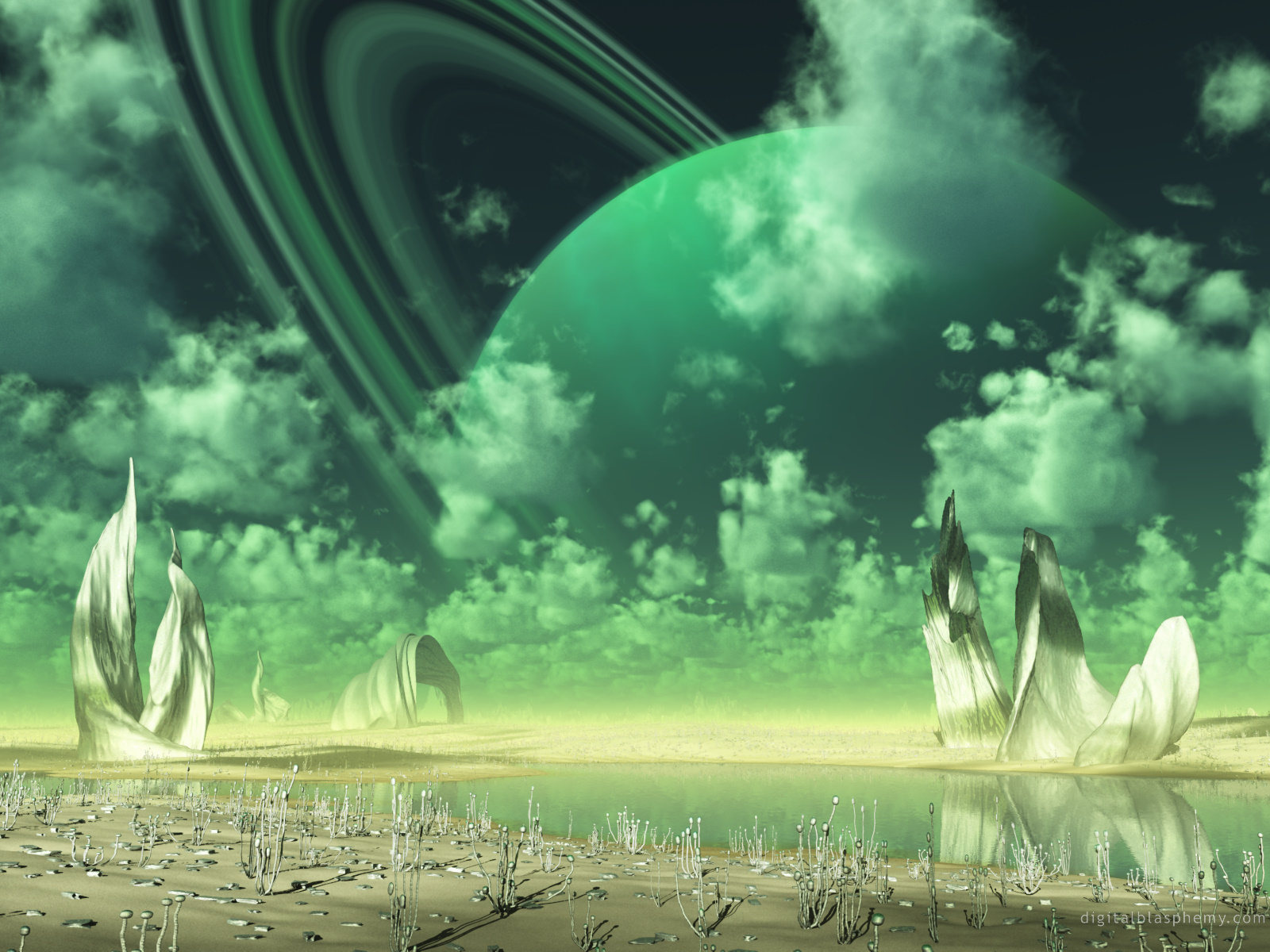
Finding Life: On Earth, on Mars, and throughout the Cosmos
 with Dr. Steven Benner with Dr. Steven Benner
Director, Foundation for Applied Molecular Evolution & The Westheimer Institute for Science and Technology — Gainesville, Florida
How do we define “life”? This fundamental question has remained largely philosophical, because it has been asked for so long, by so many, and with so few concrete conclusions. In this talk, Dr. Benner will take a different tack. He will show how laboratory studies to create a second example of life help us develop a firmer scientific understanding of what life is. The challenge of “synthetic biology” is on! Dr. Benner will discuss how we are hitchhiking on rockets, rovers, and telescopes to find life elsewhere in the Solar System, and will describe how his research team is working to develop that second example of life in laboratories here on Earth, one step at a time.
Read More >
Can Non-photosynthetic Life Be Seen From Space? — A Research Rotation Report
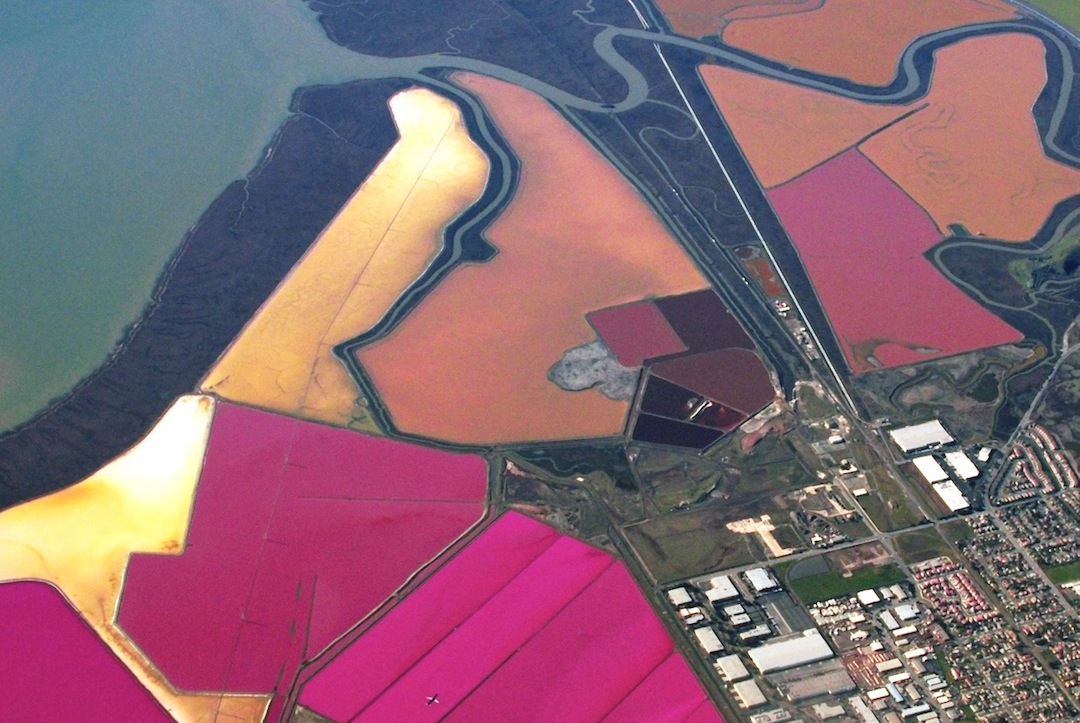 Because astrobiology requires expertise from many different fields, one of the aims of the UWAB curriculum is to train students how to collaborate with researchers in disciplines other than their own. In our Dual Title PhD program, students complete a research project outside their home discipline that allows them to learn new skills and techniques, as well as gain a broader understanding of their primary research area. In this retrospective, graduate student Eddie Schwieterman (Astronomy) describes the work on spectroscopic “biosignatures”—or signs of life—that he completed during his rotation last year at the UK Centre for Astrobiology in Scotland. Because astrobiology requires expertise from many different fields, one of the aims of the UWAB curriculum is to train students how to collaborate with researchers in disciplines other than their own. In our Dual Title PhD program, students complete a research project outside their home discipline that allows them to learn new skills and techniques, as well as gain a broader understanding of their primary research area. In this retrospective, graduate student Eddie Schwieterman (Astronomy) describes the work on spectroscopic “biosignatures”—or signs of life—that he completed during his rotation last year at the UK Centre for Astrobiology in Scotland.
Read More >
From Life in Ice to Finding Earth‘s Cousin — Our Research Highlights
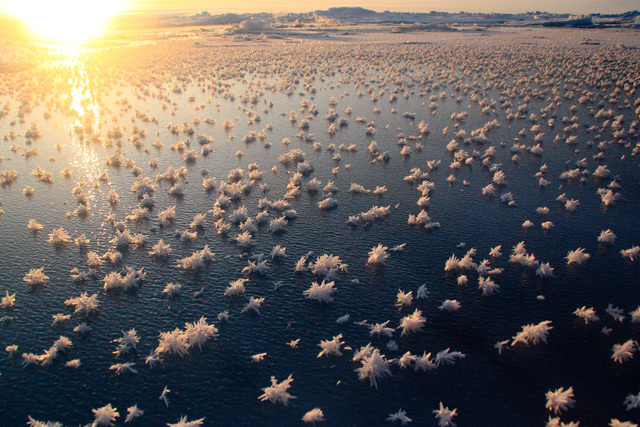
How does life survive in some of the coldest and saltiest places on Earth? How close are we to finding another planet like Earth? Our astrobiologists have been hard at work trying to answer these and other questions! Here are a handful of recent research highlights from the UWAB community.
Read More >
|
UWAB @ A Glance
- New faculty or postdoc?
- The Spring Astrobiology Colloquium is underway! The colloquium takes place Tuesdays @ 3pm in PAA A114, and features speakers from both UW and other institutions presenting on a wide range of astrobiology-related topics. See our website for the current schedule.
- The 2014 International Summer School in Astrobiology will be held June 29th-July 3rd in Santander, Spain. This year’s theme is “Origin of Life: From Monomers to Cells”. Prof. Victoria Meadows (Astronomy) will be co-directing the school and graduate student Name (DEPT) has been awarded a scholarship to attend.
- AbGradCon will be held at the University of Wisconsin-Madison on July 19-23, 2015.
- A unique Astrobiology/Cosmology symphonic concert will be held on Saturday, November 7, 2015, at 2pm at Benaroya Hall.
Congratulations!
- Congratulations to Meg Smith (ESS) who passed her Master's Exam and received a Graduate Certificate in Astrobiology.
- Congratulations to Amit Misra who received a Dual-Title PhD in Astronomy and Astrobiology last December. Amit was the 9th student to receive a Dual-Title PhD from the UW Astrobiology Program.
- UWAB graduate students Elena Amador (ESS) and Eddie Schwieterman (Astronomy) have published a paper with collaborators testing synchronous in-field life detection techniques in Mars-analog sites in Iceland. The authors were an international teams of astrobiologists consisting mostly of graduate students from a variety of backgrounds and disciplines. This project began as a series of field exercises at the 2012 NASA-Nordic Summer School “Water, Ice, and the Origin of Life”.
- UWAB graduate student Rodrigo Luger and Professor Rory Barnes have shown that many terrestrial planets in the habitable zones of low mass (M dwarf) stars could have experienced extreme stellar heating for up to 1 billion years after planet formation. The article, titled "Extreme Water Loss and Abiotic O2 Buildup on Planets Throughout the Habitable Zones of M Dwarfs," was published online ahead of print and can be accessed here.
- UWAB graduate student Rodrigo Luger, Professors Rory Barnes and Victoria Meadows, and collaborators have found that some terrestrial planets in the habitable zones of low mass stars could be the evaporated cores of small Neptune-like planets. "Habitable Evaporated Cores: Transforming Mini-Neptunes into Super-Earths in the Habitable Zones of M Dwarfs" was published in the January 2015 issue of Astrobiology. The full article can be found here.
- UWAB alumna, Eva Stüeken, and UWAB faculty member, Roger Buick's, paper on Archean alkaline lakes and the destruction of the "early soda ocean" hypothesis was featured in a "News & Views" article in the February 2015 issue of Nature Geoscience. A PDF of the article is attached. The original article can be found at http://www.sciencedirect.com/science/article/pii/S0012821X14007298
- Congratulations to Rory Barnes who won the Beatrice M. Tinsley Research Scholar Award at UT Austin!
- Congratulations to Giada Arney who received a NASA Astrobiology Early Career Collaboration Award. She is using these funds to collaborate with Dr. Shawn Domagal-Goldman at GSFC. .
Newsletter Editor-In-Chief:
Tina Swenson
Program Administrator, UWAB
tmrs@u.washington.edu
|


