The History of the Frontiers of Physics Lecture Series
The Frontiers of Physics Lecture Series (FPLS) was the product of conversations between Professor David Kaplan of the UW Physics Department and the UW Institute for Nuclear Theory and Patrick O'Hara (Ph.D. UW Department of Biochemistry 1980) in 2014. The first members of the FPLS committee were David Kaplan, Gerald Miller, Patrick O'Hara, Sanjay Reddy, and David Cobden, with kind support from Professor Blayne Heckel, then the Chair of Physics.
Founders
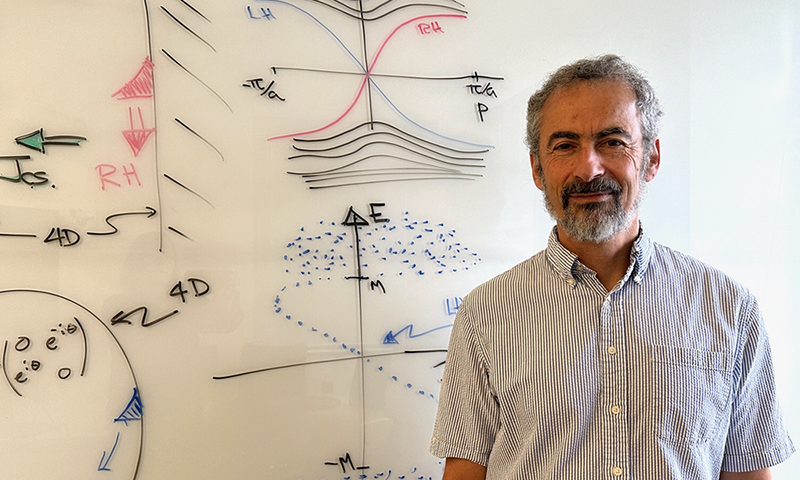
David B. Kaplan, Ph.D.
David B. Kaplan is a professor of physics and senior fellow of the Institute for Nuclear Theory (INT) at the University of Washington. He was the Director of the INT when he cofounded the Frontiers of Physics Lecture Series (FPLS). His research explores aspects of quantum field theory, applied to models of physics beyond the Standard Model, cosmology, nuclear physics, and lattice quantum chromodynamics (QCD). He is known for his work on the theory of the composite Higgs boson, the role of the strange quark in dense matter and the phenomenon of kaon condensation, developing effective field theory for nuclear interactions, the theory of electroweak baryogenesis and other aspects of particle astrophysics, and for the formulation of lattice gauge theory with chiral fermions. The latter is known as the theory of domain-wall fermions, an early example of what has later become known among condensed matter physicists as a topological insulator.
Kaplan is a Member of the National Academy of Sciences, the American Academy of Arts and Sciences, and the Washington State Academy of Sciences. He is a Fellow of the American Physical Society. He is a recipient of the Department of Energy Outstanding Junior Investigator Award, the National Science Foundation Presidential Young Investigator Award, and an Alfred P. Sloan Foundation fellowship. He was awarded the 2022 Herman Feshbach Prize in Theoretical Nuclear Physics and the 2023 Tomassoni-Chisesi Prize.

Patrick O'Hara, Ph.D.
Patrick O'Hara (PhD, UW Biochemistry, 1980) has had a lifelong interest in biology and also in physics and cosmology. He reached out to David Kaplan and the UW Physics Department in 2014 to create this lecture series focusing on the frontiers of physics. Patrick and his spouse, Caterina Randolph (Ph.D., Microbiology, 1990) provided financial support and David Kaplan provided crucial conceptual contributions to the content, form, and management of the series.
"The coming century poses enormous, unprecedented challenges to humans and other species on the planet," says O'Hara, "and telling the community the story of the cosmos is a way to inspire people to deal with those challenges. Discoveries since the late 19th century have radically altered our view of time and space. These discoveries have significance to our view of the universe every bit as radical as realizing we're revolving around the sun. They affect all of us, all of our mindsets.
Yet, science is threatened at a time when we must support and listen to scientists. "Physics is the vanguard of the sciences, and when people see the rigor and brilliance with which the study of physics is undertaken, they gain an appreciation of what science really is and what it offers us."
Past Lectures
Design of new protein functions using deep learning
Dr. David Baker
University of Washington
Design of new protein functions using deep learning
Dr. David Baker
University of Washington
Proteins mediate the critical processes of life and solved challenges modern organisms faced during evolution. Dr. David Baker will describe how his team design optimal proteins from scratch to address current-day problems not faced during evolution.
Fluid or Solid? The Physics of Shape-Shifting Materials
Dr. Chiara Daraio
Caltech
Fluid or Solid? The Physics of Shape-Shifting Materials
Dr. Chiara Daraio
Caltech
What if a material could be both solid and flow like sand? Polycatenated Architected Materials (PAMs) are new structures that defy conventional theories and enable applications ranging from safer sports gear to reconfigurable robotics. Join us to hear Dr. Daraio describe how we are redefining what’s possible in material science and engineering.
The Mystery of Dark Matter in the Universe
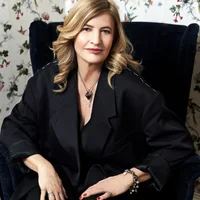
Dr. Katherine Freese
University of Texas Austin
The Mystery of Dark Matter in the Universe
Dr. Katherine Freese
University of Texas Austin
Katherine Freese will explore the mysterious 95% of the universe made up of dark matter and dark energy, tracing its discovery, current theories, and potential breakthroughs like Dark Stars.
Opening the Infrared Treasure Chest with JWST
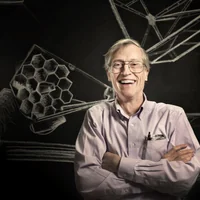
Dr. John C. Mather
NASA’s Goddard Space Flight Center
Opening the Infrared Treasure Chest with JWST
Dr. John C. Mather
NASA’s Goddard Space Flight Center
John C. Mather will discuss the discoveries made by the James Webb Space Telescope, focusing on its contributions to understanding the infrared universe.