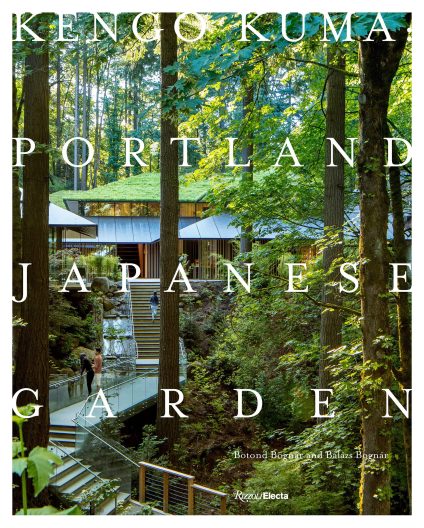
 I recently visited the Portland Japanese Garden after many years away, taking a tour in June 2019 as part of a Hardy Plant Society of Oregon study weekend. The focus was the new part of the garden, the Cultural Village, which opened in 2017, but I also made time to explore the earlier areas that date from 1967.
In June 2020, I enjoyed a keynote presentation by Stephen Bloom, the CEO of the Portland Japanese Garden as part of the virtual American Public Garden Association annual meeting. He stressed that the garden is a cultural entity and much more than just a horticultural collection. The Cultural Village, that includes a café, gallery, library, and learning center, is one expression of that vision, allowing the visitor to experience a broad range of Japanese arts and culture.
“Kengo Kuma: Portland Japanese Garden” is a substantial new book that tells the story of the Portland Japanese Garden, both old and new, that is written by Botond and Balázs Bognár, father and son Hungarian-American architects. Kengo Kuma is the noted Japanese architect and professor of architecture at the University of Tokyo who was hired to design the Cultural Village.
The authors begin with excellent recounting and appreciation of the original garden, and one of the best summarization I’ve read of both the Shinto and later Buddhist religions in Japan and their impact on Japanese art and design. “The symbiotic relationship between the new and the old alters them both and arguably for the better.”
The older site includes five different styles of Japanese garden design, an unusual trait as gardens in Japan are typically in a single style. These five designs are widely spaced, so that each has its own integrity – qualities well-captured by the images of several photographers.
This book is also the story of how the scope of the garden has grown. CEO Bloom, who was hired in 2005, brought an unusual background as a music educator and non-profit manager. He recognized it is easy to get caught up with the horticulture, the politics, the science – but the garden is really all about people. To hone this focus, he restructured the management, upgrading the Garden Director to Garden Curator, and creating a peer Curator of Culture, Art, and Education.
This made the Cultural Village possible. Kuma writes in his introduction: “I wanted to create a special architecture and place that also did not belong solely to either culture; it would be neither entirely American nor completely Japanese.” This approach is illustrated by the choice of building materials for the new buildings. The interiors are primarily the wood of Port Orford cedar (Chamaecyparis lawsoniana), an Oregon native, crafted by Portland builders, but as “a symbolic counterbalance,” the main doors were made from Japanese wood, constructed in Japan.
Another example of synergy was solving the need for a retaining wall in the courtyard to keep the steep hillside in place. The project team asked the question, why settle for a utilitarian solution? Castle walls are an ancient tradition in Japan, but new castles are rarely built and artisans who maintain existing walls are few. However, Bloom was able to find a stonemason, who was of the 15th generation of a stonemason family, and able to build a new wall in the old tradition, creating a delightful feature that serves a necessary function.
Excerpted from the Fall 2020 issue of the Arboretum Bulletin
 Jen Stearns is the owner of Urban Sprouts, a houseplant specialty nursery in Renton, WA. Her new book, “The Inspired House Plant,” aims to make your indoor space more festive by promoting a great diversity of indoor plants and teaching you to be a good plant parent. The emphasis is on foliage – so no African violets or orchids, but that doesn’t mean the selections are dull.
 Pat Roome has been a gardener for almost all of her 87 years, has lived and gardened at the same Bellevue home for 56 years, and has been a Master Gardener for 45 years. That’s a lot of experience, and she decided it was time to share her accumulated knowledge in a self-published book, “Legacy of a Passionate Gardener.” We are all the beneficiaries.
 I had the opportunity to visit the Kubota Garden in southeast Seattle last fall as part of a staff enrichment day for the University of Washington Botanic Gardens. It was my first visit in decades, a time in which I have visited many notable public gardens throughout North America and in parts of Europe. For all my travels, I had been overlooking a garden treasure very close to home.
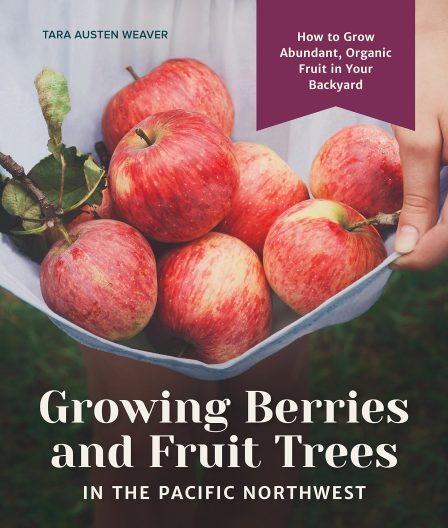 Tara Austen Weaver became smitten on growing fruit in Seattle after planting raspberries during an extended summer visit. Later, she moved here permanently to a house with nine mature fruit trees and proceeded to add 14 more plus many berry plants. Her new book, “Growing Berries and Fruit Trees in the Pacific Northwest,” is based on that experience and is an excellent choice for the beginning fruit grower in Washington, Oregon, or British Columbia, especially west of the Cascades.