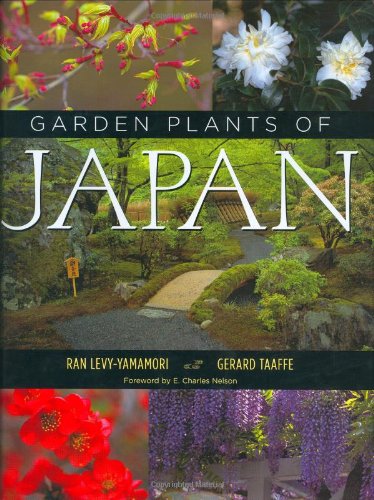
 The four main islands of the Japanese archipelago stretch north to south at the same latitudes as from Portland, Oregon to northern shore of the Gulf of California. This range has given rise to a diverse flora including many species found nowhere else. If you include all the small islands, almost one-third of the 5,600 species found in Japan are endemic.
Unlike European and North American gardeners, the Japanese have historically relied heavily on their native plants for garden plantings. The focus of “Garden Plants of Japan” is on those plants of horticultural importance, including the development of many cultivars and hybrids. Also included are some important and even iconic plants that originated in nearby China and Korea.
The authors, Ran Levy-Yamamori, from Israel, and Gerard Taaffe, who learned horticulture in Ireland, England, and Scotland, bring an international perspective to their work. Both are fluent in Japanese and had long running gardening columns in “The Japan Times”, the most circulated English language newspaper in Japan.
This encyclopedia is, at first glance, much like others on recommended garden plants. It takes reading in depth to recognize the uniqueness of its subjects. What British or America garden encyclopedia would have a whole chapter on garden mosses? In what other book are all woody plants assessed for their suitability as bonsai subjects?
Each entry has the necessary information for successful garden culture and good design choices, but also fascinating reading about traditional uses in Japanese culture. For example, Lycoris radiata (higan bana in Japanese or spider lily in English) is “rarely planted in gardens because the red flowers remind people of the dead. However this flower is frequently found growing around Shinto shrines and Buddhist temples.”
Excerpted from the Summer 2020 issue of the Arboretum Bulletin
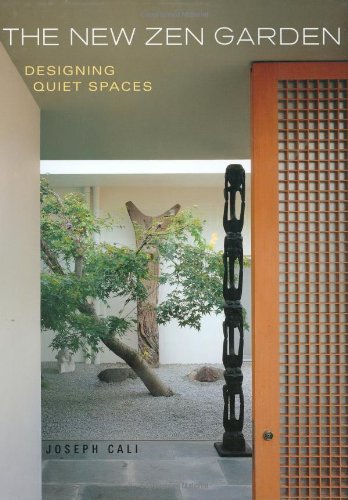 For designing your own space in a Japanese style, consider “The New Zen Garden” by Joseph Cali, an American who lived many years in Japan, using his education as an interior designer. In this book, he urges his readers to treat the garden as an extension of the home’s indoor space, and is very practical and systematic in his advice.
 Yoko Kawaguchi’s book “Japanese Zen Gardens” is excellent source of Japanese gardening history, but with a focus on the dry landscape (kare-sansui) traditions associated with Zen Buddhist temples. These sites bring the history alive with gorgeous photographs by Alex Ramsay and interpretive diagrams. While the dry landscape style may seem static to those outside Japan, Kawaguchi clearly shows an ongoing evolution, including its use for gardens not associated with temples.
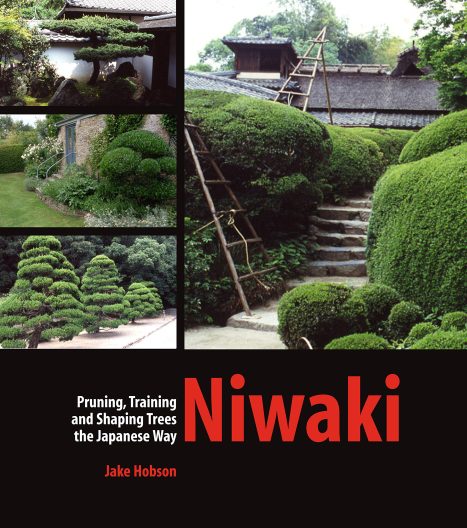 Jake Hobson is a European author who moved to Japan. Although now returned to his native England, he writes “Niwaki: Pruning, Training and Shaping Trees the Japanese Way” from his experience in Japan, including working at an Osaka nursery.
![[Wilding] cover](https://depts.washington.edu/hortlib/graphix/wilding.jpg)
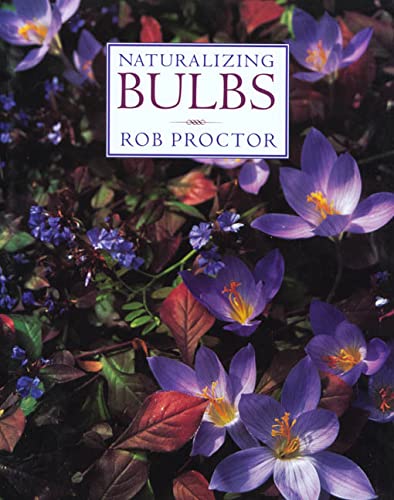 In “Naturalizing Bulbs”, Rob Proctor does not provide the usual alphabetical recital of genus, species and varieties. Instead, he begins with a series of essays on the aesthetics and practicalities of weaving bulbs into the landscape. These chapters both inspire and provide a dose of reality of what works, based on broad climate zones throughout the United States.
![[Olmsted in Seattle] cover](https://depts.washington.edu/hortlib/graphix/OlmstedinSeattlereview.jpg)
![[Oh, La La!] cover](https://depts.washington.edu/hortlib/graphix/Ohlala!.jpg)
![[The Outdoor Classroom in Practice, Ages 3-7] cover](https://depts.washington.edu/hortlib/graphix/outdoorclassroominpractice.jpg)
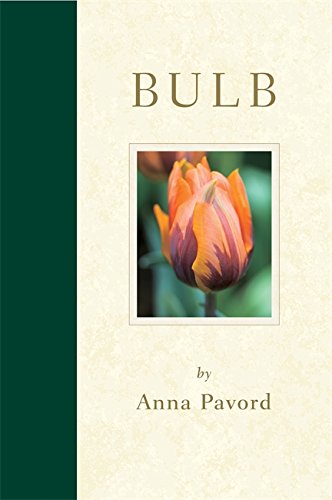 For pure opulence, nothing matches Anna Pavord’s “Bulb”, a compilation of the author’s favorites of primarily spring-flowering selections. Each is described with such heartfelt devotion that you know they must be good. She includes some newer varieties but the treasures are the older, time-tested names that just keep giving every year.