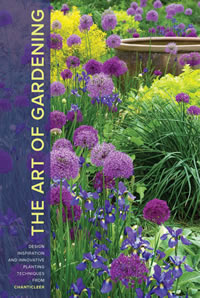
 In June 2005, I attended a conference for plant science librarians in Philadelphia. After a long day of presentations, business meetings, and visits to libraries, I wasn’t expecting much from a visit to small garden west of the city near Villanova University.
Instead, that evening at Chanticleer was one of the most magical garden experiences of my lifetime. The weather was perfect, cooled down from the already warm and humid beginning of summer. A glass of wine and a convivial group of colleagues added to the good feelings, but mostly it was the stunning garden rooms, plantings, and artwork of this most amazing garden.
Now there is an exciting new book, “The Art of Gardening”, which takes its place among the best of all garden profiles. Written by R. William Thomas and the horticultural staff of Chanticleer, this not only transports the reader to the garden, it is also an excellent source of design ideas and plant choices for your own garden. I don’t purchase many gardening books for my home library since I have daily access to the Miller Library collections, but this is one that I will get for sure.
Published in the March 2016 Leaflet Volume 3, Issue 3.
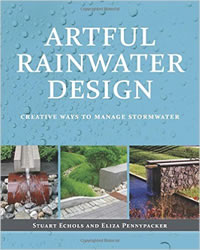
Stuart Echols and Eliza Pennypacker are on the faculty of the Department of Landscape Architecture at Penn State University. They have combined their academic interests in stormwater management and sustainable landscapes to write “Artful Rainwater Design”.
Much of the tone of the book is captured in this quotation about changing terminology: “Stormwater—a waste product and common enemy blamed for property damage through flooding and for surface water and aquatic system damage through pollutant conveyance—has morphed into rainwater, a valued natural resource beneficial to our water cycle.” Techniques, design principles, dealing with public relations, and many case studies—including several in the Pacific Northwest—make this an important book for anyone involved with any aspect of water management in urban settings.
Published in the March 2016 Leaflet for Scholars Volume 3, Issue 3.
 Edible Heirlooms is a great little book! Little only in dimensions and number of pages, as the author carefully defines his purpose and limits his scope, but within those parameters shows you how to grow an outstanding vegetable garden in the maritime Pacific Northwest.
Most important, he sees this endeavor as part of a larger picture. “The challenge for me is to somehow integrate my vegetable-growing practices into a diverse ecosystem and, if possible, enhance biodiversity.” The key for this is to use heirloom varieties that can be regrown from collected seeds. Besides the mouth-watering descriptions, you will also get an excellent history lesson.
Carol Deppe is a witty and engaging writer based in western Oregon. Her third book on vegetable gardening, The Tao of Vegetable Gardening, is particularly valuable if you are growing tomatoes in our maritime climate, hoping to maximize your output of salad greens, or passionate about seed saving. Infused throughout are her philosophies on life and gardening, and you can read about the amazing adventures of Garden Woman, while learning some great weeding techniques, too!
Chapter 3, Audubon At Home in Seattle : Gardening for Life by National Audubon Society and the Seattle Audubon Society (2003). This chapter focuses on how to design a garden that will attract birds. It also includes a plant list.
By Idaho Landscapes & Gardens, University of Idaho Extension. Gardens can be alive with songbirds and beneficial insects and many are visited by deer, rabbits, raccoons, skunks, voles, and even the occasional snake. On this page, you’ll find information to help you decide just how “wild” you’d like your garden to be and how to make it more-or less-so.
A compilation of suggested guidelines for making your landscape more wildlife friendly by PlantNative. These guidelines promote the essential habitat elements of food, cover, water, and places to raise young.
Graphs of precipitation, snowpack and water use in the Seattle area.
Statistics and links to news articles on droughts in the USA.
A list of the best books, articles and websites on Trees in Cities.