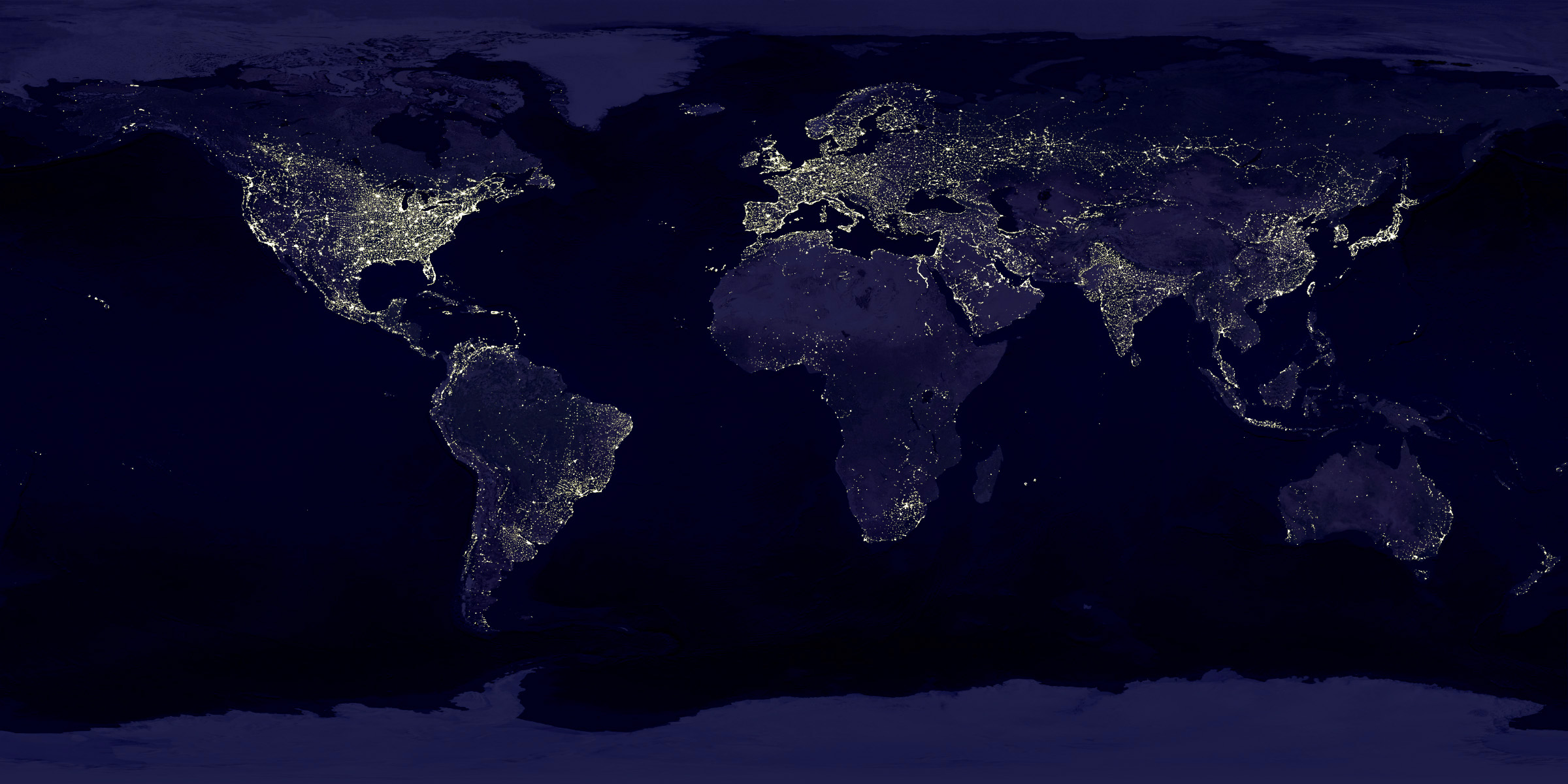
Why rely on Purchasing Power Parity adjusted GDP to assess development. Here are much more convicing measures:
Light

Locations of Friends

Air Traffice

Why rely on Purchasing Power Parity adjusted GDP to assess development. Here are much more convicing measures:
Light
Locations of Friends
Air Traffice
Looks like the coming year is going to be a tough one for the Euro…
A Tactical Short is, of course, not to be confused with my favorite book of the years: The Big Short


Of course, if you like this one, you will also enjoy his eclectic collection on the crisis:

A scary reminder how little the 2008 US banking crisis taught Europe:
This is not, in fact, an Irish bailout. It's a bailout of the European (including British) banks that lent a lot of money to the Irish government and Irish banks. If European governments want to bail out their banks, let them do so directly and openly—not via the subterfuge of country bailouts. Then they should face the music: How is it that two years after the great financial crisis, European banks make so-called systemically dangerous sovereign bets, earn nice yields, and then get bailed out again and again? Source

Japanese farmers enjoy a 777.7% tariff on imported rice. Some say its a matter of national security. The new Trans Pacific Partnership would unhinge these tariffs in exchange for unfettered Japanese car and television exports… They should talk to the Indonesian farmers, Korean farmers, or even those European farmers whose livelihoods are protected by subsidies…
IWAMIZAWA, Japan — Atsushi Kono considers it the gravest threat to his family’s farm in a century of rice-growing: a free-trade initiative that could dismantle Japan’s sky-high protective farming tariffs, finally opening up the country to cheap, foreign produce. In a move pitting Japanese farmers against the nation’s export industries, Prime Minister Naoto Kan is pushing to join negotiations for an American-backed free-trade zone called the Trans-Pacific Partnership that would span the Pacific Rim.
The new zone would give Japanese exporters of cars, televisions and other manufactured goods greater access to the United States and other markets. But a trade agreement could dismantle the generous protections that have sustained Japanese farms for years — most notably, Japan’s 777.7 percent tariff on imported rice.
Dec. 13 (Bloomberg) — World Trade Organization judgesrejected China’s complaintthat U.S.tariffs on Chinese car and light-truck tires violate global trade rules, sayingthe Obama administration “did not fail to comply with its obligations.”
President Barack Obama announced the three-year dutieson $1.8 billion of tires from Chinain September 2009, acting on a complaint by the United Steelworkers union,which represents 15,000 employees at 13 tire plants in the U.S. The unionsaid Chinese tire exports to the U.S. tripled from 2001 to 2004 to41 million and called for a cap on annual imports of 21 million.
The case was the largest so-called safeguard petitionfiled to protect U.S.producers from growing imports from China. Union leaders and Democraticlawmakers said at the time the decision was proof of Obama’s commitment tosafeguarding domestic workers and jobs.
The Chinese government said the tariffs broke WTOrules and were a “serious case of trade protectionism, which Chinaresolutely opposes.” It lodged a complaint at the Geneva-based WTO against theduties just three days after Obama announced them.
‘Major Victory’
“This is a major victory for the United States and particularly for Americanworkers and businesses,” U.S. Trade Representative Ron Kirk said in a statementfrom Washingtontoday. “This outcome demonstrates that the Obama administration is stronglycommitted to using and defending our trade remedy laws to address harm to ourworkers and industries.”
Trade complaints against China have surged since Obamabecame president — as have retaliatory steps by the Chinese government. China calls U.S.complaints against its exporters signs of protectionism while the U.S. says it’senforcing trade rules.
The two countries, the world’s largest andsecond-largest economies with $366 billion in annual two-way goods trade in2009, have clashed over access to each others’ markets for products includingsteel pipes, auto parts, poultry, movies and music. Chinaran up a $201 billion trade surplus with the U.S.in the first nine months of this year, more than the U.S. deficit with the nextseven-largest trading partners combined, according to Commerce Department data.
That gap, together with the drop in Americanmanufacturing employment and the U.S.contention that the yuan — which has gained 2.4 percent since a two-year pegto the dollar ended on June 19 — is undervalued, has made China a targetfor Congress and voter anger.
Opposition
The Tire Industry Association opposed the tariffs,saying they would create shortages and hardships for tire retailers withouthelping domestic manufacturers. Findlay, Ohio-based Cooper Tire & RubberCo., the second-biggest U.S.tiremaker, and the U.S. unitof Osaka, Japan-based Toyo Tire & Rubber Co., which has a plant in Atlanta, were alsoagainst the tariffs.
One year after the duties kicked in, they have“reversed a massive decline in domestic production and provided much-neededrelief to workers, their employers and communities from a flood of Chinesetires,” according to Leo Gerard, president of the Pittsburgh-based UnitedSteelworkers.
The tariffs are calculated as a percentage of tires’value. Obama imposed a levy of 35 percent in the first year, 30 percent in thesecond year and 25 percent in the third year, on top of the 4 percent dutyapplied to all passenger-vehicle and light-truck tires imported into the U.S. market.
Samuelson provides a dissenting opinion.
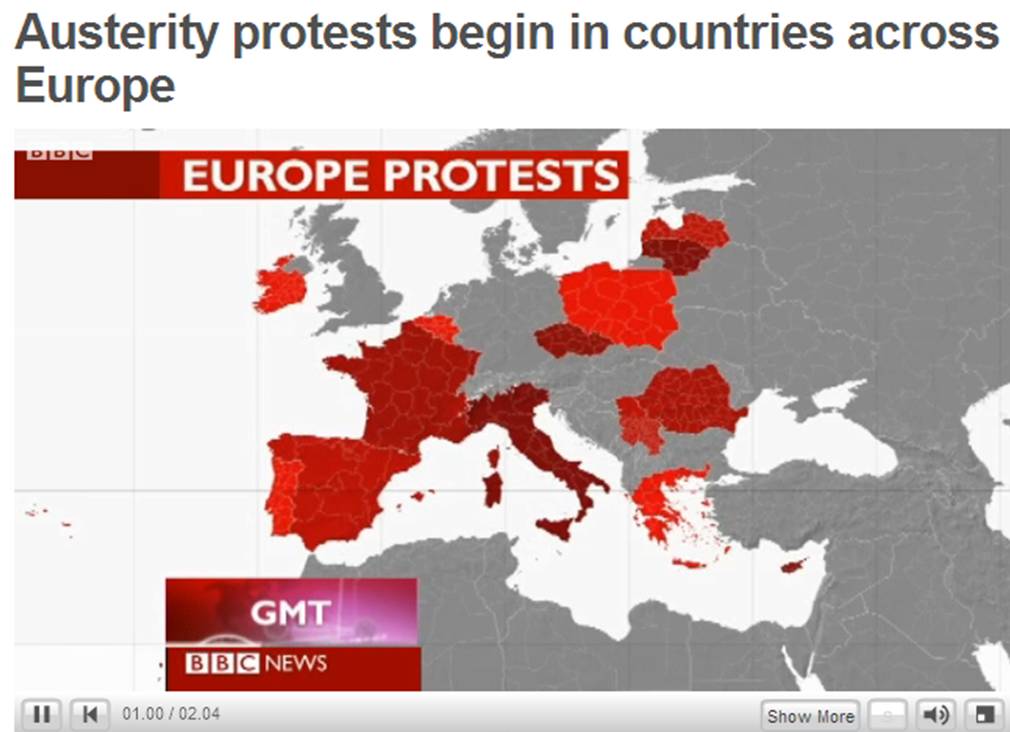
First it was panic, then hype, and now it is conventional wisdom: Portugal & Spain will have to restructure and its just a question when. How these packages turn out politically and economically will likely determine if the Euro will go into "over time" – a package for Italy…
Here is Ken Rogoff:
Now that the European Union and the International Monetary Fund have committed €67.5 billion to rescue Ireland’s troubled banks, is the eurozone’s debt crisis finally nearing a conclusion?
Unfortunately, no. In fact, we are probably only at the mid-point of the crisis. To be sure, a huge, sustained burst of growth could still cure all of Europe’s debt problems – as it would anyone’s. But that halcyon scenario looks increasingly improbable. The endgame is far more likely to entail a wave of debt write-downs, similar to the one that finally wound up the Latin American debt crisis of the 1980’s.
For starters, there are more bailouts to come, with Portugal at the top of the list. With an average growth rate of less than 1% over the past decade, and arguably the most sclerotic labor market in Europe, it is hard to see how Portugal can grow out of its massive debt burden…
Paul Krugman provides the pertinent data…
Italian 10 Year bond rates
Here is the story in an interactive chart and video from the WSJ