Farmers Ask When They Can Finally Stop Winning Trump’s Trade War

There were an estimated 775 million undernourished people in 2014 and that number increased to 815 million in 2016. In 2016 23% of children in the world are “stunted,” meaning they are too short for their age as a result of chronic malnutrition (link). But in the US food is rotting by the tons as farmers cannot afford the harvest or storage prices now that Trump’s trade policy has closed key global export markets. A good application of the “large open economy” effect where the lack of exports depress domestic prices.

The gap between US and Brazil (World) soybean prices is substantial: 
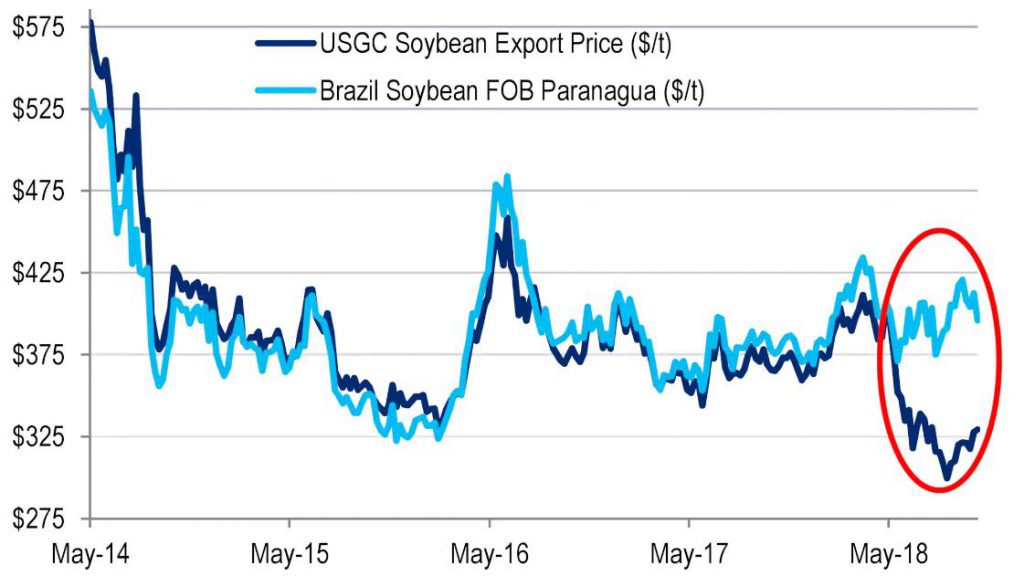
Source: CNBC.
Estimated Costs of Leaving an Economic Union (Brexit)

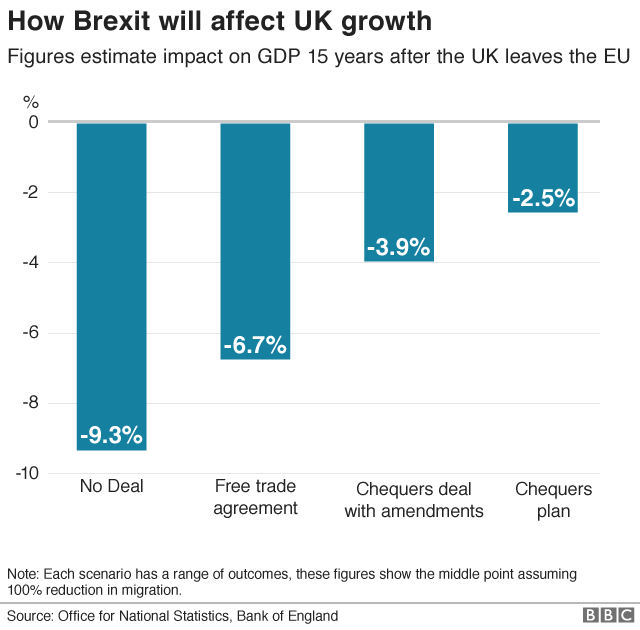
The UK’s ruling government’s very own study suggests Brexit will cost the UK between $80-$300 billion (2.5-9.3% of GDP) per year (!).  A study commissioned by the “People’s Vote campaign” (which seeks a second Brexit referendum), was conducted by the independent National Institute of Economic and Social Research (NIESR), found that the most likely cost to the UK would be 3.9% of GDP or $125 billion. The House of Commons Treasury Committee requested that the Bank of England published an analysis of the effects of Brexit; the Bank of England Report published today suggested the impact could exceed $300 billion with -10% of GDP per year

Correlate “the different levels of integration” we learned bout in class with the “no deal” and “FTA” Brexit options in the figure below to explain the size and origins of the losses.GDP growth scenario

Source1, Source2, Source3

Former Fed Chair Comments On Trump’s Populism

In a recent BBC interview former Fed Chair Al Greenspan suggested that “The populism of Donald Trump is a “shout of pain” but it won’t improve the living standards of ordinary Americans.” Greenspan led the US Central Bank from 1987 to 2006, said Mr Trump’s trade war with China would hurt US workers. The BBC comments that “since 2017, Mr Trump has left or sought to renegotiate international trade deals and imposed steep import tariffs on goods like steel. He says he wants to stop US jobs being lost to countries with lower labour costs, like Mexico or China, while addressing decades-old trade imbalances.” 

Interestingly Greenspan compared the president’s approach to that of populist leaders in Latin America in the late 19th and early 20th centuries. “We have one major so-called leader saying ‘I feel your pain and I am here to help you’,” he told BBC Radio 4. “People like the sound of it but the facts are he is lowering the standard of living of the average American.”

How do Greenspan’s comments relate to the policies that eventually require expenditure switching and expenditure reductions?

300 Foot Plastic Bags

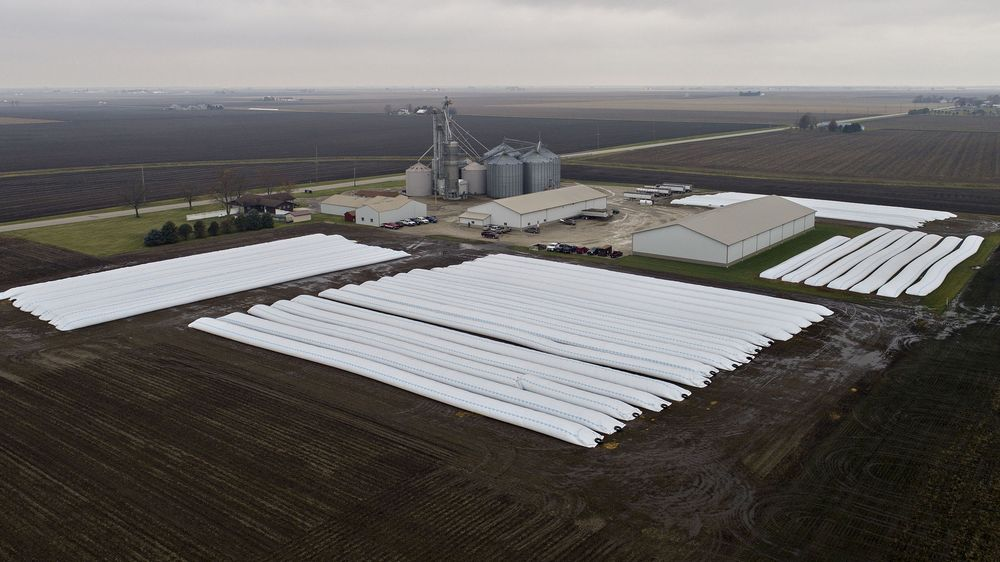
Who knew there was a market for these? China’s retaliatory soybean tariffs have created a market for huge plastic bags to store soybeans as farmers have run out of existing storage capacity. As soybean prices per bushel have fallen by about 20%, farmers have opted to increase storage rather than sell. Here is the catch: the beans in these bags are only good for about 4 months. Will there be a resolution of the trade war before March 2019? China probably knows about the storage life of these bags…

Who Pays For Steel Tariffs?

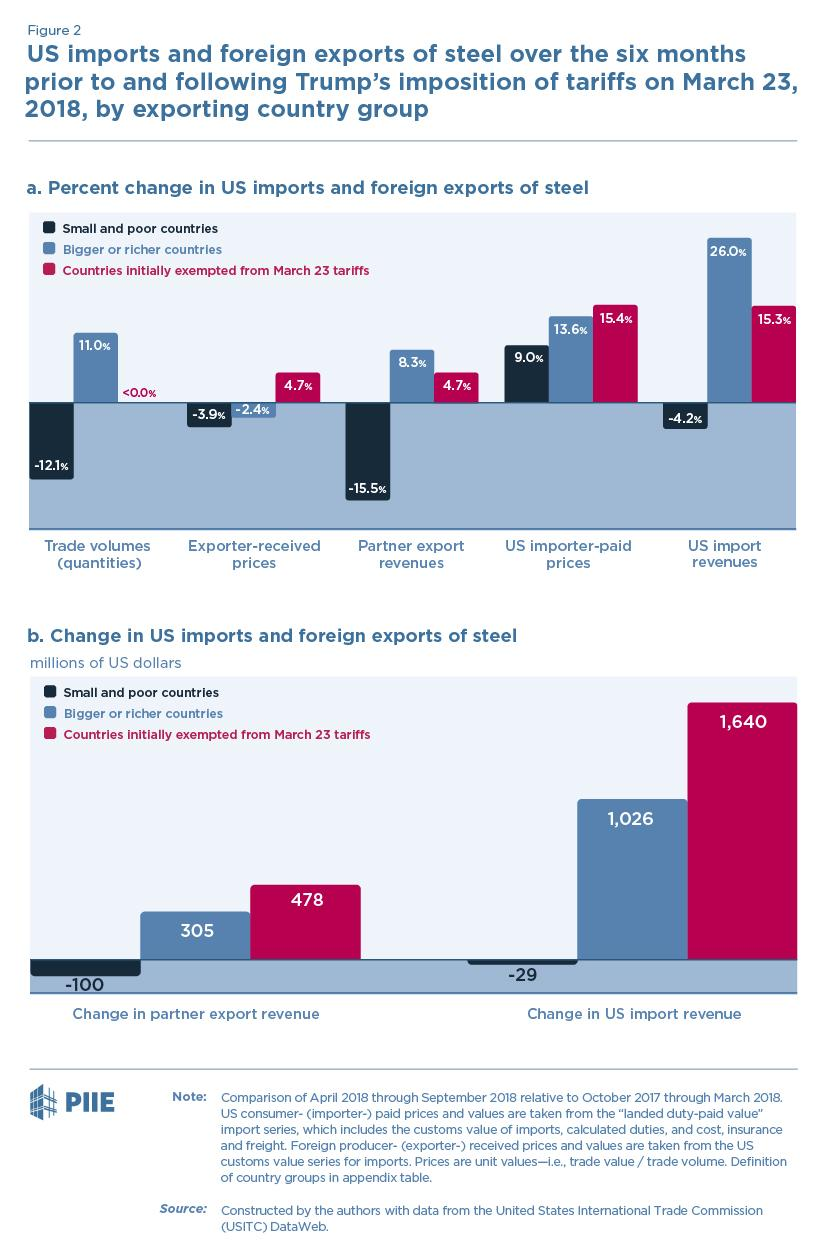
Chad Brown and coauthors examine how US steel imports changed from 6 months before the 25% Trump Tariffs to 6 months after: They find that “because of strong US economic growth, total US imports of steel actually increased by 2.2 percent in the first full six-month period after Trump imposed 25 percent tariffs on March 23.”

How could this be explained using the partial equilibrium tariff graph?

Interestingly, US importers did not pay the full 25% increase in prices. Exporters and importers shared the tariff burden just about equitably as prices paid by importers rose only 14%. Clearly the world price is not perfectly elastic and seems to have declined some in response to tariffs. Why? Figure 1 Percent change in US imports and foreign exports of steel over the six months prior to and following Trump’s imposition of tariffs on March 23, 2018

Trump exempted some countries from tariffs during April and May (Argentina, Brazil, Canada, Mexico, and the European Union) as other countries faced the 25% tariff. This produced nothing other than a redistribution of imports – towards exempt countries. Small and poor countries saw steel export volumes and export prices plummet, while exempt countries saw no change in exports and even an increase in prices and revenues.