When and how will the Fed and other central banks wind down
their mammoth asset purchases, also known as quantitative easing (QE)? Since the
start of the financial crisis, the Fed, the European Central Bank, the Bank of
England, and the Bank of Japan have used QE to inject more than $4 trillion of
additional liquidity into their economies. When these programs end, governments,
some emerging markets, and some corporations could be vulnerable. They need to
prepare.
- Research by the McKinsey Global Institute suggests that
lower interest rates saved the US
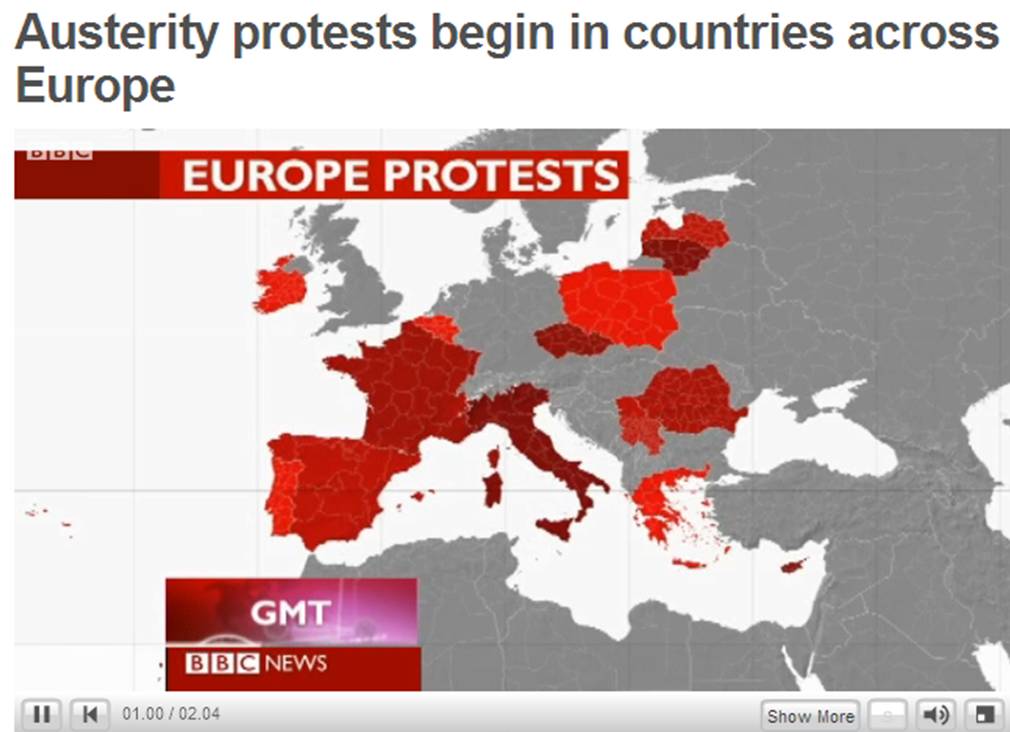
and European governments nearly $1.6 trillion from 2007 to 2012. This windfall
allowed higher government spending and less austerity. If interest rates were
to return to 2007 levels, interest payments on government debt could rise by 20%,
other things being equal. Governments in the US and the eurozone are
particularly vulnerable as interest rates
rise, governments will need to determine whether higher tax revenue or stricter
austerity measures will be required to offset the increase in debt-service
costs. - Likewise, QE saved firms $710
billion from lower debt-service payments, thus ultra-low interest rates boosted profits by about 5% in the US
and the UK,
and by 3% in the eurozone. This source of profit growth will disappear as
interest rates rise, and some firms will need to reconsider business models –
for example, private equity – that rely on cheap capital. - Emerging economies have also benefited from access to cheap
capital. Foreign investors’ purchases of emerging-market sovereign and
corporate bonds almost tripled from 2009 to 2012, reaching $264 billion. As QE programs end, emerging-market countries could see an outflow
of capital. - By contrast, households in the US
and Europe lost $630 billion in net interest
income as a result of QE. This hurt older households that have significant
interest-bearing assets, while benefiting younger households that are net
borrowers. - QE may have also generated NEW asset-price bubbles in
some sectors, especially real estate. The International
Monetary Fund noted in 2013 that there were already “signs of overheating in
real-estate markets” in Europe, Canada,
and some emerging-market economies.
Of course, QE and ultra-low interest rates served a purpose.
If central banks had not acted decisively to inject liquidity into their
economies, the world could have faced a much worse outcome. Economic activity
and business profits would have been lower, and government deficits would have
been higher. When monetary support is finally withdrawn, this will be an
indicator of the economic recovery’s ability to withstand higher interest rates.
Nevertheless, all players need to understand how the end of QE
will affect them. After more than five years, QE has arguably entrenched
expectations for continued low or even negative real interest rates – acting
more like addictive painkillers than powerful antibiotics, as one commentator
has put it. Governments, companies, investors, and individuals all need to
shake off complacency and take a more disciplined approach to borrowing and
lending to prepare for the end – or continuation – of QE.