The Great Divide

The divide between political rhetoric and economic reality in Europe is growing. Former IMF chief economist Simon Johnson along with Peter Boone have the summary:


As usual, Nouriel Roubini tells us how deep Europe could side in all different dimensions. (Remember, Roubini earned only hearty laughs when he predicted the 2008 financial crisis in 12 easy steps too scary for anyone to take seriously – then it all came true, just worse than even he had predicted…

Here is the update on Euro Bond Spreads. Looks like markets are getting quite confident about default – then why is the Euro so strong? – Because US interest rates are zero… Try Interest Parity…

European Bond Spreads, Sept 15, 2010 


The Demise of the Dollar (Euro=$1.45)

This may just be the beginning of a long line of posts on the faltering fortunes of the dollar…


In a wonderful application of interest arbitrage, the dollar has been falling ever since deleveraging ended earlier this year. Today's WSJ outlines the key reasons

– risk appetite is up as people bet on the end of the global recession. 

– investors are leaving the safe heaven of US treasury bills that they bought during the crisis

– where is the money going? China, Japan, Brazil of Europe

But wait there is more: deleveraging and changing risk perceptions are just one part of the interest arbitrage equation. On top of this 

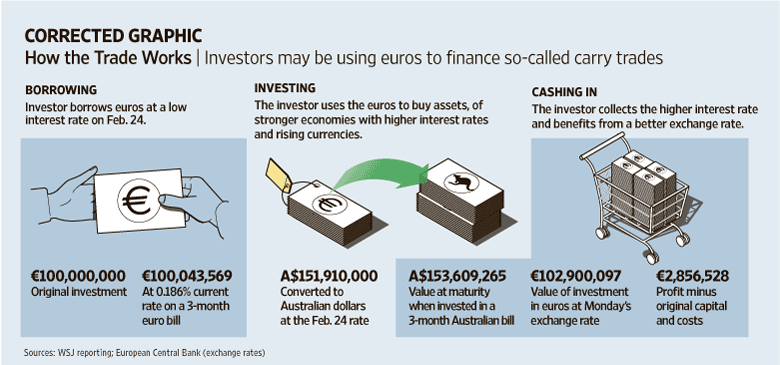
"the dollar is now cheaper to borrow then the yen. Low US interest rates and easing of credit markets

have caused a reversal for the first time in 16 years."

These two reports feed straight into the interest arbitrage equation to explain the falling dollar. 

Here is the puzzle: the same day the dollar hit its low, gold topped the $1000/oz sound barrier. Usually gold is a safe haven, just like the dollar was during the crisis. Why the divergence?  
 

Thawing Dollars

There is some evidence that international financial markets are thawing.

– The "Ted Spread" (the difference between interest rates on interbank loans and U.S. goverment debt) is declining. The financial crisis had driven up the Ted Spread as investors cared most about the return of their investment and the panic induced a flight to quality

So much for the good news.

The 10% decline of the dollar in the past 5 weeks signals that carry trade is back again in full force since it weakens the target currency (in this case the dollar) when investors sell domestic currency to purchase foreign assets (The Fed also provides an assessment of carry trading). As recently as 6 months ago, carry trades unraveled at lightening speed (driving up the Ted Spread) as financial institutions were force to deleverage to meet their capital requirements.