Section 301 of the U.S. Trade Act of 1974 authorizes the President to take all appropriate action, including retaliation, to obtain the removal of any act, policy, or practice of a foreign government that violates an international trade agreement or is unjustified, unreasonable, or discriminatory, and that burdens or restricts U.S. commerce. If the US Trade Representative initiates a Section 301 investigation, it must seek to negotiate a settlement with the foreign country in the form of compensation or elimination of the trade barrier.
For cases involving trade agreements, the USTR is required to request formal dispute proceedings as provided by the trade agreements under Section 301. The law does not require that the U.S. government wait until it receives authorization from the WTO to take enforcement actions.
In the 1990s, Section 301 ws challenged by a number of Members of the WTO as contrary to the WTO Agreement.[8] The WTO ruled that that “taking any such actions against other WTO member countries without first securing approval under the WTO Understanding on Rules and Procedures Governing the Settlement of Disputes is, itself, a violation of the WTO Agreement.”
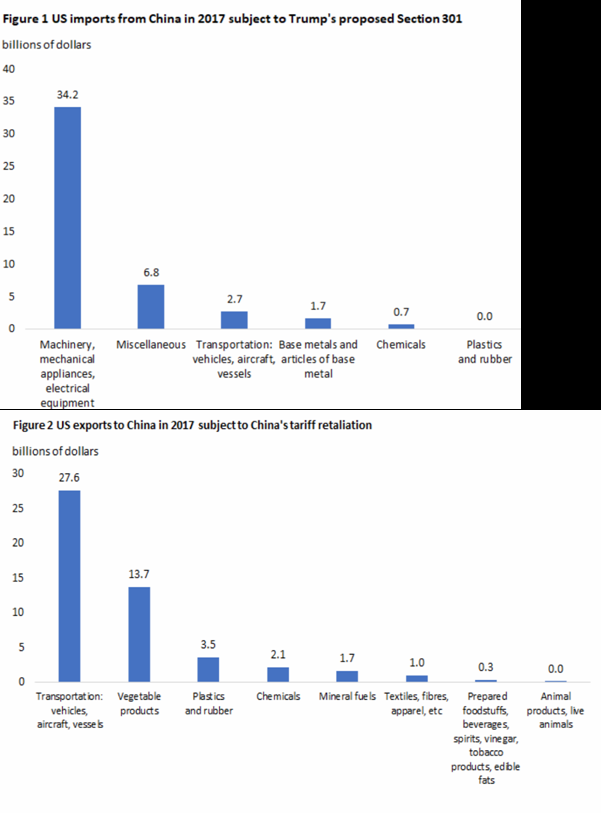
The most recent Section 301 investigation involved Chinese intellectual property rights theft. Here is the report. It was the basis for President Trumps $60 billion tariff. Chad Brown does the analysis and characterizes the retaliation.