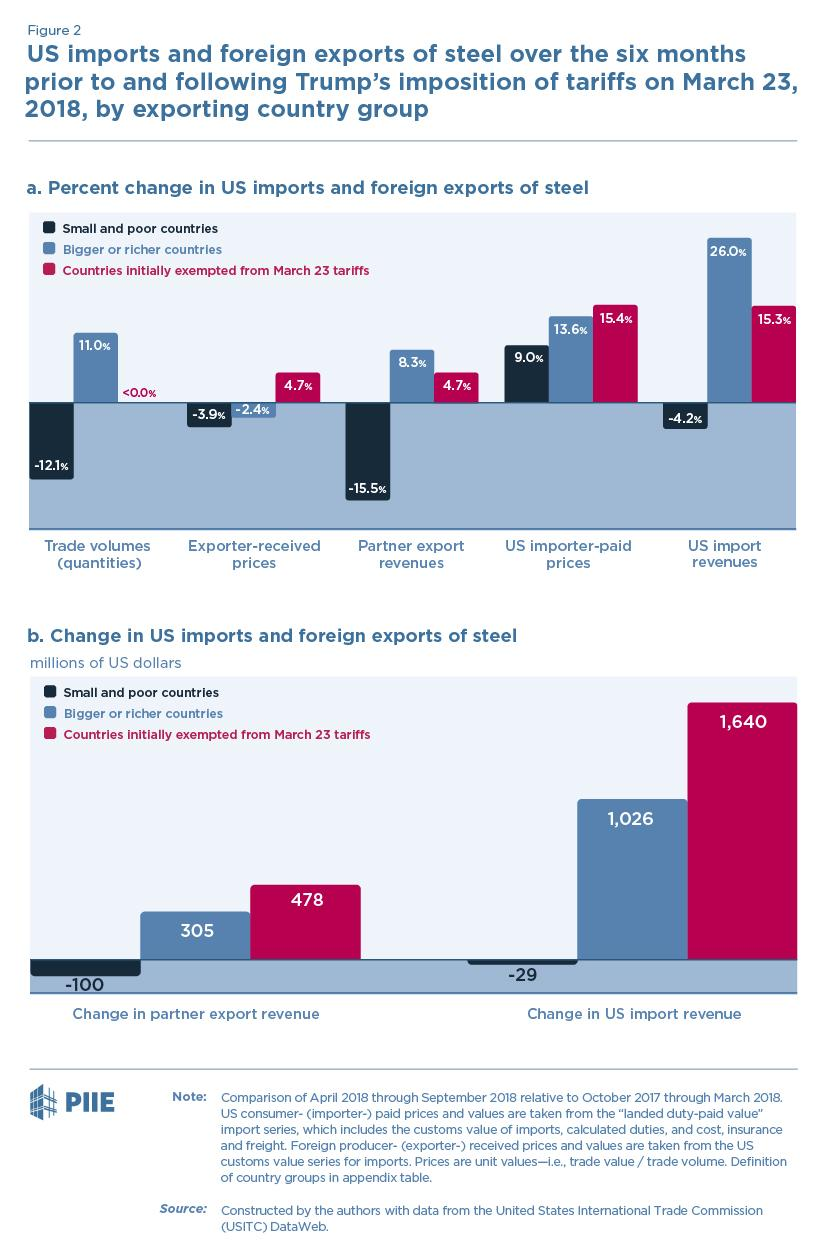
Chad Brown and coauthors examine how US steel imports changed from 6 months before the 25% Trump Tariffs to 6 months after: They find that “because of strong US economic growth, total US imports of steel actually increased by 2.2 percent in the first full six-month period after Trump imposed 25 percent tariffs on March 23.”
How could this be explained using the partial equilibrium tariff graph?
Interestingly, US importers did not pay the full 25% increase in prices. Exporters and importers shared the tariff burden just about equitably as prices paid by importers rose only 14%. Clearly the world price is not perfectly elastic and seems to have declined some in response to tariffs. Why? 
Trump exempted some countries from tariffs during April and May (Argentina, Brazil, Canada, Mexico, and the European Union) as other countries faced the 25% tariff. This produced nothing other than a redistribution of imports – towards exempt countries. Small and poor countries saw steel export volumes and export prices plummet, while exempt countries saw no change in exports and even an increase in prices and revenues.