College of the Environment | University of Washington Block W Logo
div class="mktoText text linkBarText" id="linkBarText54953c19-b04c-42e5-a447-6ded2c7bd9dd" mktoname="Link Bar Links"> Library Home | Catalog | Calendar | College Home
VOLUME 10, ISSUE 12 | December 2023
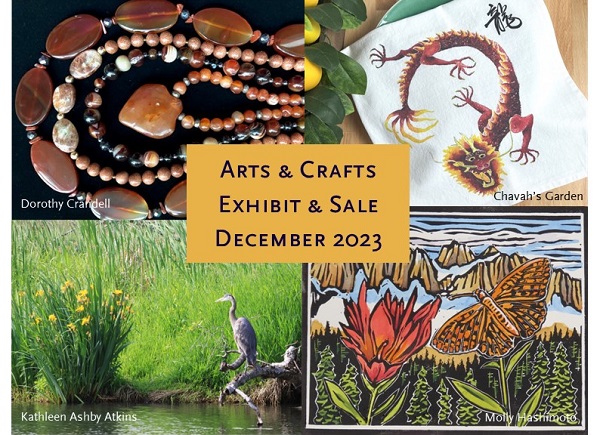
Necklaces, cards, books, mittens, and more
We are delighted to announce that four local artisans are bringing their work to the Miller Library for our December group show and sale:

Chavah’s Garden ~ tea towels and kitchenware
Dorothy Crandell ~ natural stone bead necklaces
Molly Hashimoto ~ paintings, prints and cards
Kathleen Ashby Atkins ~ photography and knitwear

Meet the artists Monday, December 4 from 5 to 7 p.m. in the library.
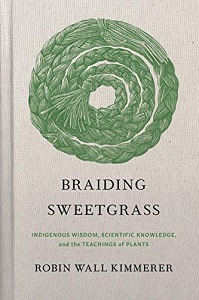
Braiding Sweetgrass by Robin Wall Kimmerer
Recommended by Ashlyn Higareda
In Braiding Sweetgrass  Robin Wall Kimmerer unfolds a mesmerizing journey through the convergence of nature, Indigenous wisdom, and personal reflection. Kimmerer's poetic prose beautifully weaves a tapestry of stories, imparting ecological wisdom that transcends its pages and provides a transformative experience for its readers.

In a world rushing with fast-paced living, the book serves as a gentle reminder to slow down, observe, and welcome nature's wisdom. It goes beyond being a mere book, extending an invitation to explore our intricate ties with our surroundings, all while challenging the confines of Western science. Rather than outright dismissing ideologies rooted in Western science, it encourages a thoughtful reconsideration of alternative ways of knowing, inviting us to embrace a multiplicity of perspectives in our interaction with the world. 

As a botanist and member of the Citizen Potawatomi Nation, Kimmerer guides readers to perceive the world through reciprocal relationships with the land, seamlessly weaving in the narratives and wisdom of her ancestors. Her narrative gracefully dances between scientific understanding and Indigenous perspectives, creating a harmonious blend that resonates deeply. Each chapter felt like a meditative stroll through nature, with Kimmerer as a wise companion, offering insights that inspired awe, reverence, and a profound love for the world and its non-human inhabitants.

Through such thoughtful and skilled storytelling, Kimmerer prompts reflection on our connection to the environment and fosters a sense of responsibility and gratitude.  Braiding Sweetgrass is such an enchanting, enlightening, and inspiring book — a must-read. These stories are not just tales but offerings, gifts that linger in memory, cherished and unforgettable.

Editor's note: for more on this title, see Priscilla Grundy's review in the March 2021 Leaflet.
Ask a librarian: When will my strawberry tree fruit?
Researched by Corinne Kennedy

book image
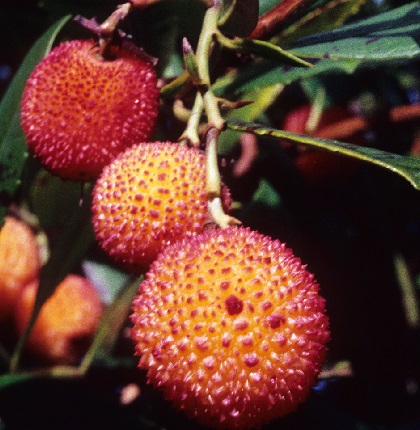
Question: My strawberry tree (Arbutus unedo) is 8 years old, and very lovely, but the hummingbirds and bees don’t seem to find it. The tree has had some blossoms over the years, but only 1 “strawberry.” Now it has many blossoms. Can I help it by hand-pollinating?

I first saw Arbutus unedo growing in Greece while on a Christmas holiday hiking trip. So I returned home with the dream of a real live tree, self-decorated with red, yellow and orange baubles! My tree is lovely and green as I look out the window, but I may need to hang the decorations. Should I be out there now with a paintbrush and hope for strawberries next Christmas?

Answer: There are several factors that affect the fruiting of  Arbutus unedo. You don’t mention a cultivar name, so I’m assuming that your plant is the species, Arbutus unedo, which is usually propagated from seeds. Seedling plants are variable, unlike cultivars, which are grown from cuttings (hence, genetic clones). It’s likely that some seed-grown plants do not fruit reliably. An Australian article notes that “vegetatively propagated plants will fruit faster and more predictably than seedlings.”

Another factor is that the flowers and ripened fruits appear on the plant at the same time. Your plant has flowered sparsely until this year, so it’s possible that fruit will form in the next several months, ripening next fall.

The University of Washington Botanic Gardens blog has an entry about this plant: “The flowers are in clusters of tiny white bells (similar to its related genera Arctostaphylos,  Pieris, and  Enkianthus) and are present October to December while the 1” round fruits of the previous year’s pollination are ripening on the tree. The fruits take 10-12 months to ripen; from green in the spring they begin to turn yellow then orange through summer then ripen to a bright red from October to December at which time they are edible.”

Local non-profit Great Plant Picks indicates that a protected location is also a factor: “Foliage and flowers may be damaged in unusually cold winters, but it will recover in the spring. Plants in protected locations are more reliable fruit producers.” Other sources stress the need for a warm, relatively sunny location. Unfortunately, strawberry tree doesn’t transplant well, so if yours is planted in a shady location, transplanting it is probably not an option.

Even though Arbutus unedo is self-fertile, fruiting is greatly improved by planting more than one tree. On my own walks in Seattle parks, I’ve noticed that strawberry trees planted in groups of two or more seem to fruit prolifically.

Strawberry tree is attractive to many forms of wildlife but is pollinated by bees. If your garden lacks other plants that attract bees, I recommend adding bee-pollinated shrubs, perennials and/or annuals that flower earlier in the year to increase the chances that bees will remain there in the fall.

Finally, does your site have what  Arbutus unedo needs to grow well, remain healthy, and develop fruit? “This versatile shrub tolerates a wide variety of soil conditions, including sand and clay, but it must have a well-drained location.” (Great Plant Picks). It’s drought tolerant when established but may be damaged if not given supplemental water during the very hot and dry conditions the Pacific Northwest has experienced, especially in the last several years. Even using a high nitrogen fertilizer will affect fruiting, promoting leaf and stem growth instead of flowers and fruit.

Please support the library
Thanks to community support, the Miller Library offers the best in horticultural reference assistance and outreach. You can also donate gently-used gardening books through February 29 for our April 5-6 book sale. We appreciate your generosity!
Digital resources
   UWBG pine cone logo
detail from Su Propio Cultivo  Miller Library book and flower logo
New to the library
cover image    cover image    cover image
cover image     cover image    cover image
cover image   cover image   cover image
cover image    cover image
cover image    cover image    cover image
cover image    cover image
cover image    cover image
Donate to the Miller Library Fund    Miller_LibraryLogo293px.gif
  Facebook    Twitter    Instagram     Pinterest
Contact Us   |   Privacy   |   Terms
© 2023 University of Washington Botanic Gardens