“The language of birds is very ancient, and, like other ancient modes of speech, very elliptical: little is said, but much is meant and understood.”
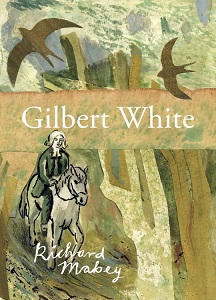
With this quotation from a letter by Gilbert White, Richard Mabey opened this biography when it was first published in 1986. It offers a nice glimpse into White’s ability to observe and understand nature.
This new edition, with a new foreword but the same opening quotation, brings back to print the man whose single volume,
The Natural History of Selborne, helped revise the public view of nature. Published in 1789,
Selborne arrived as the rational focus on a well-ordered universe was beginning to clash with Romanticism’s view of nature as wild and alternately terrifying and inspiring. White instead focused on careful and often affectionate observation of natural detail, placed carefully in the setting of an English village. The book marked the beginning of nature writing as we know it.
Gilbert White spent many years recording his observations around the rural village of Selborne in Hampshire. A graduate of Oxford, when that degree alone qualified him to be ordained as clergy, he spent his life in the village where he was born. Mabey records his occasional adventures farther afield in England, usually accompanied by “coach sickness.” He never left England. On a few occasions he acquired a short-term position as curate in a nearby parish, but whenever a permanent place was available, he made little effort to obtain it. He lived on a small inheritance, without paid employment, in the family house in Selborne.
Part of the pleasure of Mabey’s biography is his description, via White’s notes, of Selborne and its neighborhood. The dominating feature is a huge hill Mabey calls “a louring whaleback” that rises 300 feet above street level.
In 1788 the village had 686 inhabitants and was almost totally isolated from the surrounding countryside. White was fascinated by its “hollow lanes,” roads had had sunk below their surroundings due to centuries of wear on the chalk soil beneath them, sometimes by sixteen or eighteen feet. He wrote they “exhibit very grotesque and wild appearances” due to “tangled roots that are twisted among the strata” and from the “torrents rushing down,” especially when frozen. “These rugged gloomy scenes affright the ladies when they peep down into them from the paths above” and “make timid horsemen shudder” (p. 26).
White was also an enthusiastic gardener. He recorded his activities in what he called “The Gardener’s Kalendar.”
(The Garden Diary of Dr. Darwin,
reviewed in the
Leaflet in May
describes a similar, later record by an English amateur gardener.) White planted and tended flowers, often in borders and climbing vines, but he mainly devoted himself to vegetables – more than forty varieties: “including artichokes, endives, mustard and cress, white broccoli, skirret and scorzoner [both root vegetables], marrow fat peas, ‘a remarkable long leek,’ squashes, cucumbers, all manner of lettuces,” plus onions He experimented with maize, wild rice, potatoes – even sea kale (p. 55). The Kalendar records it all.
In 1787, after much delay and prodding from friends and relatives to finish, White sent the first sections of
The Natural History of Selborne to the printers He chose an epistolary form. Epistolary novels like Samuel Richardson’s
Pamela were extremely popular in the 18th century. White used many letters he had written to friends, but he also created letters he had never sent, and he edited often, cutting some passages, moving parts of others so similar topics appeared together, and added new material. After a flurry of editing and proofreading, with help from friends, at last his book was published in 1789. It received positive reviews, but only in the 1830s, after White’s death, did its sales soar, and its fame make it the quintessential volume of English rural life.
White never married, but he regularly entertained friends and family, including multiple nieces and nephews. After
Selborne’s publication he continued keeping his journal and welcoming visitors to his home until his death a few years later in 1793.
In this winsome account of a quiet life, Mabey shows how
The Natural History of Selborne emerged from the ever-curious mind of White and the natural and intellectual world around him.