
MODULE 6: Nutrition and the Young Infant
Intro
Nutrient Needs During the First Two Months of Life
Changes to Nutrient Needs After Two Months of Life
Diet-related Concerns
Considerations in the Nutrition Assessment
Diet-related Concerns
Introduction of complementary foods – preliminary discussions with family
Recommendations for infant feeding generally support exclusive breastfeeding for the first 6 months of life and breastfeeding supplemented by complementary foods at least through 12 months of age. (AAP, 2012; Academy, 2015) It is important to look at the infant’s developmental readiness for solid foods; some infants show signs of readiness as early as 4 months of age, while others may not be ready until after 6 months of age. Complementary foods (including adding cereal to infants' bottles) should not be introduced before 4 months of age. Introduction of solids too early has been linked to childhood obesity. For most infants, complementary foods should be introduced at or by 6 months of age in order to aid in the development of feeding and eating skills. (AAP, 2018; Holt et al, 2011).
Evidence-based guidelines for the introduction of complementary foods have been published. These guidelines also include a summary of physical and eating skills, hunger and fullness cues, and appropriate food textures for children 0 to 24 months. (CDC, 2018)
developmental readiness
introduction of complementary foods
introduction of milk
use of honey (botulism)
continued development of a healthy feeding relationship
Understanding infant development, relative to feeding skills can help the dietitian to make a more complete assessment of an infant’s nutrition status and to develop effective interventions, when there are nutrition-related problems.
A discussion of an infant’s cues that shows she is developmentally ready to begin solid foods can also be helpful to families. It will help them understand the rationale behind the recommendations and make plans for their infant’s transition to solid foods. This is discussed in greater detail in Module 7.
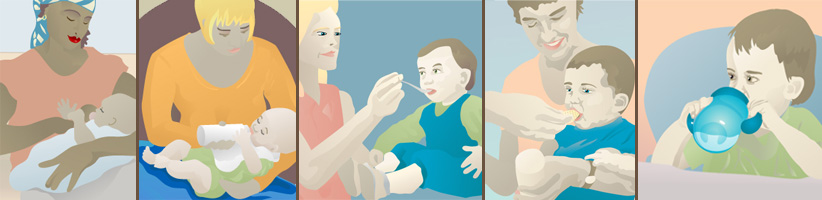
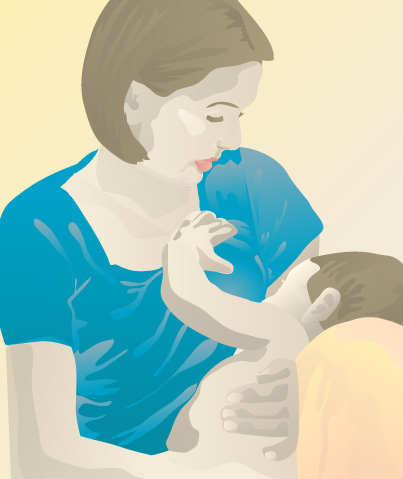
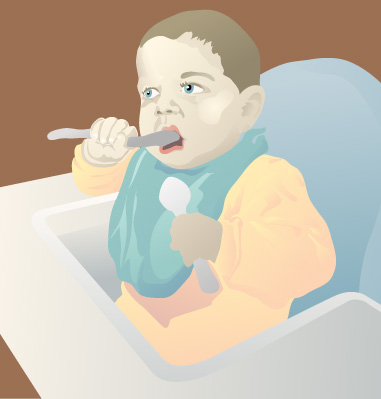
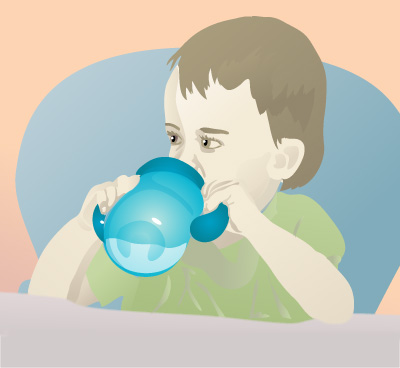
A summary of developmental stages related to feeding is found in Bright Futures in Practice: Nutrition. The ages outlined below are based on an infant’s developmental age, and may not match her chronologic age.
What can I expect my baby to do as he grows?
 |
From birth to 1 month of age, your baby will:
|
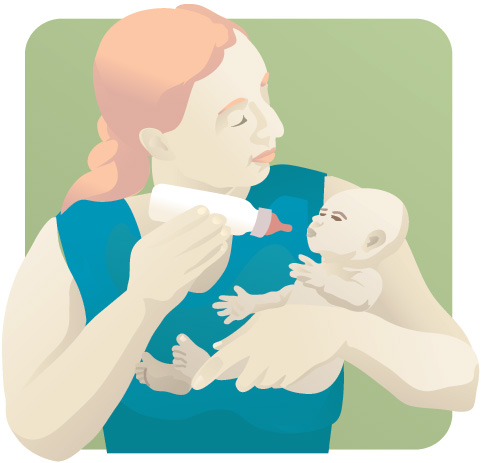 |
At about 3 to 4 months of age, your baby will:
|
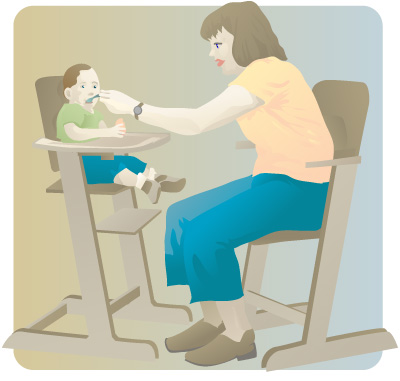 |
At 4 to 6 months of age, your baby will:
|
 |
At 7 to 9 months of age, your baby will:
|
 |
At 9 to 11 months of age, your baby will:
|
Resources related to the introduction of complementary foods are listed in the resource list.
Introduction of complementary foods
It is generally recommended that single-ingredient foods be introduced first, and that they be started one at a time, at 3- to 5-day intervals. Many pediatricians will advise starting with iron-fortified cereal or vegetales prior to the introduction of fruits to avoid the infant being exposed to sweeter flavors and/or to provide a source of iron, however there is insufficient evidence to support any specific order for the introduction of complementary foods to infants. (DiMaggio et al, 2017). Meat and fortified foods provide many of the nutrients for which young toddlers are often at-risk of deficiency, in particular iron and zinc. (CDC, 2018) Exposure to a variety of flavors early in life may help a child to accept a variety of new foods later in childhood.
Unmodified cow’s milk is inappropriate for infants. The curd that is produced is difficult to digest, less fat is absorbed than with human milk or commercial infant formula, and the renal solute load is higher and may pose a risk for young infants. Whole fat cow’s milk can be introduced beginning at 1 year of age and reduced-fat (2%), low-fat (1%), and fat-free (skim) milk should be avoided during the first two years of life. (Holt et al, 2011)
Goat’s milk is not appropriate for infants. Its protein content is higher than human milk and infant formula, which puts an infant at risk for dehydration, and has a higher renal solute load. It is also deficient in folic acid and vitamin B6.
Honey has been implicated as a source of spores that can cause botulism in infants. For this reason, honey (or foods that contain honey, including many graham crackers) should not be offered to infants under 1 year of age. There has been some controversy over the presence of botulism spores in corn syrup. No cases of botulism have been proven to be related to the consumption of light or dark corn syrup, but manufacturers are unable to ensure that these products are free of spores. (Carillo-Marquez, 2016)
Continued development of a healthy feeding relationship
The introduction of complementary food provides more opportunities for families to help their infants develop healthy relationships with food and eating. Ellyn Satter describes the division of responsibility in this way: It is the parent’s responsibility to offer developmentally-appropriate foods; it is the child’s (or infant’s) responsibility to control how much and what to eat. At each stage, this keeps the child in charge of the feeding/eating process and promotes a sense of trust between parent and child. (Satter, 2000) This is discussed in greater detail in Module 7 - MNT for Specific Conditions - Infants.
 Read
more about the development of child-caregiver interactions.
Read
more about the development of child-caregiver interactions.Insert new interactive page:
KNOWLEDGE CHECK
Six-month old Jamie has not had complementary foods introduced yet by her caregiver and is still exclusively breastfed.
- Jamie might be deficient in which nutrients?
- In which order should complementary foods be introduced?


Copyright 2007 | Disclaimers
Last updated: 10/22/2018