How did this all start?
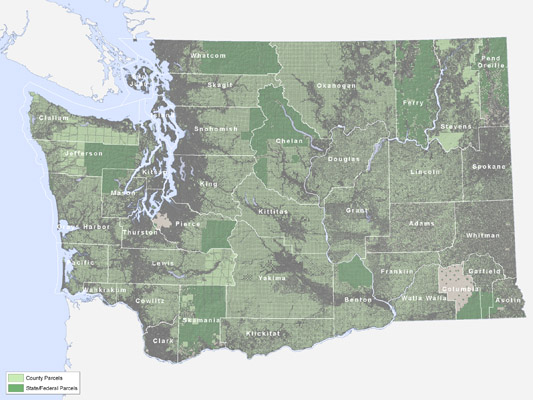
In 2000, the Rural Technology Initiative was formed with a mission to "empower the existing infrastructure to use better technology in rural areas for managing forests for increased product and environmental values in support of local communities." In many parts of Washington State the rural economy is largely dependant on forest resources and timber production. RTI focused its research on understanding the unique role of non-industrial private forest lands (NIPF) and training efforts on helping these landowners with management of their lands. To gain a better understanding of the number and location of these landowners a quasi-spatial database was built from county assessor tax role legal descriptions. This database provided a foundation for understanding the unique geography associated with the identified NIPF lands.
Since then, RTI has continued to expand our spatially-based research into forest land use patterns, forest land conversion issues, increased accuracy of identifying forest landowners, and more. As the use of GIS continues to grow, it is hoped that WAGIS will be able to respond to the broad, interdisciplinary, and relevant spatially-based questions posed by researchers, policy makers, and other interested organizations and groups.