VOLUME 13, ISSUE 4 | APRIL 2026 | | |
Our New Look
Welcome! As UW Botanic Gardens unites with the Arboretum Foundation to form Seattle Botanic Gardens, the Miller Library is using a new system for mailing the Leaflet.
Also with this issue, our two newsletters (Leaflet and Leaflet for Scholars) merge into one. Subscribers to both will now get all the stories in one email. Scholars subscribers will notice a fresh look and additional news.
| |
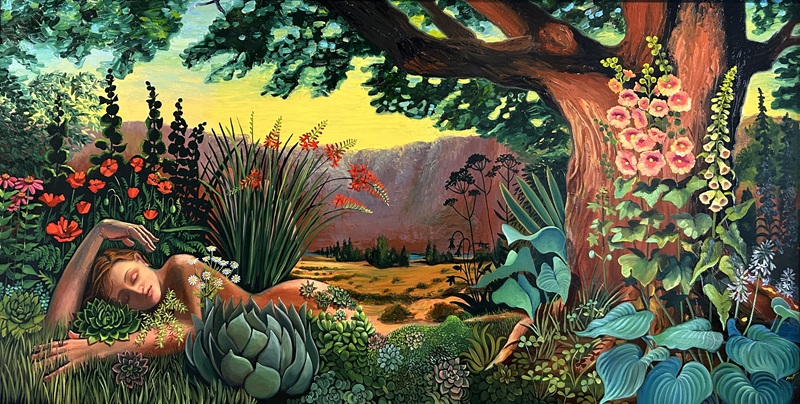
Roots + Bones Exhibition Runs April 2-27
In Roots + Bones, Mary Mann explores the intimate relationship between human and plant life. Roots mirror our own lineage with ancestry, memory, and the invisible networks that sustain us. As a child, Mann saw bodies in trees: torsos rising from the soil, limbs reaching skyward, trunks entwined in struggle and embrace. She paints from the living forest, still lifes with animal bones, and imagined landscapes. Together, these elements form a vision of the forest as a living archive, where generations intertwine and hold stories of growth, conflict, resilience, and shared survival beneath the surface.
Mary Mann is a Tacoma-based public mural artist and studio painter. Roots + Bones will be on display at the Miller Library from April 2 to 27. You can meet the artist during the 2026 Garden Lovers' Book Sale on April 10 and 11 (see below).
| Literary Gardens by Sandra Lawrence | |
REVIEWED BY CARLY STEWART
In Literary Gardens: The Imaginary Gardens of Writers and Poets, author Sandra Lawrence takes readers on a thoughtful stroll through the fictional gardens of our favorite stories. From the fantastical, labyrinthine gardens of Lewis Carol’s Alice in Wonderland to the hauntingly ethereal, rhododendron-saturated lawns of Manderley in Daphne du Maurier’s Rebecca, Lawrence reminds her readers why these gardens hold our imaginations.
Lawrence highlights 30 notable imaginary gardens from the world of literature, and she makes it clear that narrowing down this number was a harrowing task. Though her book is not comprehensive, it is an excellent exploration of some unique stories that shape, and are shaped by, our relationship to the flora around us. I would encourage readers to use Literary Gardens as a jumping-off point to revisit books you love, discover new ones to try, or enjoy some fun prose and beautiful artwork.
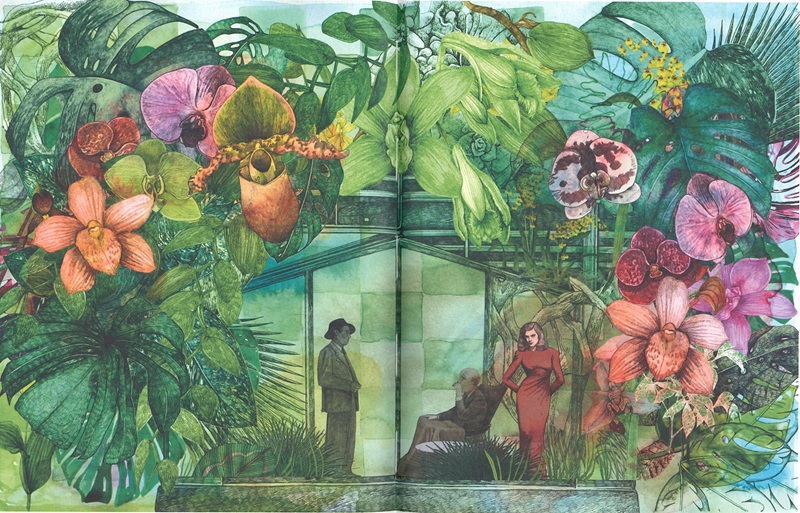
I particularly enjoyed the entrancing color illustrations from artist Lucille Clerc, especially the sweeping two-page spread of orchids in the chapter on Raymond Chandler’s The Big Sleep. If the featured stories intrigue you, you'll find some of them at the Miller Library! For example, Elizabeth and her German Garden by Elizabeth von Arnim, My Garden by Jamaica Kincaid, and works by Beatrix Potter are in our stacks. Lawrence's book is a great read if you want a brief look into some of literature’s most exciting gardens.
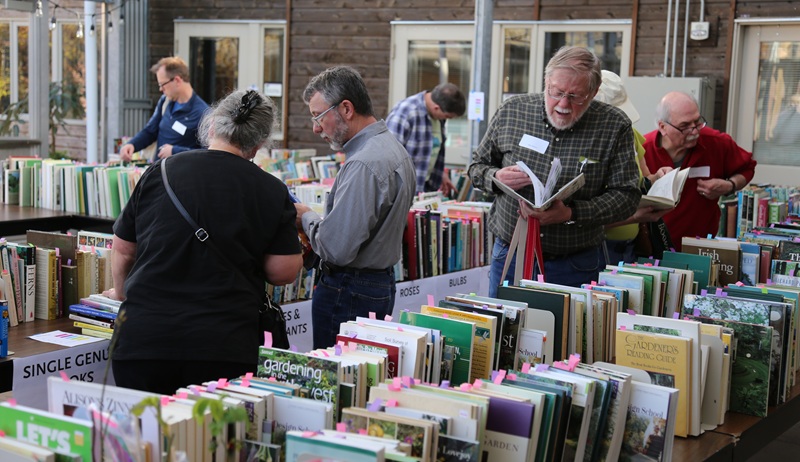
| Garden Lovers' Book Sale: April 10 and 11 | Join us April 10 and 11 for our annual Garden Lovers' Book Sale. Enjoy the company of fellow plant lovers, browsing thousands of gently used books for sale on gardening, plants, ecology, and related topics. The Opening Night event on Friday, April 10 from 5 to 8pm includes the book sale, a silent auction, food, and drink. Tickets are available now. No registration is required for the Saturday book sale, which runs from 9am to 3pm. | |
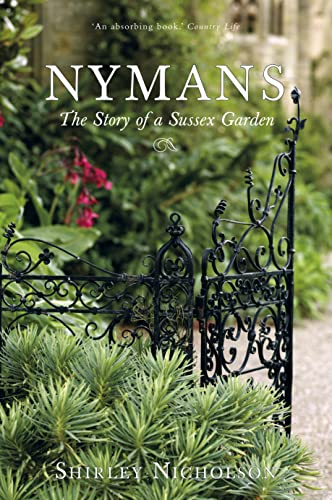
Nymans by Shirley Nicholson
REVIEWED BY PRISCILLA GRUNDY
Nymans differs from many books about gorgeous English gardens. First, one notices its size. Not a big coffee table book, this one measures only nine by six inches. The photographs inside are mostly black and white. Shirley Nicholson clearly sets out to do something different - and she succeeds.
In Nymans, Nicholson presents, with admirable efficiency, thorough histories of the fascinating Messel family, of grand English gardens, of competitions for plant awards, and of the inclusion of gardens into the National Trust.
| | | |
She also describes the garden created by Ludwig Messel (1847-1915) at his Sussex estate in enough detail to please any gardener. Messel was very interested in new and rare varieties and worked with plant explorers to create the garden at Nymans. As we do here in Seattle, he grew many magnolias, rhododendrons, and camellias.
Nicholson makes it clear that Ludwig Messel was more interested in collecting plants and developing new ones than creating set scenes on his grounds. His son, Leonard Messel (1872-1953), continued this focus on rare species and varieties, winning the garden many awards at Royal Horticultural Society shows, even during wartime years.
In the early decades of the 20th century, Nymans was regularly open to public viewing, but the number of visitors declined, especially after a disastrous 1947 fire destroyed most of the manor house. A medium-sized garden, Nymans was not as well known as some of the England's larger destination gardens. It also lacked some basic necessities for success, such as a parking lot, cafe, and shop. When these were added, visits began to increase. In 1953, the family convinced the National Trust to accept it.
Today, Nymans is a popular attraction. Ruins of the manor house remain, adding a romantic note - "Bare ruin'd choirs, where late the sweet birds sang," to quote Shakespeare. Nicholson makes clear the garden is well worth a visit. She also provides a very readable addition to our library shelf of English garden books.
| | |
Ask a Librarian
The Miller Library's Plant Answer Line provides quick answers to gardening questions. You can reach the reference staff at 206-UWPLANT (206-897-5268), hortlib@uw.edu, or from our website, www.millerlibrary.org.
| | | | |