VOLUME 13, ISSUE 8 | AUGUST 2026 | | |
Watch this space for news about your Leaflet subscription
As you know, this year UW Botanic Gardens is uniting with the Arboretum Foundation to form Seattle Botanic Gardens. Starting in September, the Miller Library will be using a new Seattle Botanic Gardens address for sending the Leaflet.
Expect details in the coming weeks.
| |
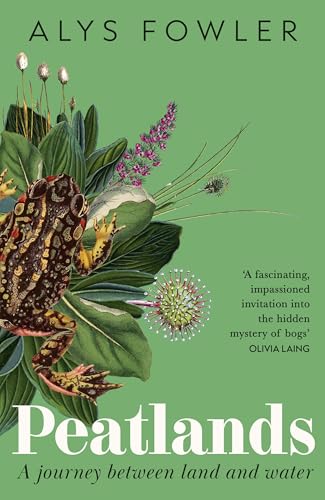
REVIEWED BY CARLY STEWART
Bogs, fens, and moors, oh my! These flat, unassuming, and oft-overlooked peat ecosystems are necessary for life on earth. Through a blend of natural science, personal experience, and history, Peatlands by Alys Fowler explores the importance of peat and its impact on climate change and biodiversity.
Peat, as Fowler explains, isn't formed by accident or happenstance, but rather through the slow accumulation of decomposing plant material in complex ecosystems over the span of millennia. The high levels of moisture in these ecosystems inhibit microbial activity, so plants like sphagnum moss grow faster than they can decompose, creating deep layers of living vegetation and partially decayed organic matter. Bogs are alive and dead all at once.
| | | |
If you have spent time in a nursery or garden center, you will likely have stumbled upon the miracle growing medium that is peat. Peat works like a sponge, absorbing water and retaining it, making it the go-to choice for many gardeners. Despite these benefits, the ramifications of the peat extraction process have catastrophic impacts.
Globally, harvesting peat from bogs for horticultural use (and fuel) can have lasting effects on climate, due to the carbon stored in these semi-decomposing wonders. "Held in the [peatlands] is a great ancient store of carbon—about 600 gigatons of carbon dioxide worldwide. That's double the carbon stored in all the world's forests, and about 44% of all soil carbon."
The solution for protecting these ecosystems and carbon sinks is not as simple as growing more peatlands, however. The peat we dig up is often thousands of years old. In the northern hemisphere, it takes a year to grow a millimeter of peat, and around 1,000 years to grow a meter. Preserving peatlands, Fowler says, needs to be our priority.
Fowler expresses a deep appreciation for these misunderstood ecosystems. As a queer woman, she finds a kinship with an environment that is not easily defined or categorized. This personal relationship engages the reader. While this book is not a comprehensive treatment of peatlands and bogs, it covers an expansive range of topics in only 256 pages. Like bogs, there is more hiding just below the surface.
| Whimsical Floral Watercolors & Botanical Acrylic Collages | | |
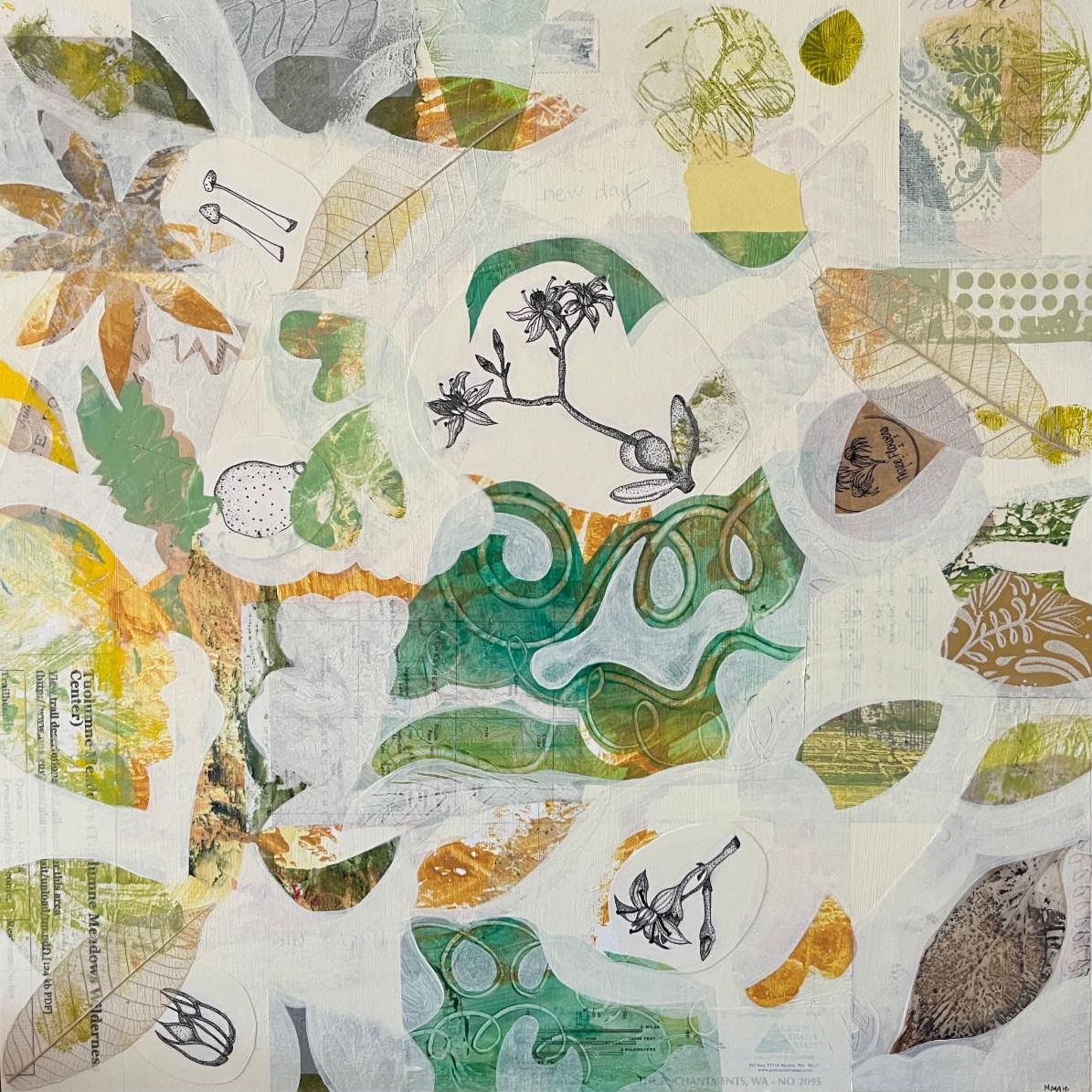
The Miller Library is excited to welcome artist Maggie Post to exhibit her work in August.
Maggie Post is a Pacific Northwest artist known for her botanical collages and floral watercolors. Her love of the outdoors, specifically national parks and open spaces, along with her backyard garden, inspires her work. Maggie grew up hiking in the White Mountains and the Sierras and now enjoys both the Olympics and the Mount Rainier area. She photographs flowers, leaves, and textures while on the trail and uses these as references back in her home studio. In her words:
"I hope my paintings become a conversation between the natural world and my inner one, and leave the viewer uplifted. My paintings carry the full spectrum of what I've experienced in life—not only joy and beauty, but grief and loss too. Nature offers us acceptance and calmness. There is a quiet depth in most pieces, a visual metaphor for resilience and unexpected radiance."
Whimsical Floral Watercolors & Botanical Acrylic Collages will run August 4–31. We will host a Meet the Artist event from 3–4 pm on August 31.
| |
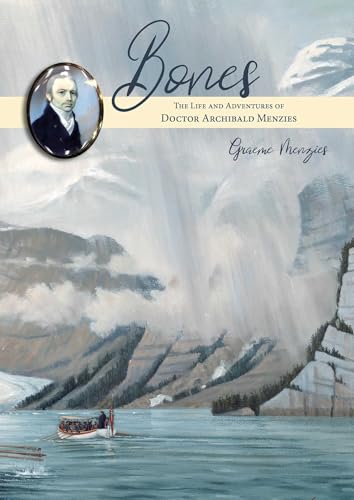
Bones: The Life and Adventures of Doctor Archibald Menzies by Graeme Menzies
| |
REVIEWED BY PRISCILLA GRUNDY
Archibald Menzies, well documented as a Scottish plant hunter in the late 18th century, also led an adventurous life as a navy surgeon. Graeme Menzies—no kin, but of the same Scottish clan—fills out the non-botanic parts of that life in Bones.
Two side notes: the British, then and now, sometimes refer to surgeons as “Bones,” hence the book’s title. "Menzies" was and is pronounced Ming-us.
Archibald Menzies brought us the monkey puzzle tree (native to Chile and Argentina). The book does include botanic information. It also describes in detail Archibald's painful struggle to bring back to England the plants he collected, often losing them to storms and lack of support from the ship’s captain.
| | | |
Archibald Menzies first learned about plants from his father, who was head gardener for the castle gardens of Sir Robert Menzies, the clan chief. As a boy, Archibald worked there, and at seventeen Sir Robert sent him to work in the Royal Botanic Garden in Edinburgh. While there, he also studied medicine at Edinburgh University, then the center of the Scottish Enlightenment.
From Edinburgh, Archibald was able to win a place as a naval surgeon. He served on multiple voyages to the Americas and around the world, combining botanizing with his medical work. Graeme Menzies provides background information, including people, places, and events, for each part of Archibald's life. He connects pieces. For instance, he suggests Archibald better understood Hawaiian culture on his visits there because of its resemblance to the hierarchy and sense of place of Scottish clan culture.
Much of this volume relates to Archibald Menzies’ voyages to Nootka Sound on the west coast of Vancouver Island. An English corporation hoped to create a major trading post there, but it eventually failed. George Vancouver, the ship’s commander, named the island after himself, creating some tut-tutting among the crew as to whether he should have named it instead for King George. Whidbey Island, Vashon Island, and Puget Sound are named for other crew members.
Joseph Banks, described here as “Britain’s most popular and celebrated botanist,” became Menzies’s supporter and then supervisor of his botanical responsibilities.
Graeme Menzies tells these stories well. He depicts a life full of courage, wanderlust, ambition, and accomplishment. The Menzies clan is well served.
| | |
Ask a Librarian
The Miller Library's Plant Answer Line provides quick answers to gardening questions. You can reach the reference staff at 206-UWPLANT (206-897-5268), hortlib@uw.edu, or from our website, www.millerlibrary.org.
| | | | | |