VOLUME 13, ISSUE 7 | JULY 2026 | | Observation: Interpretation. Nature as Muse. | | |
PAINTINGS BY PEGGY MURPHY, CYNTHIA YATCHMAN & KJ BATEMAN
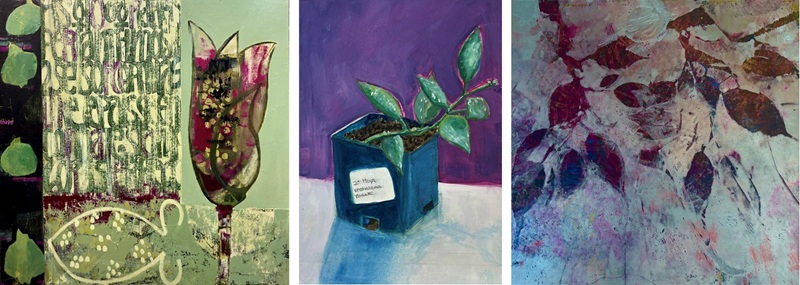
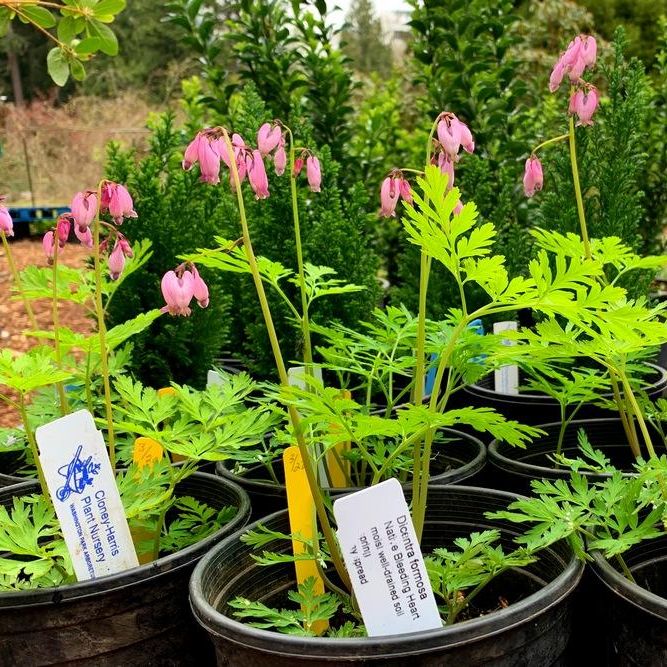
The Miller Library is excited to welcome Peggy Murphy, Cynthia Yatchman, and KJ Bateman for our July exhibition. Graduates of the University of Washington School of Art, the three artists share a long friendship and exhibition history. Their mutual love of plants led to this latest exhibition, entitled Observation: Interpretation. Nature as Muse.
Peggy Murphy looks at plants from a botanical viewpoint and interprets flower structures in a simplified, abstract manner. KJ Bateman makes small gouache paintings of plants and is delighted by the challenge of capturing the complexity of plants on paper. Cynthia Yatchman uses acrylic paint, ink, and printing to build transparent layers of floral imagery into a dense, expressionistic whole.
This exhibition will run from July 2 to 30. We will host a Meet the Artists event at the library on Monday, July 27, from 5:00 to 7:30pm.
| |
Ancient Women Gardeners by David E. Stuart | |
REVIEWED BY PRISCILLA GRUNDY
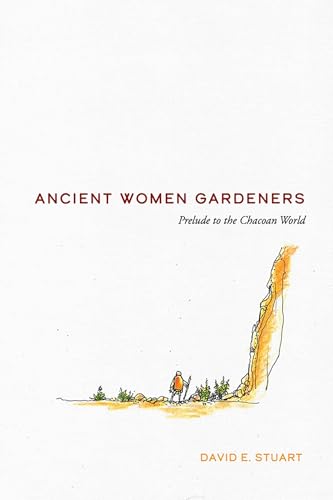
The women gardeners in this book made a major contribution to their society’s survival in a hot, dry climate with unpredictable rain. The book places them in the archeological and anthropological context of Chaco Canyon, New Mexico, from the Ice Age to European arrival.
David E. Stuart begins with a chapter on the cultures of hunters and gatherers prior to the development of horticulture. He shows that the transition to settled gardens was influenced by overhunting and by overharvesting of plants needed for foraging. The invention of “pocket gardens” helped compensate for those losses. Women owned the land in this culture and passed it down to their daughters.
| | | |
Each pocket garden grew corn, beans, and squash, providing a wide spectrum of nutrition. The plots ranged in size from that of an average modern bedroom to that of a three-car garage. The resulting crops were enough to support a family, which could consist of as many as eleven people of several generations.
As a non-anthropologist, I was introduced to several useful ideas and methods in this book. Stuart talks about the contrast between power societies and efficiency societies – the latter win. He shows how calories provided by the crops translate into hours of work. Gardeners use more calories than hunters, for instance. People had to figure out whether the calories they had were sufficient to complete any project they planned.
He describes how the Great Houses, with power and resources flowing to the elites who lived in them, contributed to the eventual destruction of this Chaco Canyon society – with echoes for our own time of a fatal chasm between those who have and those who have not.
Ancient Women Gardeners is a highly readable account of an impressive culture in our Southwest, reminding us of our inevitable connection to the past.
|
Forest Euphoria by Patricia Ononiwu Kashian | |
REVIEWED BY CARLY STEWART
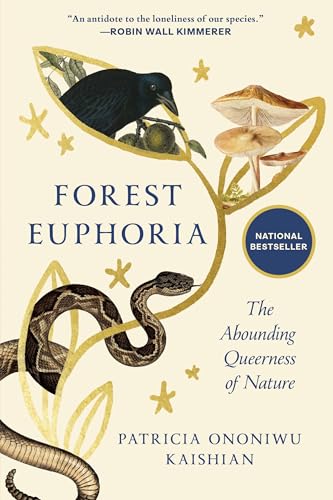
Forest Euphoria: The Abounding Queerness of Nature by Patricia Ononiwu Kashian is one of the most unique books in our collection. It is part memoir, part scientific examination, and Ononiwu Kashian weaves together her own personal stories as a queer person and mycologist with those of community organizing, science, and belonging.
The book opens with a chapter on the author’s kinship with nature’s more commonly reviled creatures, like snakes, snails, slugs, crows, and fungi. These organisms are often feared and misunderstood, which was something deeply relatable to a young queer child.
| | | |
“I learned to bear witness to the profusion of biological forms that surrounded me. I began to see that diversity is not only abundant in nature, but its very premise.” Queerness, Ononiwu Kashian posits, isn’t unnatural, but rather a deep fundamental truth of life.
Forest Euphoria challenges many of the accepted and presumed truths we face. In the scientific world, for example, many scientists were befuddled by the now infamous “eel question.” How do eels reproduce? Eels appeared to have no reproductive organs, and their mating grounds in the ocean were hard to track down and monitor. Surprisingly, early in his career, Austrian psychiatrist Sigmund Freud was so frustrated after dissecting hundreds of eels and finding no explanation that he pulled this project from his list of publications and left the world of natural history behind.
Fluidity and queerness were terrifying explanations that Freud had no interest in exploring. It was recently discovered (very recently, in fact, it was only in 2022!) that eels repurposed their digestive organs to reproductive organs at the end of their life. This was outside the scientific binary understanding of sex and gender despite the existence of millions of intersex humans.
Ononiwu Kashian covers a lot in this 253-page book. While there is a focus on the abundance of queerness in nature, it does delve into some heavier topics. The author writes about her own childhood sexual abuse, homophobia, the destruction of Indigenous language through settler colonialism, and the prison industrial complex.
As an Armenian and Irish American, Ononiwu Kashian also explains how genocide and colonialism function to separate people from the land. Burning mulberry trees in Armenia, killing bison to near extinction on the plains, criminalizing the use of Gaelic in Ireland—colonizers recognize the deep connection humans share to the places and organisms people come from and care for.
Patricia Ononiwu Kashian weaves these threads together to create an ambitious and vulnerable piece that shows the fundamental diversity of life on earth. She is an excellent writer, combining beautiful imagery and humor to engage the reader in her messages, both scientific and personal. From the bisexual reproductive nature of trillium to the sexual dimorphism in eels, Forest Euphoria is a love letter to everything that makes our home here on earth so special.
| | |
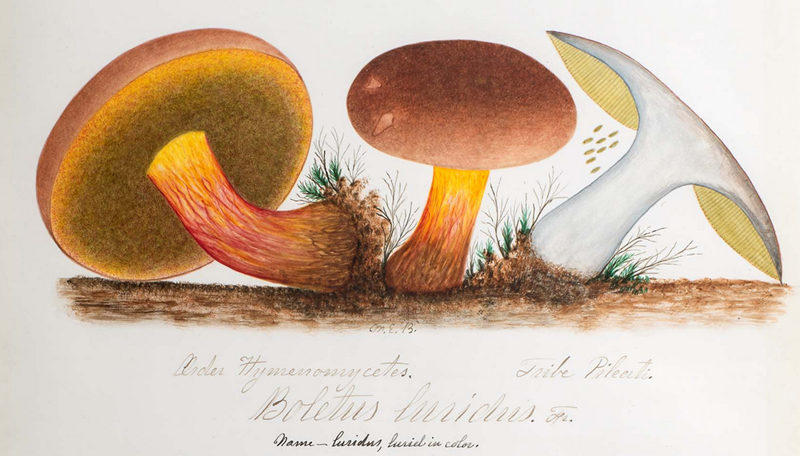
The book leaves us to consider the life story of Mary Elizabeth Banning (1822–1903), a subject of Ononiwu Kashian’s current work as the Curator of Mycology at the New York State Museum. In the book's epilogue, the author explains the life and research of Banning, a pioneer in the field of mycology, whose work was nearly lost due to her gender.
Banning dedicated herself to the study of fungi but was never recognized during her life and died in poverty. Her manuscript and watercolor illustrations of fungi specimens live at the New York State Museum, and Ononiwu Kashian hopes to get this work published so Banning can be recognized for the important work she contributed to the world of mycology. I hope, one day, Banning’s published manuscript can be found on the shelves at the Elisabeth C. Miller Library.
| |
|
Brian Thompson honored with the Long Award
The Council on Botanical and Horticultural Libraries (CBHL) has presented its highest honor, the Charles Robert Long Award of Extraordinary Merit, to Brian Thompson, Manager and Curator of Horticultural Literature and Rare Books for the Miller Library.
Established to recognize outstanding service to CBHL and exceptional contributions to botanical and horticultural literature, information services, and research, the award was presented during the organization’s 58th Annual Meeting, hosted by Longwood Gardens on May 14, 2026.
This award in part recognizes Brian’s work for CBHL. He was on the governing board as Treasurer from 2005–2015 and contributed his expertise for several additional years to the Audit and Financial Advisory Committees.
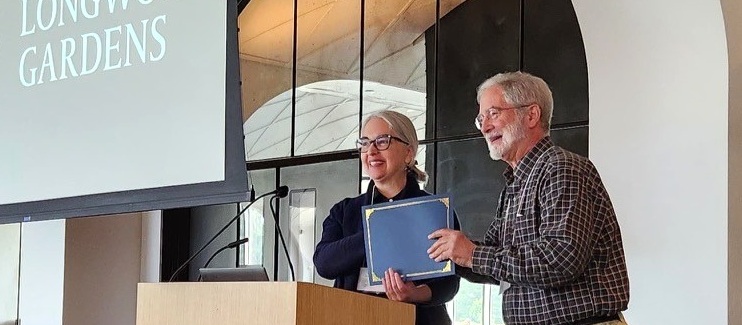
During the award presentation, CBHL President Kristine Paulus (shown with Brian above) noted he is especially recognized for his long-standing leadership of the CBHL Annual Literature Award program. Serving on the committee since the mid-2000s—as Chair or Co-Chair since 2016—he has helped elevate the program into one of the most respected awards in botanical and horticultural publishing.
All this didn’t happen in a vacuum, and Brian credits much of his success to the staff of the Miller Library. Their collective work includes the preservation and housing of the library’s collection following a nearby fire-bombing in 2001, and guiding the subsequent recovery, design, and building of the current library. The staff also took the lead when Seattle hosted the CBHL Annual Meeting in 2010.
The Miller Library staff continue to seek out publications in horticulture by lesser known but important authors and publishers. Many at Longwood commented to Brian that The Leaflet and its book reviews and monthly lists of new books provide a valuable resource for all CBHL Libraries.
Several Miller Library staff members, both current and retired, have worked with Brian in the cataloging and conservation of the library’s collection of 700 rare and historical books. This work has inspired his special interest in women botanists, gardeners, and botanical illustrators from the late 19th and early 20th century, especially enjoying promoting their work and telling their life stories through live presentations, webinars, and articles.
| | |
Ask a Librarian
The Miller Library's Plant Answer Line provides quick answers to gardening questions. You can reach the reference staff at 206-UWPLANT (206-897-5268), hortlib@uw.edu, or from our website, www.millerlibrary.org.
| | | | |