VOLUME 13, ISSUE 6 | JUNE 2026

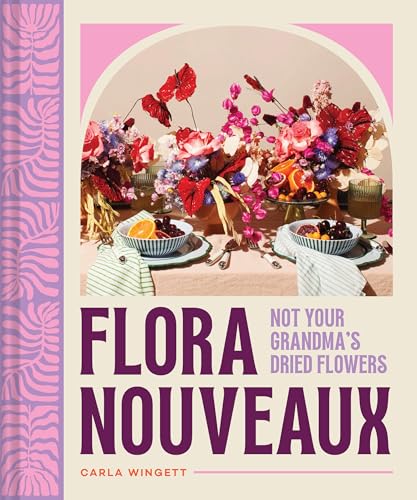
Flora Nouveaux by Carla Wingett

REVIEWED BY CARLY STEWART


If, like me, you love the liveliness and color a bouquet brings to your home but dread the inevitable withering, you may want to consider Carla Wingett’s solution to the short shelf life of cut flowers: dried arrangements. Wingett, a professional florist who specializes in dried flowers, shares her knowledge in the 2025 book Flora Nouveaux: Not Your Grandma’s Dried Flowers.


This book caught my eye immediately with its striking, neon-pink spine and the colorful spread on the cover. Its contents are just as exciting!

Wingett’s arrangements are, as promised in the book's subtitle, not traditional. She utilizes bright color schemes and interesting textures to create unique visual treats. Her material palette includes classic dried flowers such as hydrangea, but also surprises like anthurium, which was new to me in dried floral arrangements.


Wingett arranges Flora Nouveaux into four main chapters: "Living," arrangements for everyday spaces; "Entertaining," for gatherings at your home; "Ceremonies," for special occasions; and "Holidays," festive arrangements for holiday celebrations. Each chapter showcases bouquets, wreaths, garlands, and more.


In a separate section, the author recommends tools and techniques to make the drying and arranging process a breeze. If you are looking for a new hobby, some floral arrangement inspiration, or simply want to enjoy Jennifer Olson’s stunning photography of vibrant bouquets, make Flora Nouveaux your next read here at the Miller Library.

Gardening for the Soul exhibition runs June 2 to 29

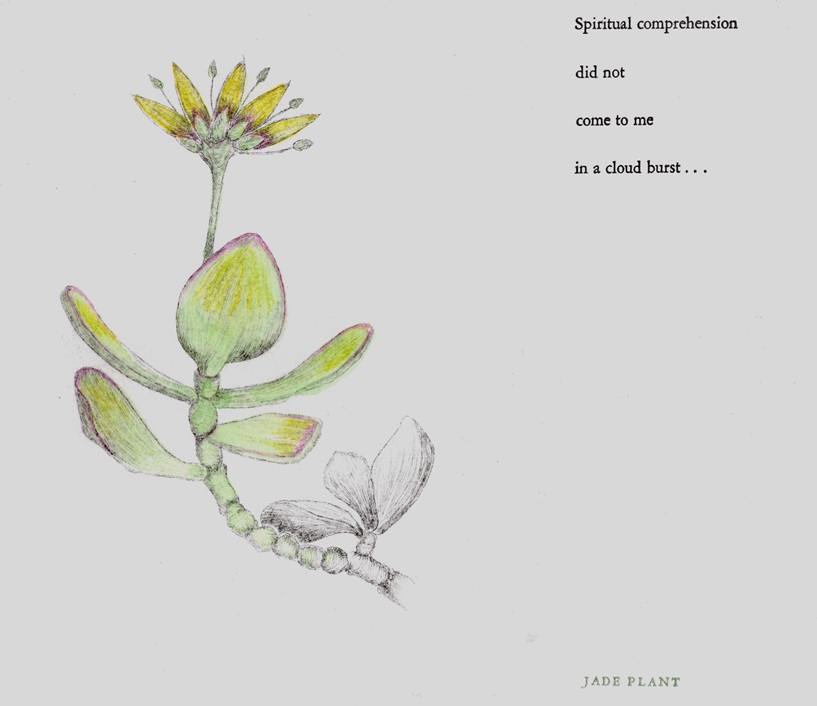
The Miller Library is excited to welcome artist Esther Ervin to exhibit her work in June. In her words:


"My work spans varied mediums: metal work, ceramics, sculpture, and fiber. Since completing the Black and Indigenous People’s Book Arts Residency at Editions Studio, my practice focuses on book and print arts, including botanical contact prints.


"The best of these will accompany the hand-bound artist book, Gardening for the Soul, containing 16 hand-tinted etchings paired with quotes from the unpublished memoir of James W. Washington, reflecting his spiritual growth.

"Dr. Washington, an artist of note in the Northwest School, lived in my neighborhood, and I have been involved with the foundation bearing his name in several capacities for more than 20 years."


Gardening for the Soul will run from June 2 to 29. Esther Ervin will join us at the Miller Library for a Meet the Artist event on Saturday, June 6, from noon to 2:30pm.

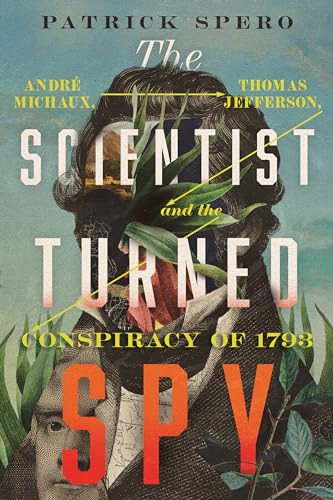
The Scientist Turned Spy by Patrick Spero

REVIEWED BY PRISCILLA GRUNDY


André Michaux just wanted to collect plants in post-Revolutionary America. He did a lot of collecting and did it very well. Politics, however, kept getting in the way. Patrick Spero wants readers to understand Michaux’s importance as a botanist and as a rather hapless participant in a potentially disastrous kerfuffle in 1793.


The Scientist Turned Spy: André Michaux, Thomas Jefferson, and the Conspiracy of 1793 is a complete biography, including much background context. In this 250th year of our Republic, it feels like part of the celebration.


Michaux was French. His love of botanizing was matched only by his fervor for his own country. Louis XVI named him Royal Botanist and sent him to America to botanize in 1785.

After the fall of the monarchy during the French Revolution, Michaux managed to gain support from the new government for more collecting. In addition to sending thousands of plants and seeds to France, he established two botanic gardens, one in New Jersey and one in South Carolina, now both lost.


Michaux made two attempts to travel west to collect plants, after working mainly along the East Coast. First, he worked with the American Philosophical Society in Philadelphia, which proposed supporting his expedition. (Spero is a former librarian for the Society.) Despite a star-spangled list of promised donors that included George Washington, Thomas Jefferson, Benjamin Franklin, and numerous others well known in American history, Michaux never took the journey. Part of the reason was Michaux’s reluctance after he discovered that the Society’s main goal was for him to find the shortest route to the Pacific—rather than to botanize.


The other reason was his sudden involvement in another adventure, ordered by the French government in 1793. Michaux was to organize secretly and then carry out an attack on Spanish-held Louisiana, recruiting his troops from Kentucky, with a goal of setting up a separate French republic. It’s an amazing story, well worth reading. Jefferson, then Secretary of State, knew about the plans but surprisingly did not tell President Washington. In the end, the attack force was quashed before it did any damage. During this trip (he got as far as St. Louis) and numerous othersone as far away as CanadaMichaux collected whenever he could and sent plants home to France.


After 1793, Michaux left America, continued to travel and collect, but never published anythingno account of his work nor the plants he foundthat might have secured him a bigger place in botanical history. Spero's book is a timely addition to that history, as well as an eye-opening glimpse into the rather chaotic politics of the early years of our Republic.

CBHL Annual Literature Awards for 2026


BY RITA HASSERT, MORTON ARBORETUM LIBRARY


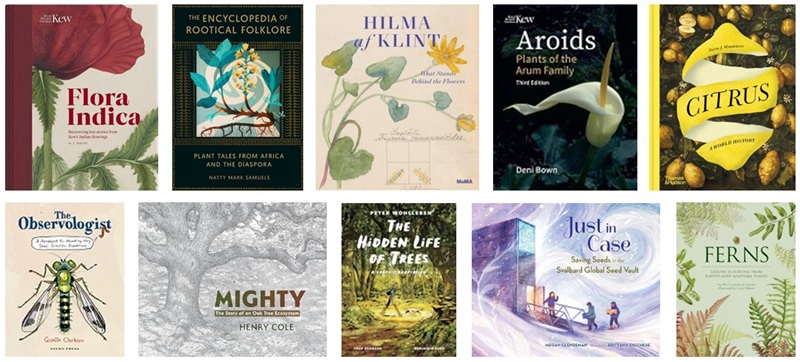
The Council on Botanical and Horticultural Libraries (CBHL) announced the recipients of its 27th Annual Literature Awards during its 58th Annual Meeting last month. This year’s awards honor ten exceptional works.


The 2026 CBHL Annual Literature Award, the organization’s highest honor, has been awarded to Aroids: Plants of the Arum Family, Third Edition, by Deni Bown, published by Kew Publishing. Representing the culmination of the author’s career-long dedication, this authoritative volume offers a comprehensive exploration of the diversity, taxonomy, and cultivation of the arum family. Blending rigorous scientific insight with accessible guidance, the work serves as an essential resource for both researchers and plant enthusiasts.


The Award of Excellence in Botany was awarded to Ferns: Lessons in Survival from Earth’s Most Adaptable Plants by Fay-Wei Li and Jacob S. Suissa, illustrated by Laura Silburn and published by Hardie Grant Books. The book examines the evolutionary resilience of ferns, highlighting how these ancient plants have adapted to changing environments over millions of years.


In the category of Botanical Illustration, the Award of Excellence went to Flora Indica: Recovering Lost Stories from Kew’s Indian Drawings, by H. J. Noltie, also published by Kew Publishing. Drawing on historical artworks, the volume uncovers the cultural and scientific narratives behind botanical illustrations produced in colonial India.


The Award of Excellence for Exhibition Catalogues was presented to Hilma af Klint: What Stands Behind the Flowers, by Jodi Hauptman, published by The Museum of Modern Art. This catalogue explores the botanical inspirations and symbolic language in Hilma af Klint’s work, connecting art, science, and spirituality.


Citrus: A World History, by David J. Mabberley, published by Thames & Hudson, was honored with the Award of Excellence in History. Blending botanical science, cultural history, and rich illustrations, this book explores how citrus fruits shaped trade, cuisine, medicine, art, and agriculture across centuries and continents.


The Award of Excellence in Ethnobotany was awarded to The Encyclopedia of Rootical Folklore: Plant Tales from Africa and the Diaspora, by Natty Mark Samuels, published by Scorched Earth Press. Blending folklore, history, and plant science, the book documents traditional knowledge and stories surrounding plants across African and diasporic cultures.


The Award of Excellence for Young Adults was presented to The Hidden Life of Trees: A Graphic Adaptation, by Frédéric Bernard, illustrated by Benjamin Flao and published by Greystone Books. Adapted from the original work by Peter Wohlleben, this visually engaging volume introduces younger readers to the complex ecological relationships and communication systems within forests through a compelling graphic format.


The Award of Excellence in Literature for Educators was presented to The Observologist: A Handbook for Mounting Very Small Scientific Expeditions, by Giselle Clarkson, published by Gecko Press. Designed to inspire curiosity, the book encourages careful observation of the natural world through hands-on, small-scale scientific exploration.


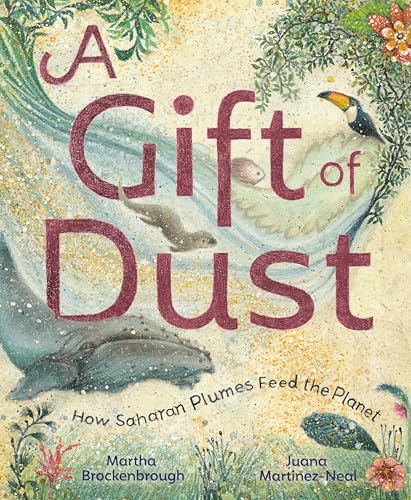
Two titles received Awards of Excellence in Literature for Children: 


The Council on Botanical and Horticultural Libraries supports a global network of professionals by addressing emerging issues, fostering collaboration, and providing expertise to its member institutions. For more information, visit www.cbhl.net.


Ask a Librarian


The Miller Library's Plant Answer Line provides quick answers to gardening questions. You can reach the reference staff at 206-UWPLANT (206-897-5268), hortlib@uw.edu, or from our website, www.millerlibrary.org.


Digital Resources

Book Review Archive

Plant Sales | Garden Tours

Periodicals

New to the Library
(click above link to see all 30 titles)

Facebook  Instagram

LIBRARY HOME | CATALOG | EVENTS

© 2026 Elisabeth C. Miller Library