College of the Environment | University of Washington Block W Logo
Library Home | Catalog | Calendar | College Home
Volume 10, Issue 8 | August 2023
Beth Chatto's Gravel Garden
Recommended by Brian Thompson

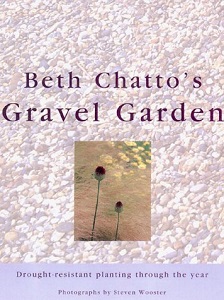
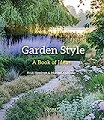
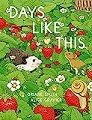
book coverOne of my favorite books in the Miller Library collection is Beth Chatto’s Gravel Garden. Published in 2000, it recounts the development of a formerly grassy parking area into a garden with gravel used as mulch, and no irrigation once plantings were established.
 
I visited the Chatto garden in August 2000 when the garden was in its eighth season. I was charmed with the concept and especially the look of the garden. When I learned a book was coming out, it was a must not only for the Miller collection, but also for my home library.
 
Beth Chatto (1923-2018) was an early proponent of the concept of “right plant, right place,” choosing plants with needs that match the conditions of their garden setting. Gravel Garden is a careful study of what plants have worked in this new garden, and those that have not.
 
Your mental image of England may be of green meadows and lush gardens nurtured by gentle summer rains.  However, this garden is in Essex, one of the driest counties, and averages only 20” inches of rain per year. By contrast, Seattle has nearly twice that amount. One key difference is the rainfall is distributed evenly through the months, so that the long, droughty summers we experience are not typical there.
 
Sadly, this may be changing. In June 2023, I attended the Hardy Plant Study Weekend at the University of British Columbia in Vancouver. John Grimshaw, noted author and director of the Yorkshire Arboretum, reported that precipitation throughout the eastern part of England has been diminishing, and summers are drying out.
 
Last summer was especially bad and the Beth Chatto Garden blog reported that as of mid-August 2022, it had been two months without any rain. A similar drought occurred in 1995. In the book, Chatto describes at the end of that summer “a dry look to this area, but not a dead look.” She continues, “I am often thankful to see how many plants not only survive but look good after this testing period of drought.” A list of the successes, and the few failures, follows. I consult it frequently.
Ask the Plant Answer Line: Are pinks edible?
Researched by Rebecca Alexander
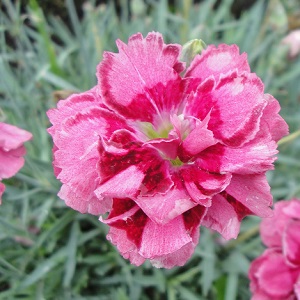
Dianthus 'Heart's Desire'Question: Are carnation and pink flowers edible? I read (in a novel) about a 17th century beverage called “Water of Venus” that included carnations and cinnamon.

Answer: I could not find any information about a beverage of that name, which may be the author’s invention.  As long as the plants are grown without chemical fertilizers or pesticides, it should be safe to use spicy, clove-flavored Dianthus petals in drinks and edible concoctions, from cake and salad decoration to flavoring oils and vinegars. According to Edible Flowers: A Global History by Constance L. Kirker and Mary Newman (Reaktion Books, 2016), ancient Greeks and Romans used the petals in various dishes. The genus name is from Greek dios (god) and anthos (flower). The Romans called carnations Jupiter’s flower, to honor the god.

John Gerard’s 1597 Herball mentions that “a water distilled from Pinks has been commended as excellent for curing epilepsy,” and more generally, “a conserve made of the flowers with sugar is exceeding cordial, and wonderfully above measure doth comfort the heart, being eaten now and then.” In Carnation (Reaktion Books, 2016), author Twigs Way lists varieties of intensely fragrant pinks that are ideal for adding to food and drink: ‘Mrs. Sinkins,’ ‘Doris,’ Whatfield Can-can,’ ‘Betty Norton,’ as well as ‘Giant Chabaud’ carnations.

The article “ History and Legend of Carnation to 1800” by W. D. Holley (editor for the Colorado Flower Grower’s Association) gives an idea of the wide-ranging presence of the plant, including its use in Elizabethan times for spicing wine and ale, called sop-in-wine or wine-sop.

Garden author Gayla Trail offers a recipe for Dianthus-infused vodka on her You Grow Girl blog. There are more recipes in the Herb Society of America‘s guide for using clove pinks, including instructions on how to prepare the flowers (discard the white base of the petals as well as the sepals and styles which can be bitter).

For more extensive historical information, Mary MacNicol’s Flower Cookery (Collier Books, 1972) is an excellent resource, with recipes from the 1600s to the 1900s. There is one recipe for Ratafia d’Oeillets from The Art of French Cookery (1814) by Antoine Beauvilliers. It calls for 24 pints of brandy and a pound of ratafia pinks (i.e., carnation flowers): “take nothing but the red of the flowers which is put into the brandy, with a drachm of bruised cloves; […] leave them a month in infusion; drain, and press the flowers well; dissolve two pounds of sugar in eight pints of water; mix it well with it; strain and bottle.” There is a second ratafia recipe using pinks with stamens removed, cinnamon sticks, saffron, strawberry juice, sugar, and brandy. Perhaps these beverages inspired the novelist’s Water of Venus.
Paintings by Linda Andrews explore Washington's
Quercus garryana prairie habitat
Please join us at the Miller Library August 2-30 for Denizens of Oak and Fire, an exhibit of Garry oak prairie paintings by Linda Andrews. From the artist:

For thousands of years, Indigenous peoples lovingly managed these lands, fostering ecologically rich landscapes through frequent low-level fires. In contrast, the colonial settlers' view of nature as a resource to be exploited has led to its decline. Prairies require a shift in mindset, where we see ourselves as part of nature rather than separate from it. Thankfully, we are now starting to learn and adopt more sustainable practices. Tribal fire ecologists and conservation scientists are reintroducing cultural and controlled burns, supporting prairie species while preventing catastrophic wildfires, though the change to this management approach can be complex.

Conservation efforts can emerge from unexpected sources. At Joint Base Lewis McChord, soldiers and scientists collaborate to protect the endangered Streaked Horned Lark. This ground-nesting bird's population has drastically declined, with only a small fraction remaining in fragmented open prairies and airfields. The regular fires resulting from artillery practice help maintain the necessary open ground for the larks, while the military actively locates and safeguards their nests, contributing valuable data to lark conservation science. Another inspiring conservation partnership exists through the Sustainability in Prisons Project, where incarcerated women at Mission Creek Corrections Center rear and study endangered Taylor's Checkerspot butterflies, exploring their relationship with the endangered Golden Paintbrush, Castilleja levisecta.
 
The Streaked Horned Lark and Taylor's Checkerspot butterflies are among the featured creatures in this collection of paintings, alongside the prominent presence of Garry oaks (Quercus garryana), which play a crucial role in sustaining this community of plants and animals. By portraying the beauty and importance of these endangered species and their habitats, Denizens of Oak and Fire invites viewers to appreciate the intricate interconnectedness of nature and encourages a deeper understanding of the urgency to protect and preserve these fragile ecosystems.

The opening reception will be Thursday, August 3, from 5 to 7 pm.

ask a librarian
The Miller Library's Plant Answer Line provides quick answers to gardening questions.
You can reach the reference staff at 206-UWPLANT (206-897-5268),
hortlib@uw.edu, or from our website, www.millerlibrary.org.
Digital resources
   UWBG pine cone logo
cover of Studies of Plant Life in Canada  Miller 
Library book and flower logo
New to the library
cover image    cover image   cover image
cover image     cover image     cover image
cover image   cover image
cover image   cover image    cover image
  cover image   cover image    cover image
cover image     cover image     cover image
  give     Miller_LibraryLogo293px.gif    
Facebook    Twitter    Instagram    Pinterest
Contact Us   |   Privacy   |   Terms
© 2023 University of Washington Botanic Gardens