March 5, 2026

This summer, a quiet descended on the halls of the Life Sciences Building as graduate students focused in on lab work and ventured out to the field. Folks made the most of the season, investing in research, collaboration, and communication. We asked graduate students from across the department to send us their summer research photos. They delivered, highlighting the diverse organisms they study, the specialized tools they use, and the collaborations that make research possible. Unless otherwise noted, captions and photos were created by the featured student. As grey skies usher in Washington winter here in Seattle, let’s look back on the long sunny days of summer 2025. 


Labmates Vaibhav Chhaya and Laura Quinche studied the respiratory and thermal physiology of rufous hummingbirds on Shaw Island, Washington. The species passed through the region during its spring migration.
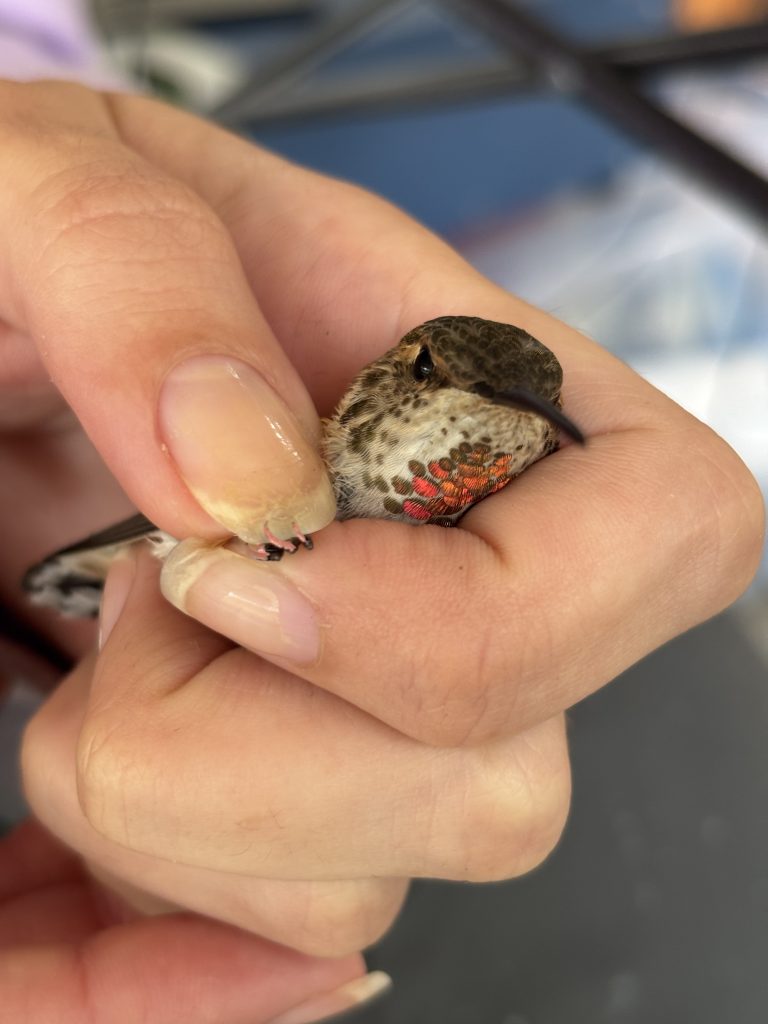
A person holds a hummingbird in their hand, showing the bird's pink painted claws.
A Rufous hummingbird getting a pedicure. We paint the claws of hummingbirds with pink nail polish to identify the ones that we have already measured. Picture taken on Shaw Island, Washington.
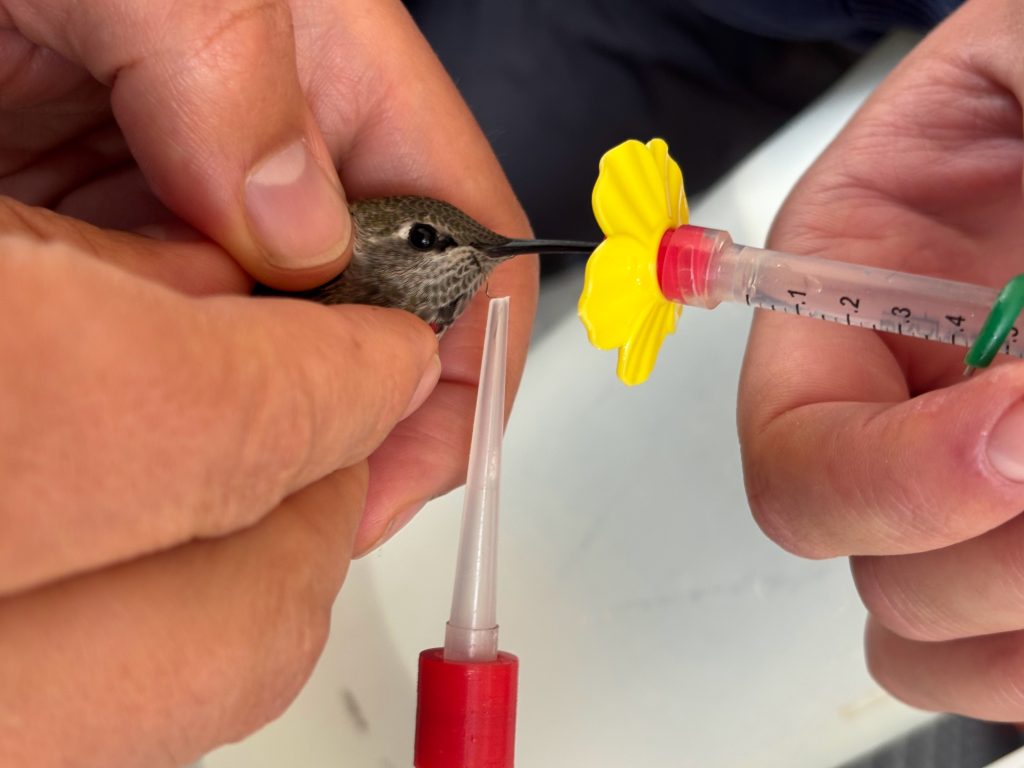
One person holds a hummingbird as it feeds from a syringe with a plastic flower on the end. A second person holds the syringe. A different tube is held near the hummingbird's beak.
Measuring the respiratory temperature changes in a Rufous hummingbird while it is drinking nectar from a syringe. We were trying to understand how hummingbirds breathe while they drink nectar. Picture taken on Shaw Island, Washington.

Brenlee Shipps traveled in South Luangwa National Park and North Luangwa National Park looking for Permian and Triassic age vertebrate fossils with the National Heritage Conservation Commission of Zambia. 
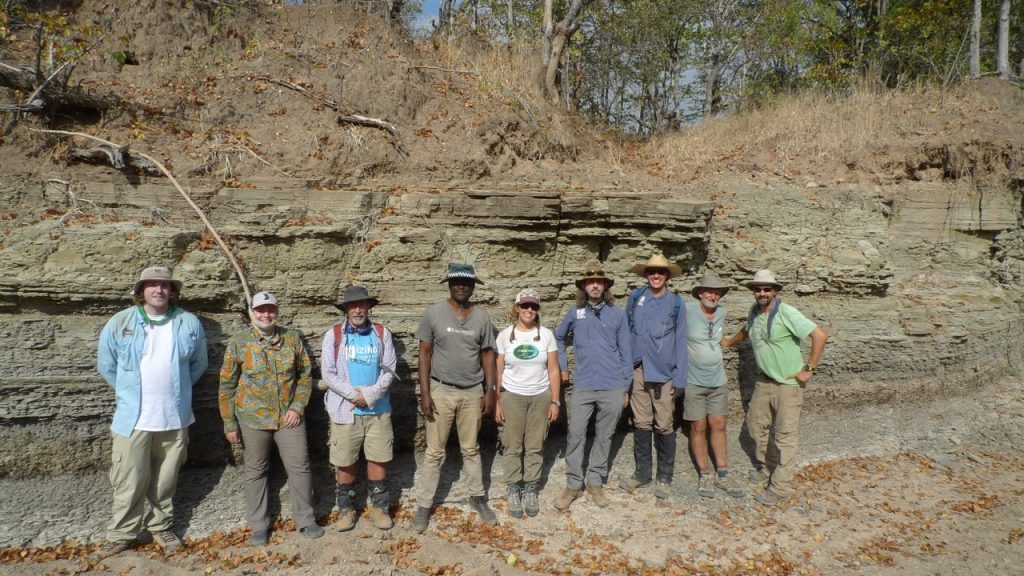
Nine people in field clothes stand in front of a rock outcrop and smile at the camera.
The entire crew from our trip to Zambia. From left: Dakota Pittinger (Master’s student, Idaho State University), Brenlee Shipps (me, UW PhD student), Dr. Roger M. Smith (Distinguished Professor, University of the Witwatersrand), Joseph Museba (Representative, National Heritage Conservation Commission of Zambia), Dr. Meg Whitney (former UW biology PhD student! Now Assistant Professor at Loyola University), Dr. Kenneth Angielczyk (MacArthur Curator of Paleomammalogy and Section Head, Negaunee Integrative Research Center, Field Museum of Natural History), Dr. Brandon Peecook (also a former UW biology PhD student! Now Associate Professor in Biological Sciences at Idaho State University and Curator of Paleobiology at the Idaho Museum of Natural History), Steve Tolan (local expert and fossil wizard), and Dr. Chris Sidor (Professor of Biology at UW, Curator of Vertebrate Paleontology and Associate Director of Research and Collections at the Burke Museum). It’s an awesome list! Photo by North Luangwa National Park Scout Anderson.
A person on the left holds a fossil in one hand and uses the other hand to imitate fangs. A person on the right looks on.
Dr. Brandon Peecook explains what he’s holding to our scout, Anderson: the underside of a gorgonopsid skull (if I recall correctly) with saber teeth visible. Brandon is doing a little thing with his hands to look like saber teeth. 
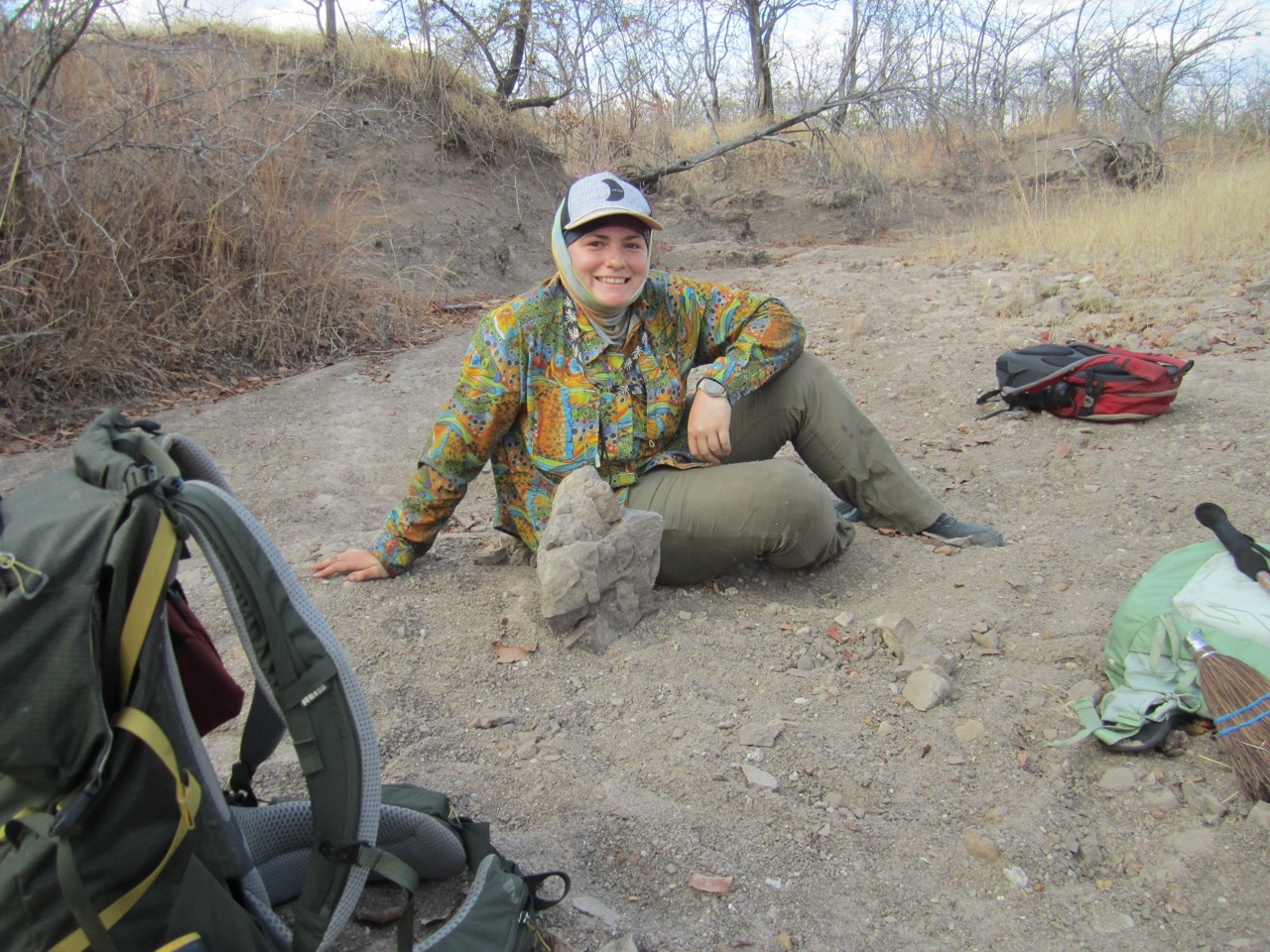
A scientist in field clothes sits behind a basket ball sized fossil.
I pose on the ground behind a large piece of dicynodont skull I found in the riverbed. Photo by Ken Angielczyk.

Emma Guerrini Romano conducted field work in the mudflats of Willapa Bay, WA. On land owned by industry collaborator Taylor Shellfish LLC, she tested the effects of sodium bicarbonate on the survival of burrowing shrimp. Emma is a licensed pesticide applicator and was able to apply bicarbonate to the plots. This is part of a larger effort to learn more about burrowing shrimp physiology in hopes to create a targeted chemical control method for oyster growers to use on their land. The work is supported by a USDA Western SARE grant (GW25-017) Emma received in April.
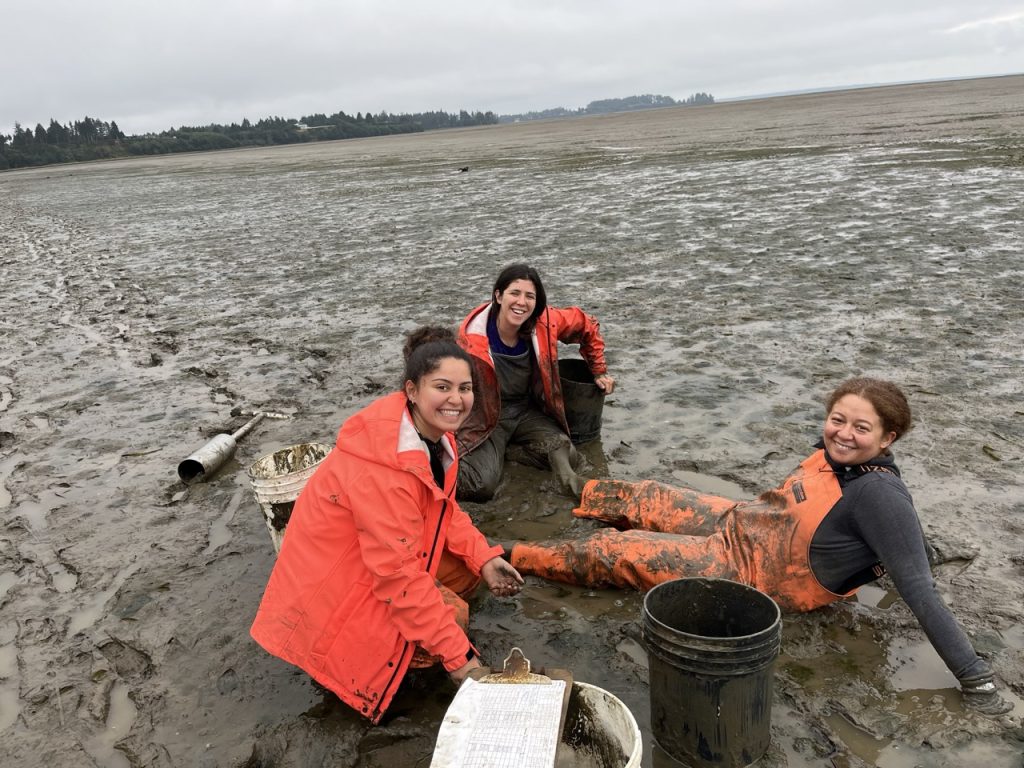
Three scientists wearing water-proof bright orange clothes are covered in mud, sitting on a mud flat. Equipment is scattered around them. They smile at the camera.
Graduate students Elissa Khodikian (left) and Emma Guerrini Romano (middle) and Prof. Andrea Durant (right) using bottomless buckets to apply baking soda solutions to shrimp-infested beds. Photo by Prof. Jennifer Ruesink.
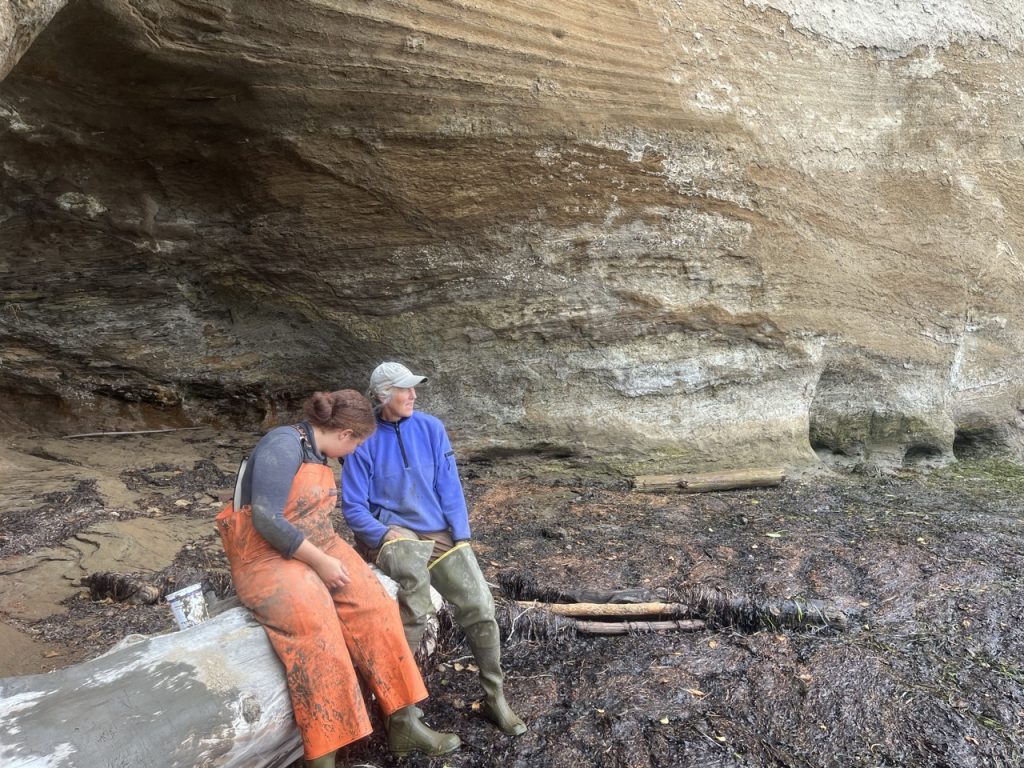
Two scientists covered in mud sit on a log.
Professors Durant (left) and Ruesink (right) taking rest on a log while waiting for the high tide and observing amphipods jumping around seagrass wrack.

Emily Humphreys traveled to Mexico in search of members of the onion genus (Allium). Working with Hilda Flores Olvera and Helga Ochoterena Booth of Universidad Nacional Autónoma de México and Mike Moore of Oberlin College, she collected whole plants to dry for museum specimens and tissue for sequencing DNA. These DNA sequences will allow her to reconstruct the evolutionary history of North American Allium.
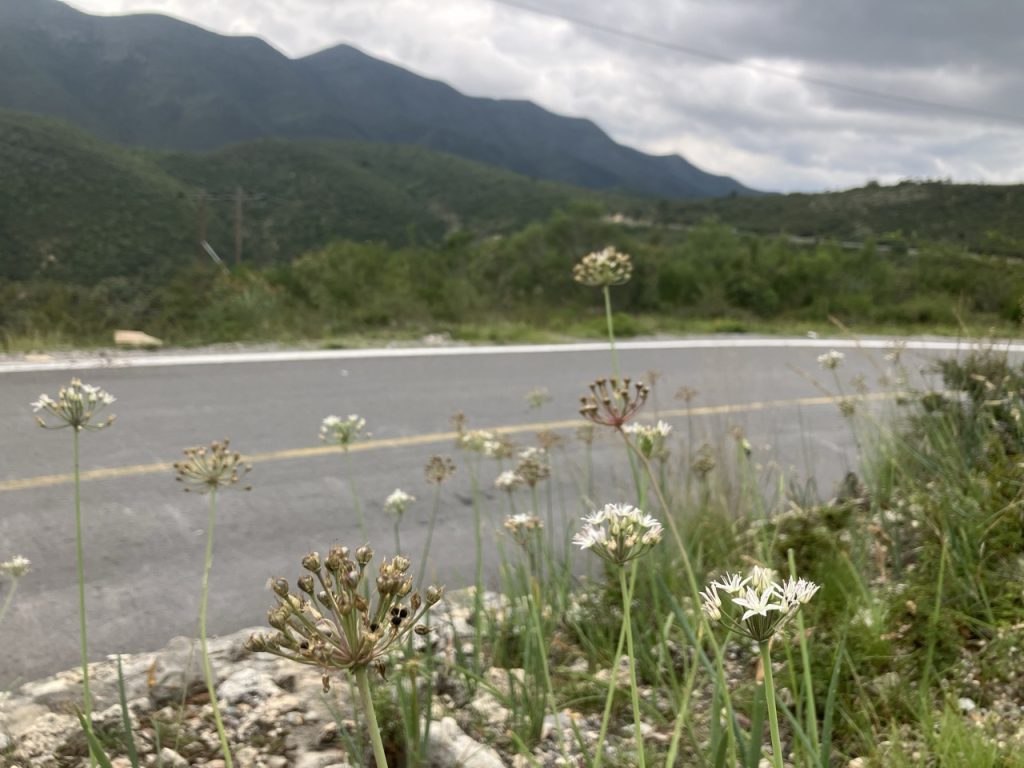
Allium flowers are in the foreground. Behind them is a highway, and behind the highway there are mountains.
You never know when you will spot a plant! Dr. Moore noticed these Allium hintoniorum while we were driving down a mountain highway to get to our hotel.
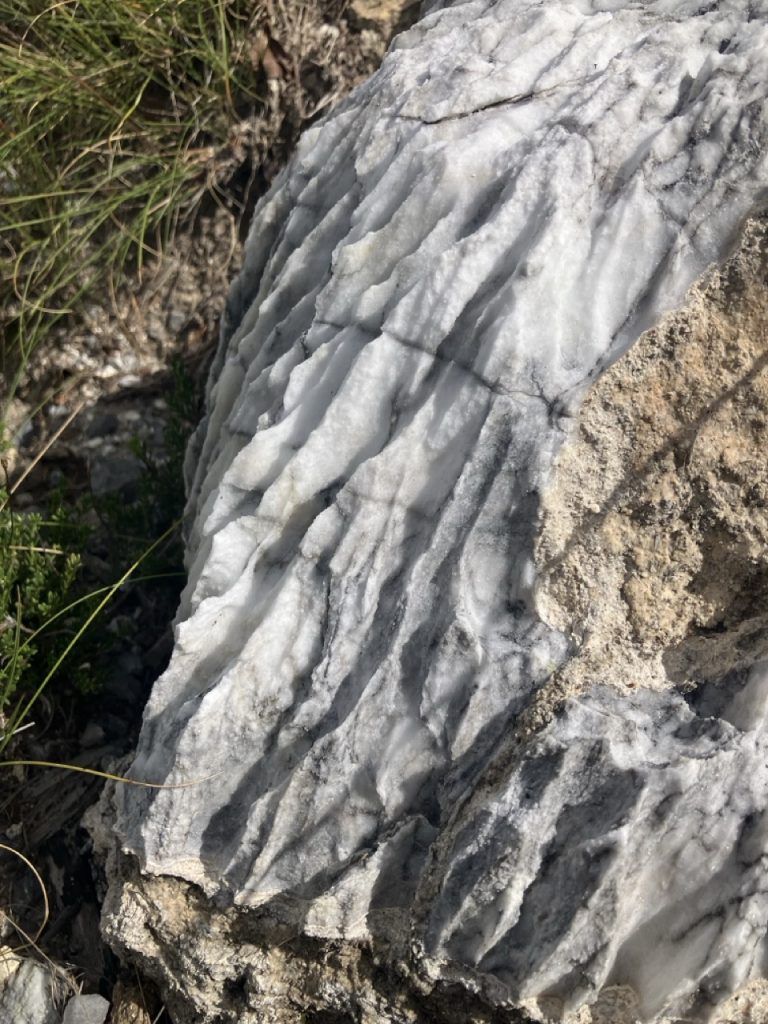
A large white rock with deep grooves.
This is gypsum. As you can see from the grooves, gypsum is super water soluble. It also hosts a unique plant community due to its high levels of calcium and sulfur. Some species of Allium grow on this unusual substrate. I collected Allium on gypsum this summer and am studying the evolutionary origin of substrate specialization in North American Allium.
A person in field clothes smiles at the camera holding three Allium plants. Behind them is a hill with scrub vegetation.
Prof. Flores Olvera took this photo of me preparing to press Allium in a field press in the back of our truck.
Three smiling people stand in front of a white truck
Dr. Flores Olvera (center), Dr. Ochoterena Booth (right), and Dr. Moore (left) pose with our field truck after returning to Mexico City from a month on the road. Photographer unknown.

Leigh West of the Abrahms lab studied how climate change is influencing large carnivore behavior and human-wildlife coexistence in Botswana this summer.
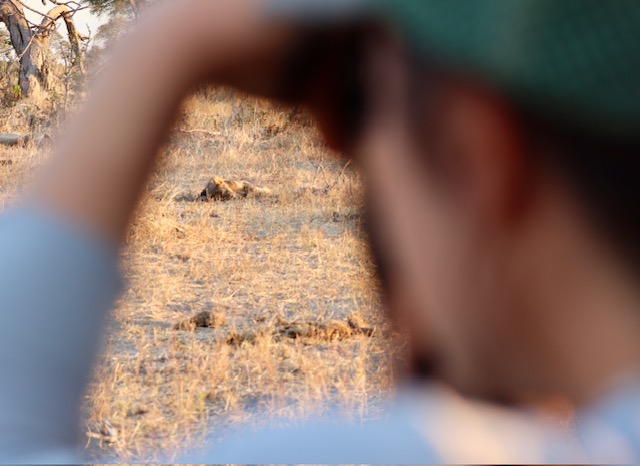
The camera is behind a blurry person holding binoculars. A lion is in focus in the distance.
Marie-Pier Poulin, a PhD student in the Abrahms lab, takes identification images of a lion cub near our field site in Botswana’s Okavango Delta. All of the animals we study have unique markings (for lions, it’s their whisker spots) that allow us to track individuals across their lives and study, among other things, how climate change is affecting their behavior.
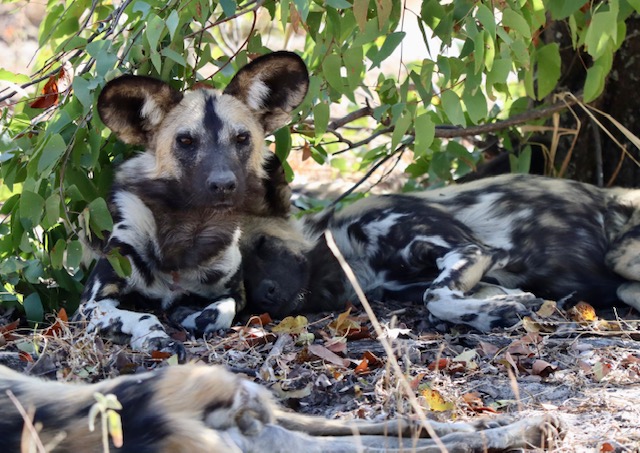
An African wild dog lounges in the shade.
An African wild dog resting at its den. 
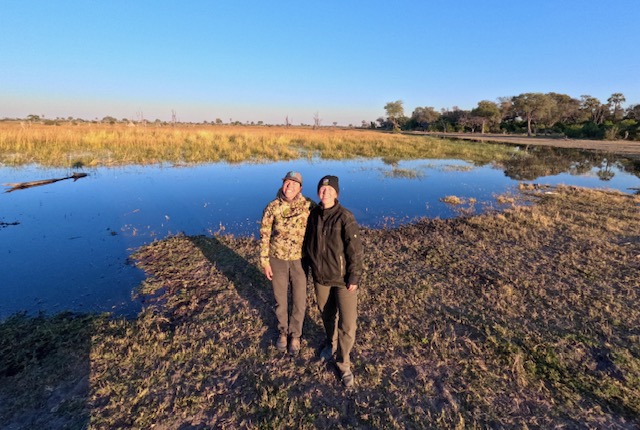
Two people smile at the camera in front of a flooded grassland.
Marie-Pier Poulin (left) and Leigh West (right) in the field this summer, pictured on the banks of the Okavango Delta’s floodwaters as they search for lions to deploy GPS collars on. Photographer unknown.
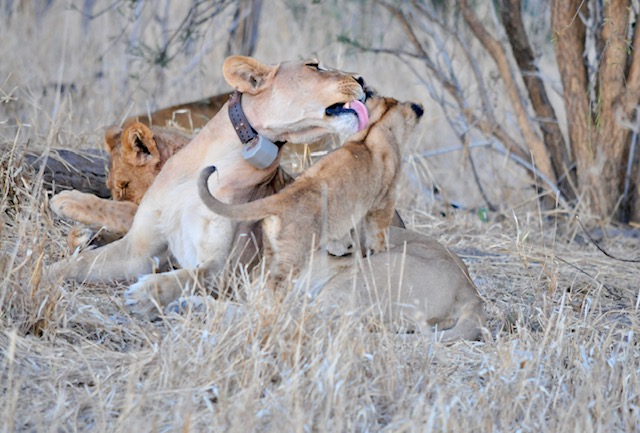
A female lion with a radio collar licks a cub.
A GPS collared lion pictured with its young cub. These collars allow us to see where animals go and what they are doing even when our research team is not with them to conduct behavioral observaitons.


Amy Moore simulated herbivory on common beans and soybeans using a razor blade to test peptides associated with plant response to caterpillar herbivory.
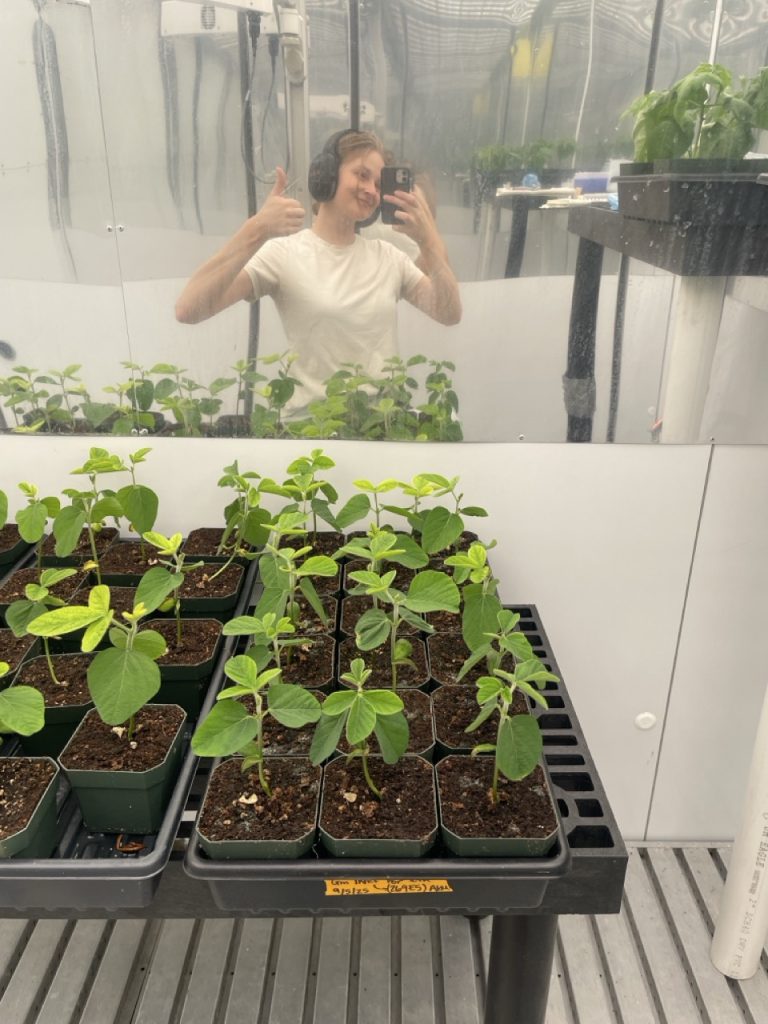
A scientist takes a selfie in a mirror. It shows her in a lab in front of a tray of young bean plants.
Rather than the field, we grow our plants year round in special chambers in the life sciences building to keep conditions constant. Here’s me with a few flats worth of soybean!

Me using a razor blade to wound the leaf epidermis, simulating caterpillar herbivory. After wounding I apply a peptide solution that modulates the plant’s defenses.

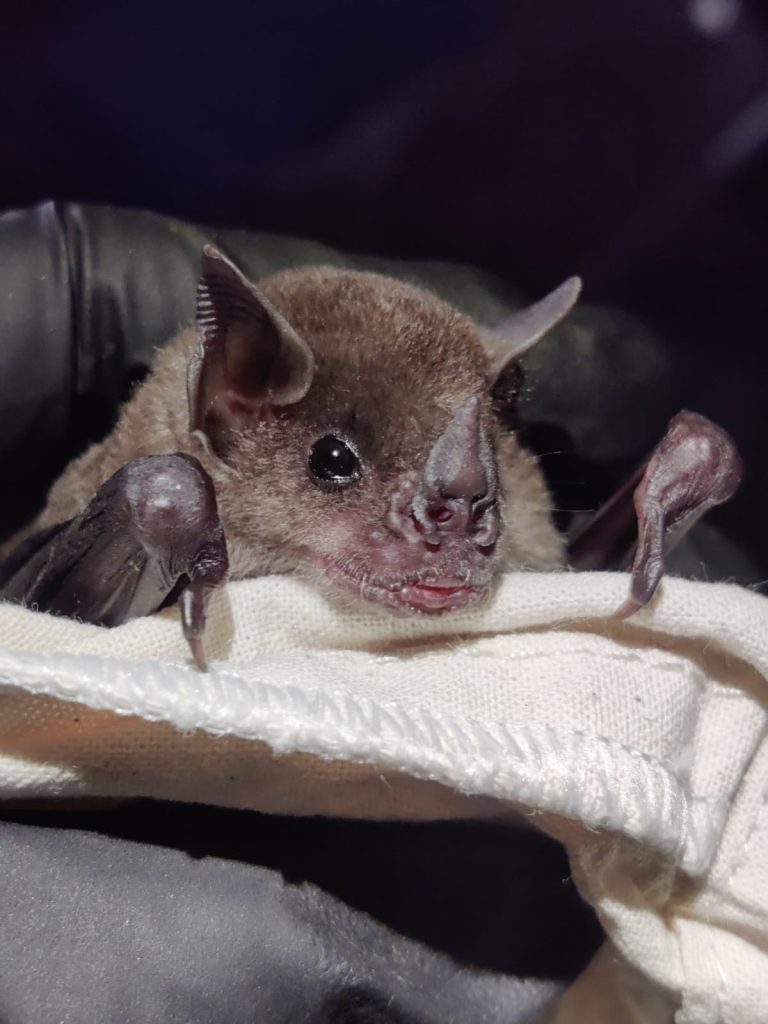
Andrea Bernal-Rivera spent the field season in the Pacific Region of Colombia working with bats in Parque Nacional Natural Farallones de Cali.
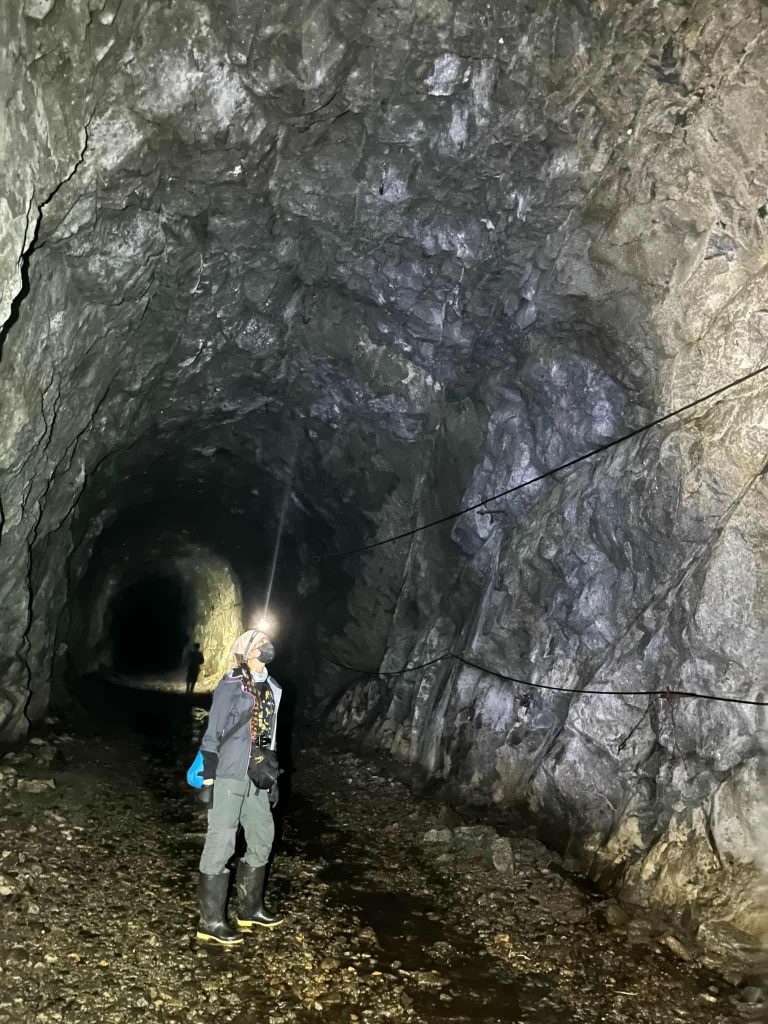
A scientist with a headlamp on looks up at the walls of a tunnel.
Finding five species of bats living in an abandoned tunnel in the Pacific Region of Colombia. Photo by National park ranger, Ricardo Ocampo.
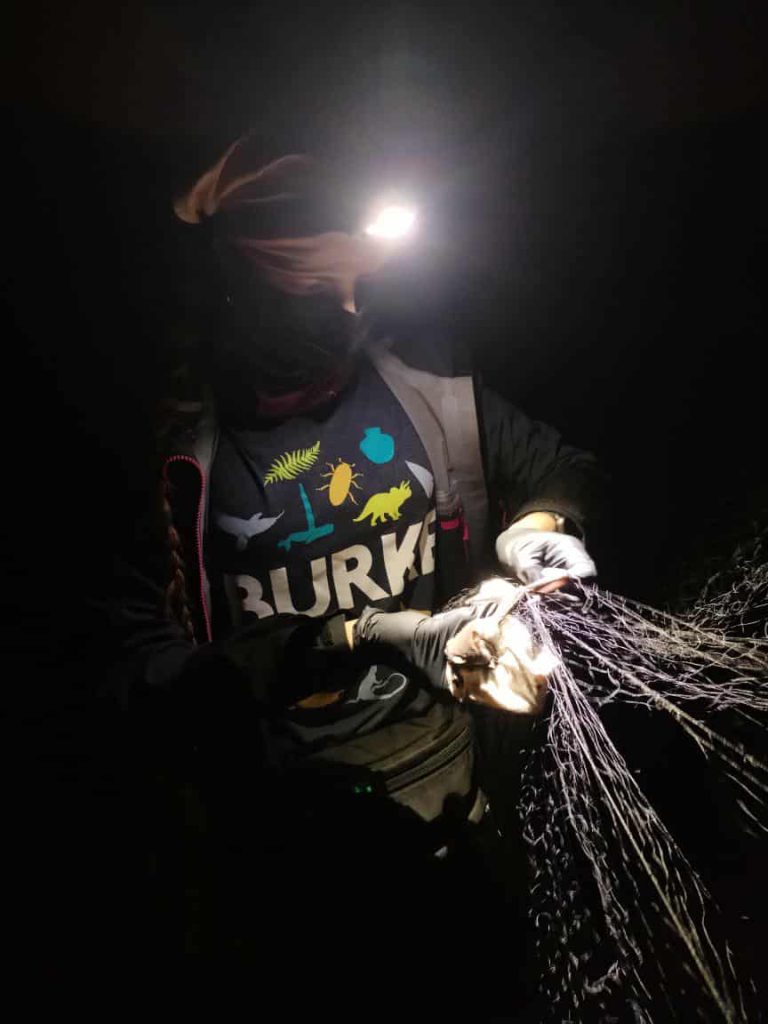
A bat caught in a mist net is held by a scientist. The only light is coming from their headlamp and is shining on the bat.
Catching bats using mist nets in a Colombian humid tropical forest at a biodiversity hotspot. Photo by National park ranger, Ricardo Ocampo.

Grace Leuchtenberger is using field and lab experiments to 1) try to make oysters more resilient to heat waves and 2) see how oysters facilitate/inhibit their own fitness via feedbacks with their local environment. Photos and video are by Prof. Emily Carrington.
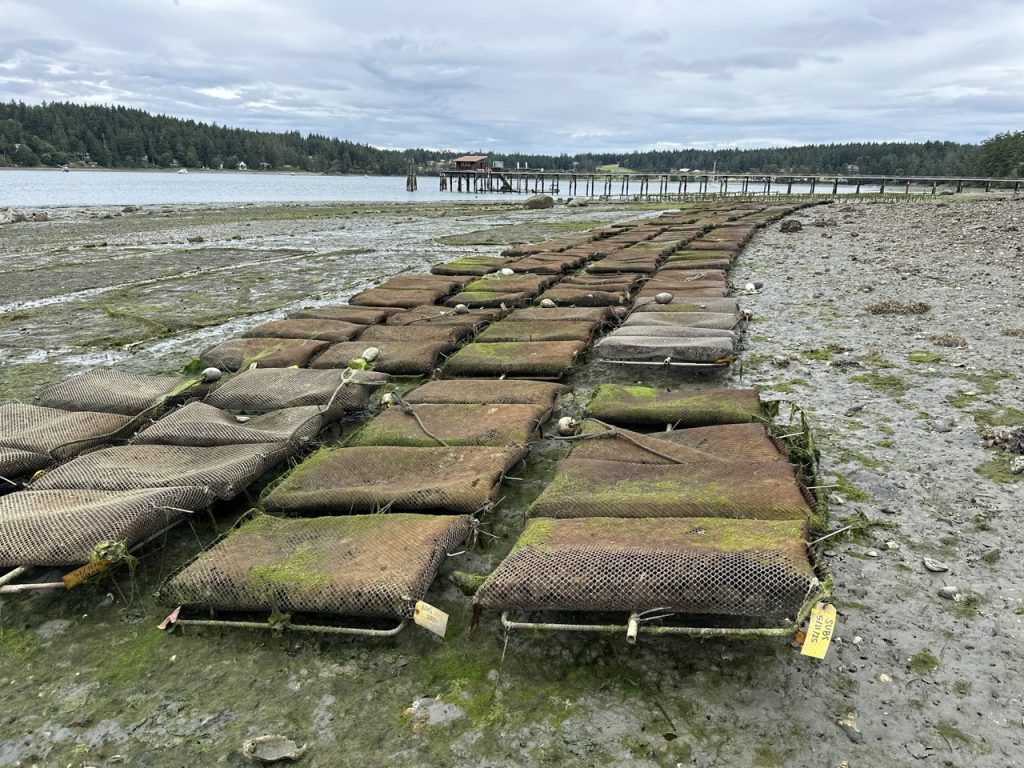
Dozens of flat, rectangular bags of oysters are spread across a beach.
The oyster farm that I do my experiments at (Westcott Bay Shellfish on San Juan Island) grows their oysters both in bottom culture (in the mud) and in off-bottom culture (in the bags you see above).
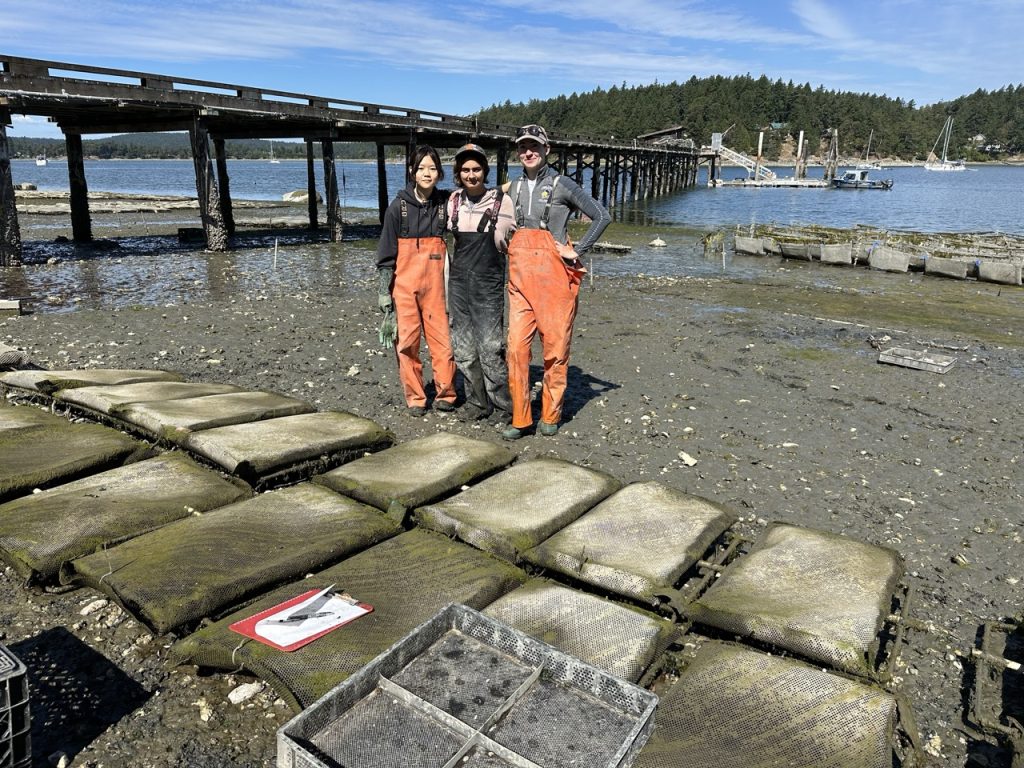
Three people in waders stand behind bags of oysters on a beach and look at the camera.
Me with an undergrad and high school intern at my field site, Westcott Bay Shellfish, after having taken oyster growth measurements. 
Me powerwashing the sea lettuce off of my oyster bags so that flow of food and oxygen isn’t blocked from the oysters.

Authors

Leave a Reply

Your email address will not be published. Required fields are marked *