This interview first appeared as an episode of the Science Positive podcast. You can check it out here on Youtube or here on Spotify!
Emma: All right, welcome, everyone, to our third episode of Science Positive. I am your host, Emma Guerrini Romano, and today we are joined by the illustrious and wonderful Vaibhav Chhaya. How are you today?
Vaibhav: I am great. I had a good lunch.
Emma: Awesome, what did you eat for lunch?
Vaibhav: It’s this Trader Joe’s fall sauce, pasta sauce, and then I put some chicken in it.
Emma: Oh, nice. OK, you got protein, you got carbs. Delicious, and it’s the fall time.
Vaibhav: Yeah, hitting my macros.
Emma: Cool. Well, so Vaibhav, you are a graduate student here at the University of Washington in the Department of Biology. Can you tell me a little bit briefly, what do you study at the Department of Biology?
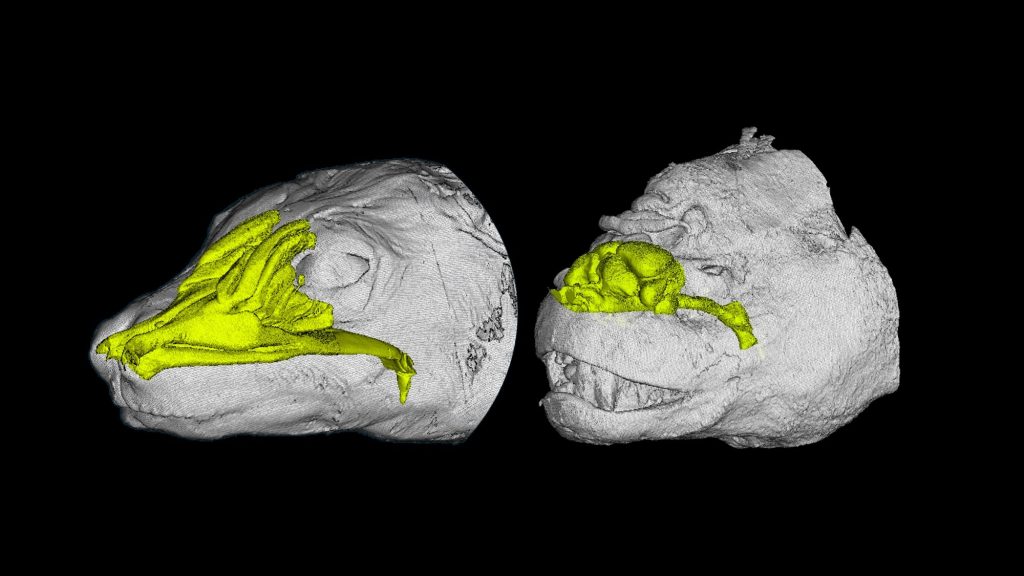
Vaibhav: Yeah, so I study bats, which in my opinion are some of the coolest creatures in the world. And with bats, I mostly study museum specimens, and with museum specimens, what I’m looking at is different questions pertaining to bat evolution. So one of the questions I’m looking at right now is how different structures inside the bats’ noses and the nasal passages, how they shape sound, and how they facilitate echolocation, the way by which bats locate their food, and the way by which they navigate in their environments.

Emma: That’s pretty neat. We have a museum here at the University of Washington called the Burke. Are you doing a lot of your research at the Burke, or are you going to different museums?
Vaibhav: Yeah, so I’m using some collections from the Burke, but we also loan specimens from other museums, like the AMNH in New York and then the Smithsonian Museum.
Emma: Pretty neat. So I mean, today’s October 30th, so we’re really approaching October 31st, which is Halloween. And bats are traditionally a spooky creature. Would you say anything about the bat is spooky or unnerving? Or are you very loving of them?
Vaibhav: You know, absolutely not. I think Halloween is the biggest misrepresentation of bats ever.
Emma: Interesting.
Vaibhav: Because when you hold bats up close, they are the sweetest creatures out there. And so this is probably a bat biologist thing, but the uglier they get, the cuter they are to a bat biologist. Yeah, so the ugliest bat is my favorite bat. It’s called Centurio. And the reason it’s called Centurio is because it means the 100-year-old man. And it looks like a really old man. And if I show it to some random person, they’ll be repelled by it, they’ll find it repulsive. But to me, it’s so cute, right?
Emma: It’s like your child.
Vaibhav: Yeah, and I feel the responsibility to vouch for these ugly–well, not ugly to me, but to other people.
Emma: Sure, I feel like a lot of times in biology, people work with very aesthetic animals like dolphins and–
Vaibhav: Hey, bats are aesthetic.
Emma: OK, yes, actually, bats are aesthetic. Let’s reframe the narrative and make them aesthetic now. Awesome. Well, so I guess bats eat a lot of different types of foods. I feel like the Halloween notion is that bats drink blood. But there’s bats that eat things that aren’t blood, right?
Vaibhav: Yes. So by the way, bats form about 20% of all mammalian species.
Emma: Wow. There are a lot of bats. I did not know that.
Vaibhav: And so there are about 1,400 bat species right now, more being described. But only three species of those around 1,400 actually feed on blood.
Emma: Wow, only three.
Vaibhav: Yeah, and they’re only found in the neotropics. And they are the vampire bats. Apart from that, most other bats either eat insects, fruit, sometimes other vertebrates, nectar.
Emma: Interesting. So when you’re looking at the– you said you look at the nose structure for echolocation for the bats. Are you looking across species, or are you looking across time scales? Are you looking at the same species or multiple?
Vaibhav: Oh, multiple species. Because different species have different requirements. They forage differently. They feed on different things. They navigate in different kinds of environments. So my job is to look, compare these species, look at their ecologies, and see how their morphology– whether the morphology corresponds to their ecology or not.
Emma: Interesting. Yeah, there’s a function is in–what’s the term?
Vaibhav: Form and function. That’s the title of my thesis.
Emma: Oh, there we go.
Vaibhav: Form and function in the bat roster.
Emma: That’s amazing. Well, awesome. I loved this little introduction to bats, especially because it’s so topical right now. OK, cool. Let’s go back a little bit about what excites you about your research. So what kind of questions do you ask, and when you wake up in the morning, what kind of motivates you to investigate what you do?
Vaibhav: That’s a deep question. So I have always found diversity very interesting. Diversity in the natural world. So a way to relate to it is like Pokemon, right? What excites us about Pokemon? It’s that, hey, there’s yet another Pokemon with its own traits and own personality and own powers. So I view organisms the same way. Each different species, each creature has a story to tell. So what motivates me to go to work is that every other day, I might get to study yet another species which might have its own secrets that haven’t been revealed yet. And I have actually found some tiny secrets that only I am aware of. And it feels so special to be that person.
Emma: Totally. That’s awesome. You’re like a keeper of knowledge in a way.
Vaibhav: No, no, no. Very, very tiny bits of knowledge. And I’m just contributing to an ocean. But just having those tiny bits of knowledge with me is just very–
Emma: I’ve heard a PhD thesis being described as– when you look up at the night sky and you see stars, in old times, people used to think that it was caused by pinpricks coming out from the outside. And so there was a massive light coming out from this black dome. And anyways, people describe PhD theses as a tiny prick in a dome of vastness. And so I think that those tiny micro pieces–
Vaibhav: Exactly. That’s a really good analogy.
Emma: That’s awesome. OK, cool. So let’s flip a little bit about more personal things. So you are now in your PhD. You’re in your– what year are you in? Fourth year.
Emma: Your fourth year. So you’ve passed candidacy. So you’re a PhD candidate.

Vaibhav: Long time ago.
Emma: Well, as someone who’s approaching candidacy, I feel like it’s a very nerve wracking time. But let’s back up a little bit to what were you doing before your PhD? And what inspired you to pursue your PhD?
Vaibhav: So I have been what people call on the fast track. Because I have not done any job, or I have not gone outside academia. I got into university college. I did a BS/MS degree in science with a specialization in biology. And I just directly moved into a PhD. And during my undergrad, my undergrad institution was very research focused. It promoted research among undergrad. So that was really helpful. And there I found my previous advisor in India. And he’s still one of the biggest mentors in my life.
Emma: Awesome.
Vaibhav: So he introduced me to birds. And then I just fell in love with the kind of work he was doing.
Emma: Yeah. So would you say that your– how is your experience in undergrad doing research? How did that kind of set you up for your PhD? And what were some of the big–you said yourself you’re on a fast track. And I can relate to that too. What are some of the difficulties that you had switching immediately from a bachelor’s degree straight into the PhD?
Vaibhav: Yeah. So because I had a master’s program as well, it was an integrated thing. And because my research institute was very focused on undergrad research, it wasn’t a very drastic jump for me.
Emma: Nice.
Vaibhav: When it came to a PhD, I somewhat knew the ropes. The challenge was adapting to an institution in a completely different country, like people from all around the world and different cultures.
Emma: Yeah. And is your family now here in Seattle with you, or are they still back home?
Vaibhav: No, they’re in India. I have no family in the US. Well, some distant family would–
Emma: How often do you go back? Is it flexible for you to go back? Do you want to go back?
Vaibhav: Yeah. My advisor is super cool about going back. So whenever I get an RA from her, I go back for about two, three weeks every year.
Emma: Yeah, totally.
Vaibhav: To see my parents and my previous advisor at least once a year.
Emma: That’s amazing.
Vaibhav: And it’s important. It’s like a refresh button. It reminds me of where I come from, because you can get lost here.
Emma: Oh, 100%. Yeah, well, I guess in terms of your path, when you were a kid growing up, was it very clear that you were going to end up in science, or was that something that you kind of discovered later on?
Vaibhav: Oh, absolutely not. Because in India, there are only two valid professions– medicine and engineering. And if you’re not doing any of those two, you’re doing some other thing. So I like biology, right? And so I started studying biology. But everybody’s just somewhat implied that, hey, you’ll go into medicine, right? So even I was like, hey, OK, I will go into medicine if you are saying so. And so I studied for medicine. I gave the exam to get into a medical institute. But in the end, I decided I didn’t want to do that. I also got a nice scholarship to get into the institute that I went to. And that was the change in trajectory. I had no clue that I would end up in science at all. I thought I would become a doctor.
Emma: Yeah. That’s really interesting. I mean, I guess, is there something about being a scientist that particularly draws you? Do you like answering your own questions and asking your own questions?
Vaibhav: Absolutely. And I think the most exciting thing about being a scientist is that you are doing so many jobs at the same time. So things are so exciting all the time, right? I’m in a podcast right now. One hour later, I’ll be teaching students. And the next hour, I’ll be working on CT scans of bats. So every day is just filled with so much diversity. It’s very exciting all the time.
Emma: Yeah. No, I’ve definitely heard–I’ve expressed to people who aren’t in PhDs that PhD is a lot of task switching. You’re very good at changing the way your brain works on a dime and approaching something from a different way. Question for you. So you said you had an advisor back during your bachelor’s and master’s. What was your relationship with your advisor? And you said that you continue that relationship with your advisor now. And what have you taken away from that relationship that you looked for in your current advisor or that you really prioritize in someone who’s leading you throughout a science degree?
Vaibhav: So my previous advisor, when I joined him, he wasn’t even a full professor there. He was a fellow, somewhere in between a postdoc and a faculty position. And he couldn’t even take PhD students. He could only take undergrads. But he was this sort of quirky character in the institute. And people knew that he would go to the hill behind the campus to watch birds at 5 AM. I said, hey, if this guy can do this for a job, I would like to do what he’s doing. So I joined him, and it was just us, like a couple of undergrads and him. And we would all sit in this common room, because he didn’t even have his own lab. We would just sit all together. And it was like, what was that show with Barney and—
Emma: Oh, the Barney and Friends show.
Vaibhav: Barney and Friends show. So he was like Barney, and we were the little kids learning from him. He also somewhat– he’s quite tall, so that matches the analogy pretty well. So he was a very involved mentor. And the kind of mentorship that happened there was different from the kind of mentorship here, which is much more professional. There, he almost became our friend. He became my friend. And just being friends with somebody actually creates a lot of accountability. And he was investing so much in me, right? So as a result, I wanted to invest in him as well.
Emma: Yeah, that makes sense.
Vaibhav: So that sort of deepened our research, our passion for the research we were doing together. And so that’s the kind of mentorship I look for. When I came here, my current mentor, it’s a different kind of mentorship. But it’s very important to learn as well, because there are good parts to having a professional side to you as well, especially when you have many students.
Emma: Totally. Yeah. That makes sense. And I guess with your old advisor, did you spend a lot of time on the hills behind the school watching birds at fighting?
Vaibhav: Yes. He made me fall in love with birds.
Emma: I bet. What’s your favorite bird? Or not your favorite bird, that’s always a crazy question to ask.
Vaibhav: OK, OK, I’ll tell you. Adélie penguin.
Emma: What’s special about the Adélie penguin?
Vaibhav: Yeah, they are feisty.
Emma: Feisty?
Vaibhav: So you know this quote, it’s not about the size of the dog in the fight. It’s about the size of the fight in the dog.
Emma: Yes, like chihuahuas.
Vaibhav: Yeah. So Adélies are like the chihuahuas of the penguin world.
Emma: Wow.
Vaibhav: And yeah, they are just so bold. And they have so much confidence. They are these short little– like anybody can topple them over. But they have this– and I somewhat relate to it. They have this confidence and boldness about them. That’s very endearing to me.
Emma: That’s interesting. In your work, in your PhD, what areas are you confident in? Or what areas did you have to build confidence in? And in the sense that– that’s a very crazy, broad question. But I guess, like the Adélie penguin has this sort of misplaced confidence. You said that you can knock it over really easily. Have you ever had misplaced confidence?
Vaibhav: Oh, absolutely.
Emma: OK. And what’s that kind of example where that happened?
Vaibhav: Yeah, so I had a lot of problems with confidence early on when I was doing science as an undergrad. And I realized that to develop confidence, you have to fake it in the beginning.
Emma: Sure, yeah.
Vaibhav: So that’s probably– yeah. That’s probably the inspiration I got from Adélie penguins, maybe subconsciously.
Emma: Fake it till you make it kind of.
Vaibhav: Yeah, so for example, speaking in front of people. You have to– the first few times you do it, it doesn’t feel natural at all. But then you have to fake it the first few times, and then you get used to it.
Emma: Yeah. I definitely have had that moment where I’ve stood up public speaking, and all of a sudden I’m just like pouring sweat, what am I doing?
Vaibhav: Especially if you’re talking to another scientist, you are showing their work to them, and you are sweating, it means that you’re getting good feedback. If a person is not making you sweat, it means like, OK, you’re not getting any proper critical feedback.
Emma: Yeah, yeah, yeah. That’s a good point. It’s a good way to think about it. I think that I need to remind myself of that sometimes. So previously on this podcast, SciPos, we’ve talked a little bit about imposter syndrome with other PhD students. And I know it’s something that is very common throughout academia. It spans from professors all the way to undergrads and everything in between. I myself have struggled with it and still struggle with it to this day. And so I want to ask you, have you ever had issues with that? Is it something that affects you at all? And if so, how have you managed to circumvent it or deal with it?
Vaibhav: Absolutely. I think if you’re not facing imposter syndrome, it’s a problem.
Emma: Yeah. And yeah, how do you deal with it?
Vaibhav: I still have problems dealing with it. Because one of the biggest problems that I have is that I’m highly critical of research. But I am even more critical of my own research and myself. And so I think what helps is having a domain in your life where everything is not about research. So I play music, for example.
Emma: And you’re amazing at the guitar. Amazing.
Vaibhav: Like, passable. But see, again, the same imposter syndrome. But with any creative endeavor, everything is so free. There’s nothing right about any creative activity. And that sort of helps you put that side of you away, the self-critical side. So that has helped me, playing music, doing creative things. And apart from that, having good mentors helps a lot. So my previous mentor, my current mentor, they are really, really supportive people. And a lot of times, I’ve gone to him and said, hey, this doesn’t make sense. I have no direction. And he would just say, I’m sure you will figure it out.
Emma: It’s just like a word or vote of confidence.
Vaibhav: Yeah, sometimes you just need validation from somebody who has been through it all, so you just need a mentor or somebody who’s there for you and they can just walk you through it, everything is going to be OK.
Emma: We’ve talked a little bit on this show about having community and how that affects your graduate school experience. Where did you find community, both before grad school and when you first came here to the UW? And was it easy to find community? Here in Seattle, we have the Seattle freeze, is what they call it. Did you experience that at all? Or was that something that you were able to do easily?
Vaibhav: Yeah, so community in my college was super easy. Because we were in a campus where everybody was living in dorms. And it was this closed off situation. So community was just natural. You were in this close space with people, and everybody was deep into science. Every single person was a geek. So it was just very easy to make friends and hang out with people. Coming here, it was my first experience, being a proper adult in the world, where I realized that building community requires much more effort. You have to reach out to people. It’s more of an uphill battle here. And of course, being an international student, it has been harder for me to find community. But what I’ve learned here over these four years is that it’s OK to have transient community. And that’s especially important with the kind of work we are in, where people are graduating, people are moving away, people are moving in. So every other year, you have different people in your life coming in, going out. And you have to make peace with that fact. You have to find beauty in the transience of this community.
Emma: Yeah, that’s a really, really good perspective. So I guess, within your own lab, have you seen the dynamic changes between people leaving and defending and coming back in?
Vaibhav: Yeah, absolutely. So my lab recently had a defense. David, he was a really good friend of mine. And he introduced me to salsa dancing. And I’ve been salsa dancing for a year now just because of him. And he showed me so many cool things, like about his culture and about music. And then he left. And that’s just one example. But then new first years came in to the floor. And now they have sort of added to this community. So you have to be willing to shift.
Emma: And the memories remain, right? The laughs remain. OK, cool. So the next thing I kind of want to ask you about is specifically advice that you have for people who are trying to get into science. So you mentioned before that previously you were on a pre-med track or you were expected to go into medicine and you decided not to. So what is a piece of advice that you have for people who might be in a position where they’re expected to do one thing, but they really are drawn to something else? Maybe that’s biology. Maybe that’s other types of research.
Vaibhav: So this is at what stage? Are they already a researcher?
Emma: Pre-actual career. So let’s say pre-grad school.
Vaibhav: I would say join a lab. Join a lab and get some experience. Start emailing people. If you think something is interesting go approach that professor or TA. Ask them about it. And especially in our department, every single TA would be very willing to talk about what they do. And yeah, just get your foot in the door. And start getting some research experience as soon as possible. That’s the best way to do it.
Emma: Yeah, we’ve talked a little bit before about cold emailing and how that’s totally fine. And most people, most researchers, are way more excited to talk about their work than what meets the eye. And yeah, it doesn’t hurt to cold email, right?
Vaibhav: Yeah, yeah, no. Not at all. You can send hundreds. Well, if you have the time. One after the other. But you will get an opportunity if you try.
Emma: Yeah, exactly. OK, a little bit more specific to this time period that we’re living in, right? We are living in a bit of a tumultuous period for science, for science funding. What is something that you do to comfort yourself when funding is maybe up in the air, or there’s a lot of news articles that maybe increase the anxiety more so than already being in your PhD?
Vaibhav: I think limiting– this goes against what many people think, but limiting the amount of news you see. I’ve realized that the less news I see every day, the happier I am. And yeah, you just need to be aware of what major things are going on. But beyond that, you have your life to live, right? You have to finish your PhD, for example. So the ignorance is bliss thing applies a little bit. Not too much, but yeah.
Emma: Yeah, and we each have our battles, right? The battles that other people are fighting are amazing, and we support them. But our science is our battle right now.
Vaibhav: We have so many battles of our own, too. Yeah, it’s a hard world.
Emma: It is a very hard world, and it’s a hard degree, too. The last question that I have for you for today is, what advice that would you give to aspiring scientists or anyone wanting to get involved in science? You talked a little bit about getting your foot in the door and cold call emailing. But I guess generally, for maybe first year graduate students or even people currently applying to graduate school, what advice do you have? Yeah, what guidance?
Vaibhav: Guidance about what?
Emma: Let’s say for this question, let’s go with research. A hot tip that you have to do with research, and then let’s give a hot tip about personal life.
Vaibhav: Don’t be afraid to take risks.
Emma: Does that apply to both research and personal life?
Vaibhav: Well, personal life, I have nobody to tell them what to do, right? But research-wise, I think it’s very important to take risks in your science if you want to do something different. Yeah, a lot of times, those risks actually teach you a lot. And sometimes they end up in some good research. Yeah. So especially early, because you said first year, take as many risks as you want. If you have a crazy idea, go pursue it. Because you might not be able to do it in your fifth year, for example.
Emma: Well, that is all the time we have today. Do you have anything else you want to say to the viewers that may be watching at home or listening at home?
Vaibhav: I’m really glad to be here. It feels very flattering.
Emma: Well, I’m so glad you’re here. Thank you so much, Vaibhav, for joining us today. I hope we have you another time. And happy Halloween to your bats.
Vaibhav: Happy Halloween.
Emma: Amazing.
Vaibhav: Thank you.
Check out the previous SciPos Podcast interview with Glorianna Gutierrez here!