Skip to content

Announcements

S+T at UW After Hours event on living with high risk brought gravity and humor to Tacoma

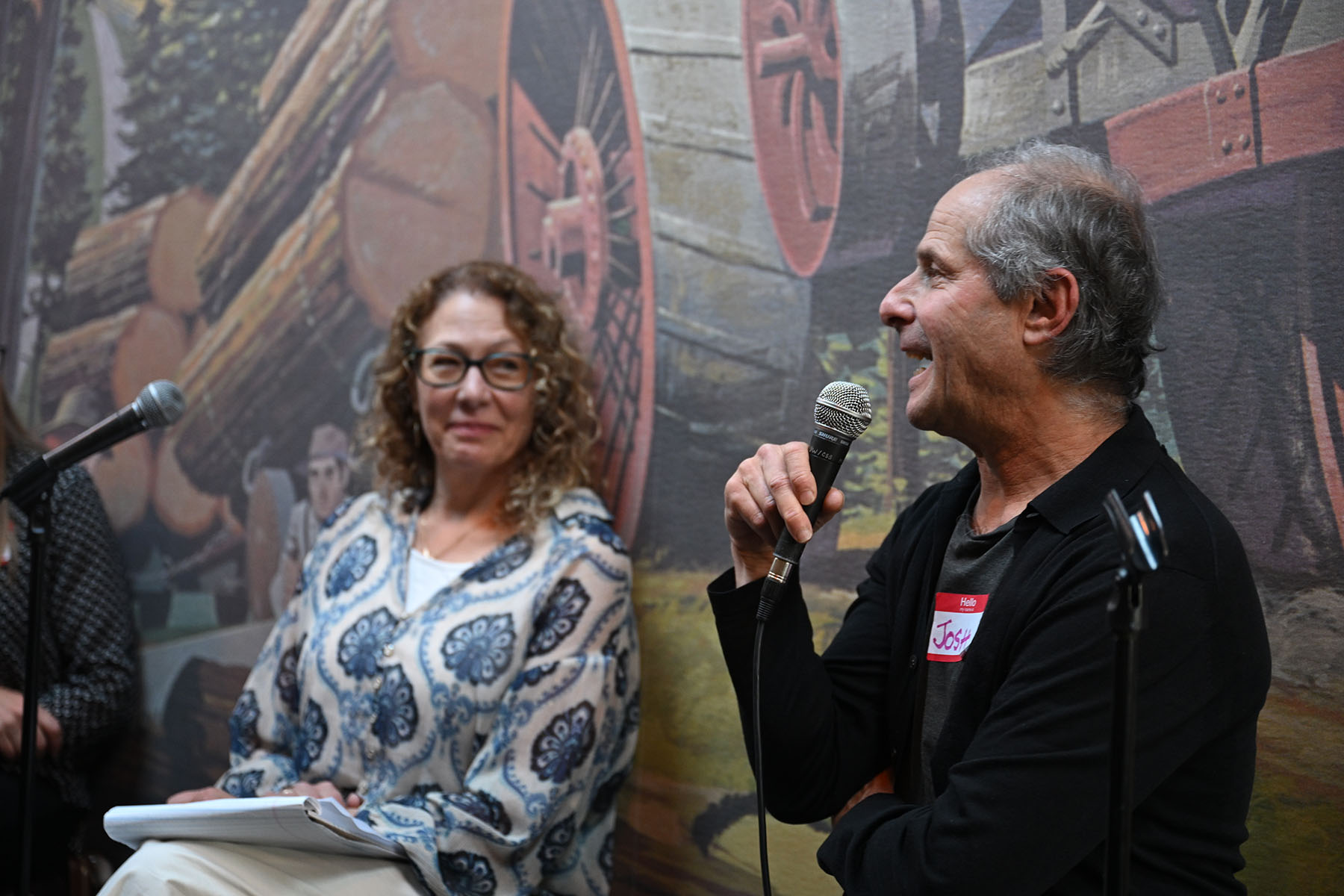
Lisa Hoffman, left, anthropologist and professor in the School of Urban Studies at UW Tacoma, and Josh Tenenberg, right, computer scientist and professor in the School of Engineering & Technology at UW Tacoma. Credit: Matthew Weinstein.

What does it mean to be living with “high risk” for disease? This was the question that inspired an intimate public gathering at Peaks & Pints Taproom in Tacoma on May 18 for Society + Technology at UW’s latest After Hours event featuring anthropologist Lisa M. Hoffman of UW Tacoma’s Urban Studies program and computer scientist Josh D. Tenenberg of UW Tacoma’s School of Engineering & Technology.

Many research collaborations have serendipitous beginnings, and the conversation began with Hoffman and Tenenberg recounting how they’d been attending an STSS reading group led by Matthew Weinstein, a professor of education at UW Tacoma (and the photographer for this event), and realized they shared a connection to pancreatic cancer but had differing relationships to their own sense of identity in relation to risk.

Hoffman (pictured above, left) had been living under the shadow of being high risk for pancreatic cancer after losing both her mother and brother to the disease. While Tenenberg (right) described a different relationship to the same illness. Although his father also died of pancreatic cancer decades earlier, he had never understood himself as someone living with high risk.

When they realized they shared this connection, the scholars began collaborating, conducting cultural and data-driven analyses of risk categories over time.

During the event, they explained the outcomes of their work, such as the regimes of truth that have come to govern approaches to living with risk, alongside their own lived experiences.

Tenenberg revealed that he is reluctant to participate in disease surveillance himself.

“I typically don’t go to the doctor,” he said, adding that he would seek medical attention if he experienced symptoms or believed something was wrong.

His remarks drew laughter from the audience when he clarified that he was not opposed to risk management altogether.

“I’m at higher risk if I go on ladders–and I don’t get up on ladders,” he said. “I don’t go up on my roof.”

Meanwhile, Hoffman described her observations of the trust that vulnerable people are asked to place in medical expertise and predictive technologies. She compared Western medicine’s authority to an oracle or sage—a person in a white coat representing an institution that people may not fully understand but are expected to trust.

At the same time, she acknowledged her own participation in disease surveillance despite concerns about the broader forms of governance they enable. “I take the statin they prescribe,” she said.
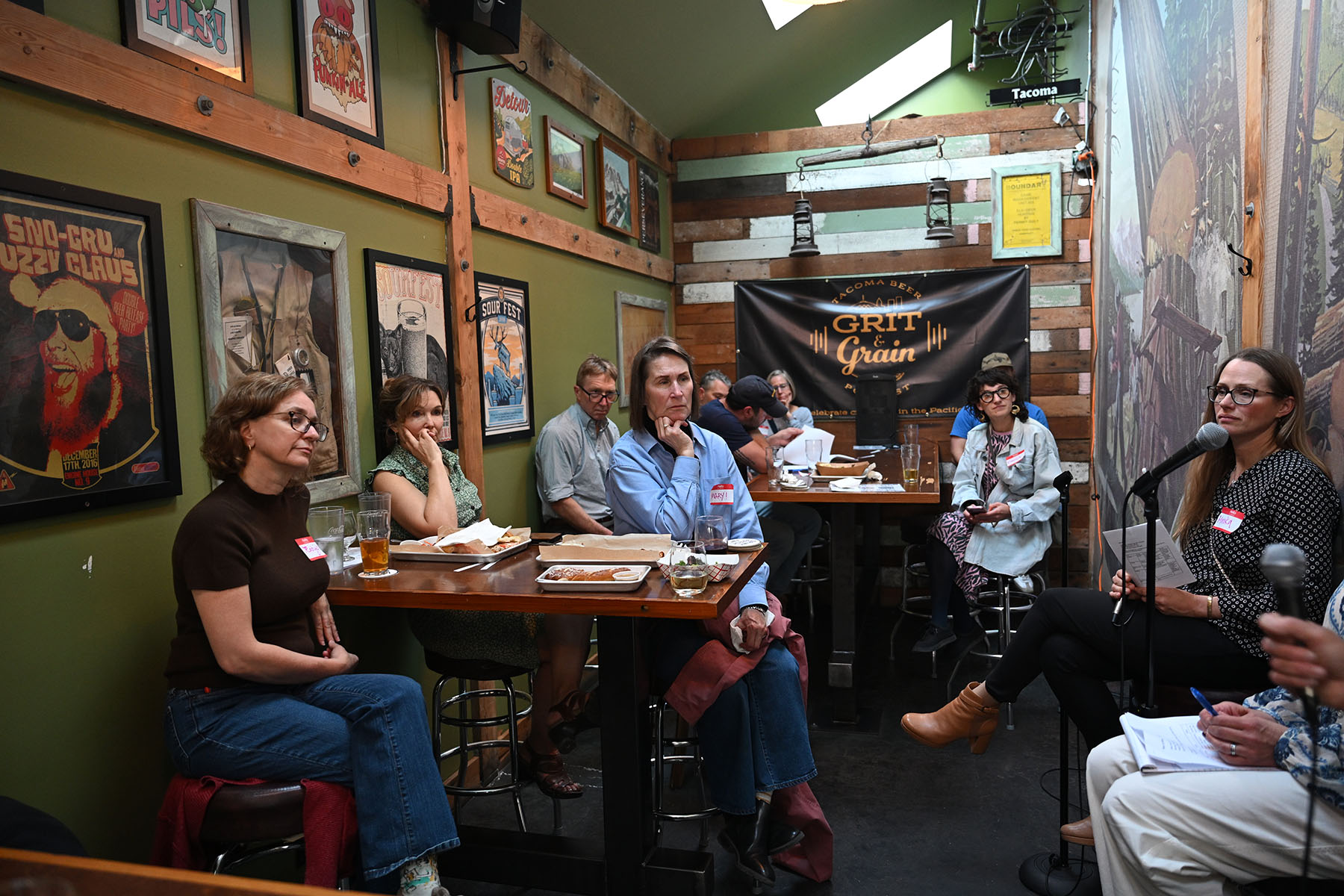
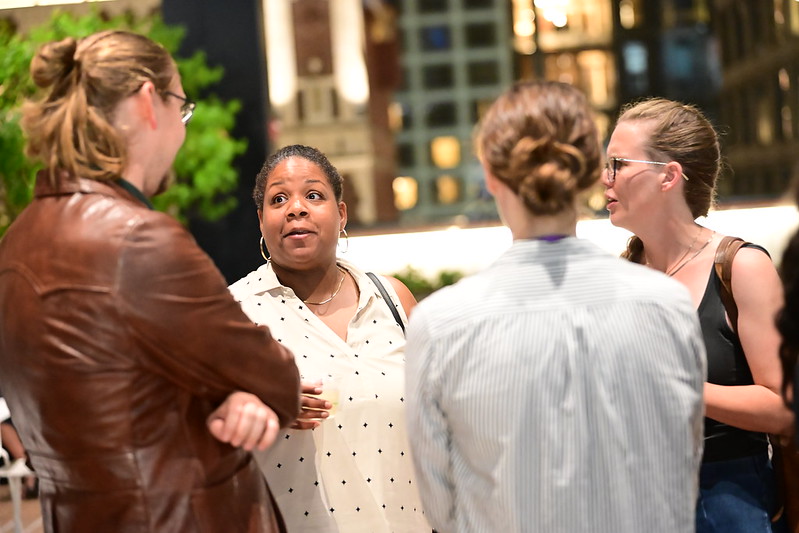
More than 25 people enjoyed the private room at Peaks & Pints for the conversation on May 18, 2026. Credit: Matthew Weinstein

Hoffman also noted there’s an expansion of interest among researchers and companies in identifying genetic risk in new populations–such as testing every infant– but noted that families may not understand the meaning of risk. There are ethical concerns about how such knowledge might shape the baby’s life, gesturing to the possibilities that risk categorization opens up, from discrimination to eugenics.

During the question-and-answer session, one audience member, a physician, discussed her elevated risk for strokes due to family history and high blood pressure. Another raised concerns about unequal access to surveillance programs and preventative treatments for people identified as high risk.
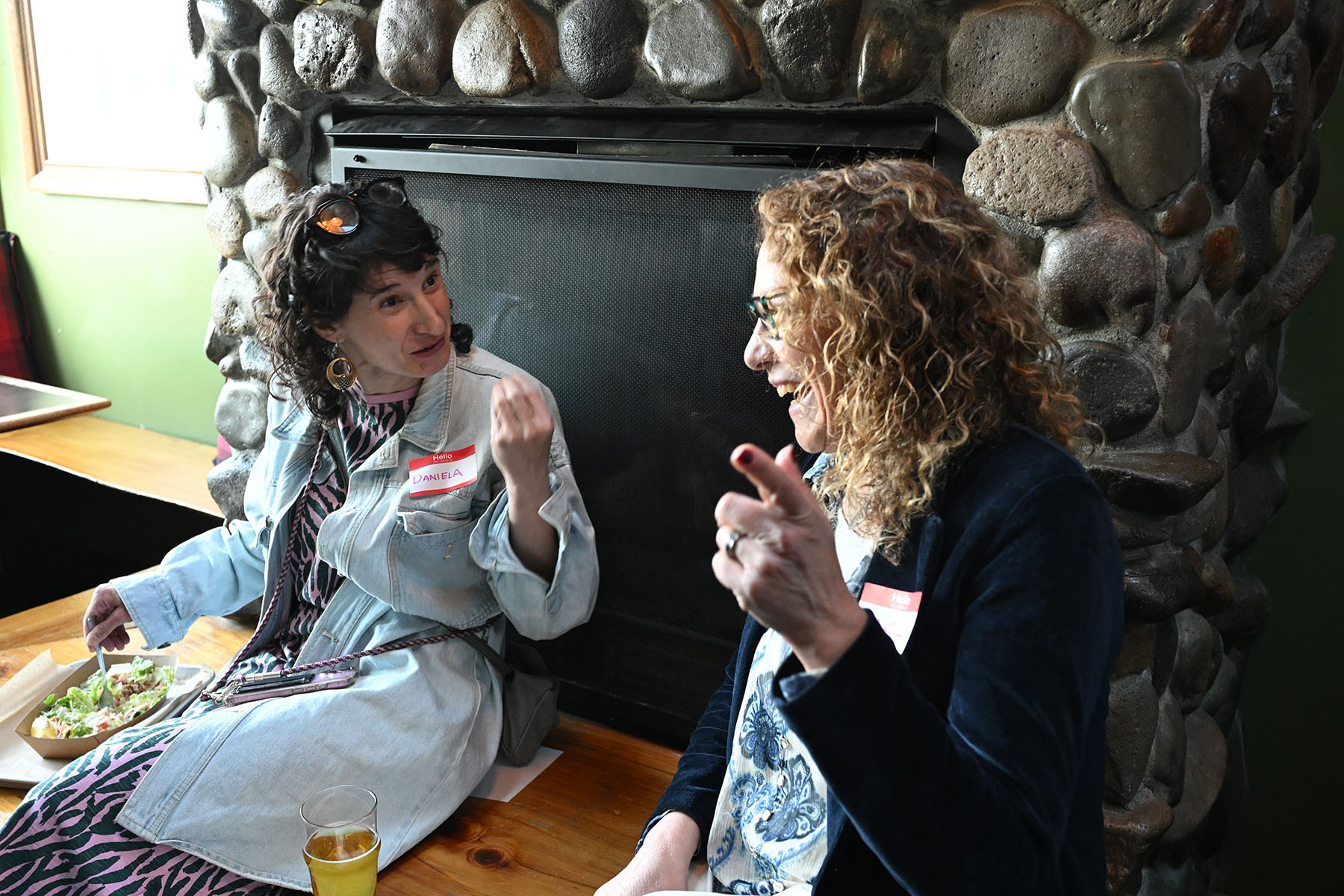
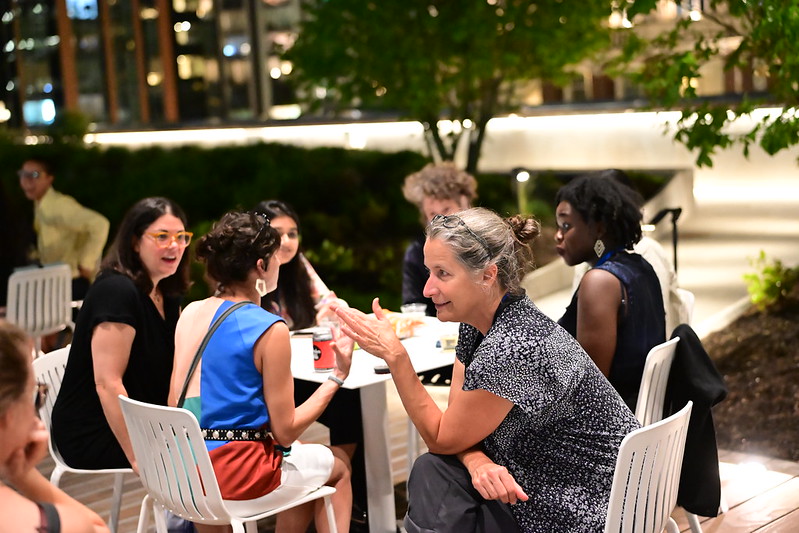
Lisa Hoffman (right) talks with Daniela Rosner (left), professor of Human Centered Design & Engineering and DXARTS at UW Seattle, who traveled to Tacoma for the After Hours event. Credit: Matthew Weinstein

Audience members came from across the Puget Sound region. The After Hours event was made possible thanks to support from the Tech Policy Lab at UW and the in-kind support of Peaks & Pints, which provided the venue space free of charge.

After Hours is a program of Society + Technology at UW, and this session was facilitated by Monika Sengul-Jones.

Society + Technology at UW is dedicated to advancing research on the social, societal, and justice dimensions of technology across the University of Washington’s campuses.

Check out Hoffman and Tenenberg’s upcoming, co-authored publication:

Hoffman, L., Tenenberg, J. (2026). Cancer Risk Assessment Scores: Personalized Risk and Mundane Genomics. In Mundane Genomics: DNA after the Hype. Argudo-Portal, V., Pavone, V., Turrini, M., Wahlberg, A. (Eds.). Preorder link: https://link.springer.com/book/9789819545490

About Lisa Hoffman
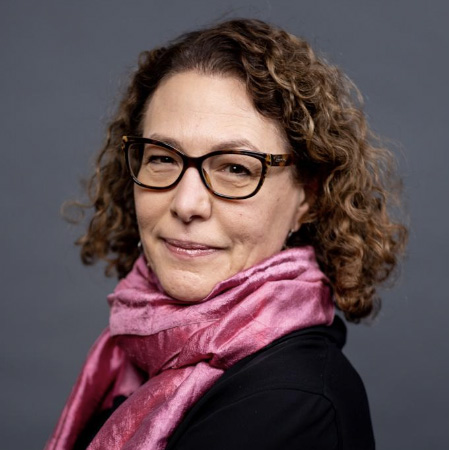
Lisa Hoffman is a Professor in the School of Urban Studies at UW Tacoma. An anthropologist, Hoffman’s current research focuses on Seattle’s biotech community, precision medicine, and the shape of contemporary practices of living in relation to genetic risk. Her work offers attunement to place, power, and subjectivity. Previously, Hoffman’s major projects included work on professionals and volunteers in contemporary China.

About Josh D. Tenenberg
placeholder

Josh D. Tenenberg is a Professor in the Department of Engineering at UW Tacoma. His expertise is in what he calls the “borderlands” of technical and humanistic approaches. Trained in computer science, Tenenberg’s empirical research has been about computing and engineering education, software development, human-computer interaction, design research, semiotics, and technical communication. His publications include Narratives of Qualitative Research: Making Praxis Visible, published by Routledge (2024). He teaches human-oriented aspects of computing at the undergraduate and graduate levels.
Crossposted with Society + Technology at UW

UW graduate students interested in STSS: Apply by June 5, 2026 to be part of the certificate program

The STSS Graduate Certificate Program Steering Committee invites applications from UW graduate students to join the 18-credit interdisciplinary STSS Graduate Certificate. We encourage all UW graduate students with an interest in STS, broadly defined, to apply.

Application deadline (Extended!): June 5, 2026

Applications are reviewed annually by the STSS Steering Committee at the end of the spring quarter.

To apply, visit the STSS “How to Apply” webpage: https://depts.washington.edu/stsst/how-to-apply/

Questions about the program? Reach out interium director David Ribes (HCDE, UW Seattle) at dribes@uw.edu

Register now for the STSS Graduate Presentations and Reception | May 14, 2026 at 5:00 PM

Thursday, May 14, 2026 | 5:00–7:00 PM
233 Sieg Building | Design Lab | UW Seattle

Join us for the annual Science, Technology, and Society Studies (STSS) Graduate Presentations and Reception, celebrating the work of this year’s graduating certificate students: Dan Tibbles, Cameron Musard, Rin Huang, Rachael Diamond, and Erica Bigelow. This event is free and open to the UW cross-campus community. This event is free and open to the UW cross-campus community.

The STSS Graduate Certificate Program at the UW introduces students to the interdisciplinary field of science, technology, and society through coursework, mentorship, and independent research. Through their studies, they develop specialized portfolios that reflect their intellectual interests and contributions. This capstone experience is an opportunity to hear from students about their research, to engage with our STSS faculty and affiliates community, and to celebrate the culmination of their work and our year together. A reception will follow the presentations.

Directions and parking: https://www.hcde.washington.edu/directions

Student Presenters

Dan Tibbles
Bioethics and Humanities

Advisor: Sara Goering (Philosophy)
Presentation: Zooming Out

Dan Tibbles is a graduate student in Bioethics & Humanities, Genetic Epidemiology, and Education, Equity, & Society at the University of Washington. His work sits at the intersection of bioethics, public health genetics, and science and technology studies, focusing on how institutional incentives, interpretive practices, and data infrastructures shape what biotechnologies become clinically available, how they are communicated, and whom they serve. Prior to academia, he spent two decades in the tabletop game industry as a designer, manager, and business owner, a background that informs his systems-oriented approach to ethics, infrastructure, and human choice.

Rachael Diamond
Communication

Advisor: Carole Lee (Philosophy)
Presentation: Science/Society Communication in a Warming World

Rachael Diamond is a second-year graduate student in the Department of Communication whose master’s thesis research examines climate science communication and the rhetoric of environmental activists. After earning her MA, she will start her PhD in philosophy at Northwestern University in the fall. Before coming to UW, she was a political organizer advocating for pro-climate policies and candidates, and studied philosophy at Scripps College.

Erica Bigelow
Philosophy

Advisor: Amanda Friz (Communication)
Presentation: Meeting and Making the Tech-Built World

Erica Bigelow is a PhD candidate in the Department of Philosophy whose dissertation studies the nature and extent of our moral obligations toward others’ emotions. She is a scholar of critical disability studies and is particularly interested in how online discourse shapes and interprets such obligations, and in rethinking feminist moral theories to meet the present moment.

Cameron Musard
Urban Design and Planning

Advisor: Daniela Rosner (Human Centered Design & Engineering)
Presentation: New-Wave Old-School Urban Planning (Retro-Planning): A Master Builder Imaginary

Cameron Musard is a second-year Master of Urban Planning student within the College of Built Environments, whose STSS portfolio explores the role of craft and making in the production and authorization of knowledge within built environment schools. He is a scholar of pragmatist/linguistic philosophy. His research interests include classical sociological topics such as analytical comparison between “traditional” and “modern” societies; and in philosophy of science, analytical comparison between naturalism and positivist epistemic venues.

Rin Huang
Cinema and Media Studies

Advisor: David Ribes (Human Centered Design & Engineering)
Presentation: Media, Modernization, Mobility

Rin Huang is a graduate student in Cinema and Media Studies, focusing on transportation and its media representations. They wonder how technologies, especially those related with aviation and aeromobility, create a dispersed imagination of globalization and modernization since 1920s.

Advisors

Sara Goering
Philosophy (UW Seattle)

Sara Goering is Professor of Philosophy and the Program on Ethics, and has affiliations with the Department of Bioethics and Humanities, and the Disability Studies Program. In addition, she currently leads the ethics thrust at the UW Center for Neurotechnology. She teaches courses in bioethics, ethics, philosophy of disability, feminist philosophy, and philosophy of medicine. She also spends time discussing philosophy with children in the Seattle public schools, through her role as the Program Director for the UW Center for Philosophy of Children.

Carole J. Lee
Philosophy (UW Seattle)

Carole J. Lee is Professor in the Department of Philosophy at the University of Washington, an Adjunct Professor at the Information School (iSchool), and Affiliate Faculty at the Center for an Informed Public, Center for Statistics and the Social Sciences, eScience Institute, Center for Studies in Demography and Ecology, and the Society + Technology Program. She studies the social structure of science from both normative and descriptive perspectives.

Amanda Friz
Communication (UW Seattle)

Dr. Friz is Assistant Professor of Rhetoric of Health and Medicine in the Department of Communication and an Associate Director of the Center for Communication, Difference, and Equity and its Heal Equity Action Lab. She is currently writing her first book, A New Materialist Critique for a Radical Politics of Pleasure, which proposes shifting the locus of feminist pleasure activism from liberal subjectivity toward a radically inclusive plurality as the basis for more equitable sexual relationships.

Daniela Rosner
Human Centered Design & Engineering, DXARTS (UW Seattle)

Daniela Rosner is Professor of Digital Arts and Experimental Media (DXArts) and Human Centered Design and Engineering (HCDE) at the University of Washington, where she serves as Associate Chair of External Affairs. She holds adjunct appointments in the Department of Gender, Women, and Sexuality Studies (GWSS) and the Allen School for Computer Science and Engineering (CSE). She also serves as an associate member of the Einstein Center for Digital Futures in Berlin, Germany.

David Ribes
Human Centered Design & Engineering (UW Seattle)

David Ribes is a Professor in the Department of Human Centered Design & Engineering at the University of Washington. Dr. Ribes’s research focuses on the sociotechnical facets of eScience and how research infrastructures can support scientific investigations across changes in technology, policy and social organization.

S+T After Hours on living with “high risk” | Monday, May 18, 2026 at 5:30 PM in Tacoma

Society + Technology at UW is pleased to host the next After Hours conversation at Peaks & Pints Taproom and Eatery in Tacoma, Living “At Risk” with anthropologist Lisa Hoffman (Urban Studies, UW Tacoma) and computer scientist Josh D. Tenenberg (Engineering, UW Tacoma) in conversation about the stakes, technologies, and stories of high risk.

What if you’re living with “high risk” for future disease? Maybe it is a genetically identified risk, maybe it is family history risk.  What do you do with that knowledge—and who decides what disease risk means and how you should live? 

Monday, May 18, 2026 | 5:30 PM
Peaks & Pints Taproom (21+ only)
3816 N. 26th Street
Tacoma, WA 98407

Add to Calendar

Topics include:

  • What does it mean to live with a “high” disease risk in our contemporary moment—and how does it differ from earlier formations of “risk factors”? 
  • How genetic risk scores are shaping screening, reproduction, and everyday decision-making
  • Who interprets risk data? What is at stake in continuous recalculations of risk with new technologies?
  • What happens when you resist or refuse?

Faculty, students, community members, and curious citizens are welcome. Free and open to the public. No registration required.e stakes—and the stories—we tell about our genetic pasts and possible futures.

Free and open to the public. No registration required.

About Lisa Hoffman

Lisa Hoffman is a Professor in the School of Urban Studies at UW Tacoma. An anthropologist, Hoffman’s current research focuses on Seattle’s biotech community, precision medicine, and the shape of contemporary practices of living in relation to genetic risk. Her work offers attunement to place, power, and subjectivity. Previously, Hoffman’s major projects included work on professionals and volunteers in contemporary China.

About Josh D. Tenenberg

placeholder

Josh D. Tenenberg is a Professor in the Department of Engineering at UW Tacoma. His expertise is in what he calls the “borderlands” of technical and humanistic approaches. Trained in computer science, Tenenberg’s empirical research has been about computing and engineering education, software development, human-computer interaction, design research, semiotics, and technical communication. His publications include Narratives of Qualitative Research: Making Praxis Visible, published by Routledge (2024). He teaches human-oriented aspects of computing at the undergraduate and graduate levels.
Crossposted from Society + Technology at UW

Share graduate courses for 2026-27 to feature on the STSS website

Faculty teaching graduate-level courses in science, technology, and society studies (STSS) in the next few quarters are invited to share the course details with me at mmjones@uw.edu for inclusion on the website course page by or before Wednesday, March 18, 2026. 

Would you like to check out the archive of previous courses? 
https://depts.washington.edu/stsst/courses/

Questions about courses or the certificate program? Contact David Ribes, interim STSS director, at dribes@uw.edu

Join the online First Monday Mixer on Dec. 1, 2025 at 12:30 PM

Join our online S+T at UW First Monday Mixer | Monday, Dec. 1, 2025 at 12:30 PM
As you navigate that end-of-Autumn-quarter schedule, enjoy the convenience and ease of an online-only lunch break mixer to connect. We’ll do introductions and have a few curiosity-stoking prompts/questions on Monday, Dec. 1, 2025 from 12:30-1:25 PM. Add the online mixer to your calendar.

The reading-focused First Monday STSS Reading Group programming will resume on Monday, Jan. 5, 2026, with host Pelle Tracey (Information, UW Seattle). Reach out to mmjones@uw.edu to get added to the email invitation list! 

Register for the Fall STSS Mixer on Tues. Nov. 25 in Seattle

 S+T at UW is hosting an STSS Fall Mixer on Tuesday, November 25, 2025, at 3:30 PM at the Simpson Center for the Humanities (CMU 202) in Seattle.

Register!
Add to your calendar!

The theme is “Encounters.” STSS faculty, staff, and students from UW Seattle, Bothell, Tacoma, and the School of Medicine are invited to connect, mingle, and share what they’ve been doing with STS across research, teaching, mentorship, and leadership work.

We are still deciding if we should make the mixer hybrid to best include all our colleagues from across our campuses. We want to hear from you about that, and more. We’ve also got a table reserved for a no-host drink at a local brewery afterward. 

Looking forward to seeing you there.

Social spotlights UW’s leadership in STS at conference with 2,000 attendees

From September 3-6, 2025, more than 100 University of Washington faculty and students presented at Reverberations, the 50th Annual Meeting of the Society for Social Studies of Science (4S), a leading interdisciplinary conference for scholars engaged in social studies of science, technology, and medicine (a field often referred to as STS), which was held in Seattle.

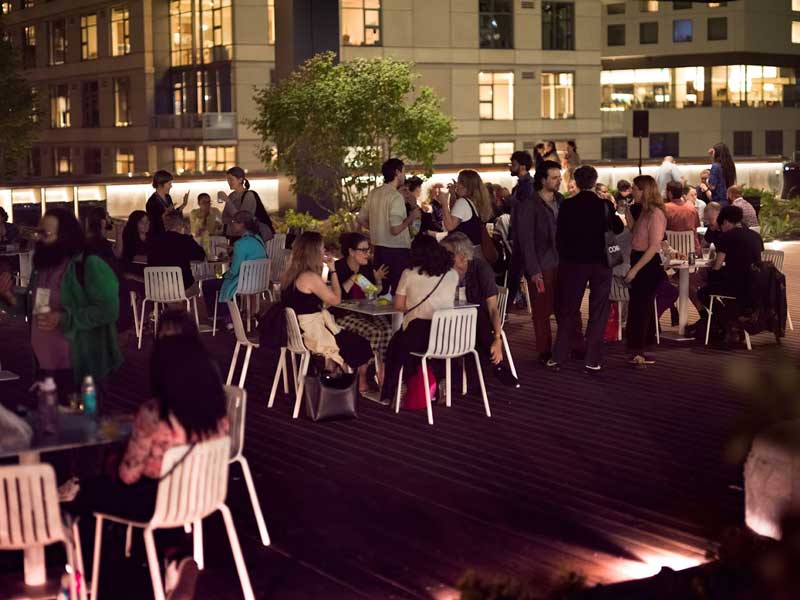
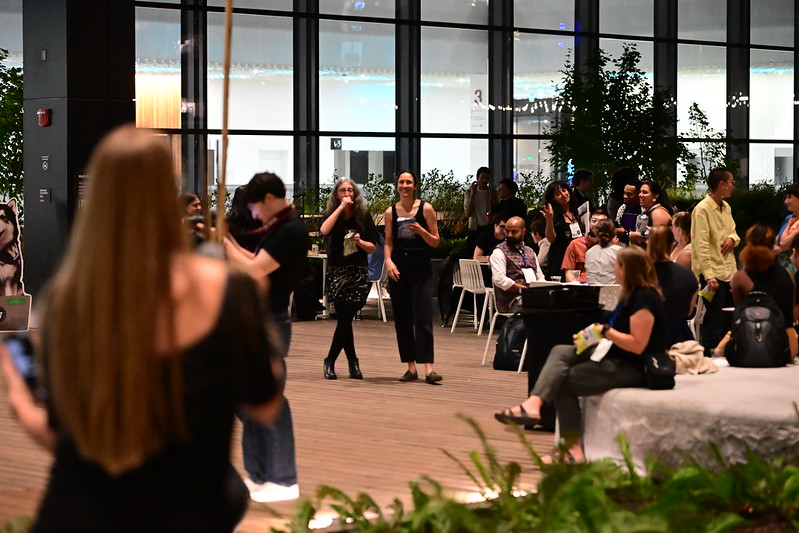
To recognize and celebrate this extraordinary demonstration of UW’s expertise, Society + Technology at UW hosted the UW Social at 4S for the 2,000 attendees.

The party was held on the Garden Terrace of the Summit Seattle Convention Center. 

Announcement of the UW Social co-sponsors: Society + Technology at UW, hosted by the Tech Policy Lab, University of Washington Press, 4S, Science, Technology & Society at UW Bothell, the Department of Philosophy, the Department of Cinema and Media Studies, the Science, Technology and Society Studies Graduate Certificate Program, the Department of Communication, CommLead, Human Centered Design and Engineering, DXARTS, and the Department of Bioethics and Humanities at UW Medicine. Credit: Matthew Weinstein

To spotlight UW, the Social featured an academic bingo activity, named co-sponsors and faculty speakers, and celebrated UW faculty working at the critical intersections of technology and society with a special book giveaway: 

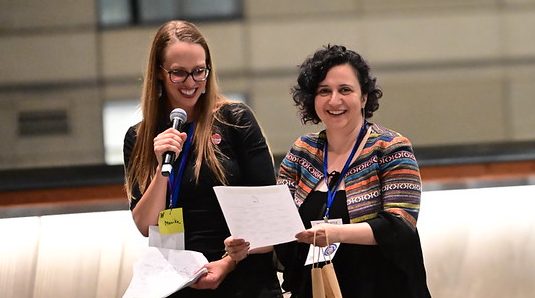
Nassim Parvin (right), Associate Professor at the University of Washington (UW) Information School, with host Monika Sengul-Jones (left). Credit: Matthew Weinstein

The AI Con by Emily Bender (Linguistics, UW Seattle) and Alex Hanna.

Technocreep and the Politics of Things Unseen edited by Neda Atanasoski and Nassim Parvin (Information School, UW Seattle).

Unmaking the Bomb by Shannon Cram (IAS, UW Bothell).

LIsa Hoffman, Shannon Cram at Welcome Table.
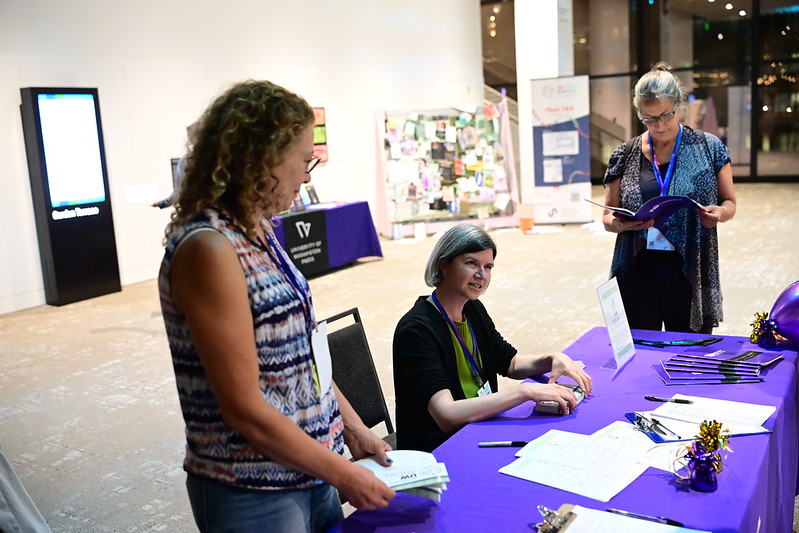
At the Welcome Table at the UW Social at 4S: Shannon Cram (center), Associate Professor in the School of Interdisciplinary Arts and Sciences at UW Bothell, and Lisa Hoffman (left), Associate Professor in Urban Studies at UW Bothell. Credit: Matthew Weinstein, 2025

During the conference, several UW faculty gave signature talks, including:

  • Associate Professor Dian Million (American Indian Studies) delivered the presidential plenary keynote on generative dis/connections between indigenous studies and science and technology studies.
  • Faculty Lupe Alberto Flores (American Ethnic Studies) and Diana Flores Ruíz (Cinema & Media Studies) featured as keynote speakers in an address on Bordering, which traced struggles and solidarities across bordering mechanisms, describing the use of systems of attention and surveillance to violently separate, confine, and debilitate.
  • Graduate students Althea Rao and Sadaf Sadri (DXARTS), and alum Chari Glogovac-Smith (DXARTS), gave the threaded keynote address Art Scenes, offering remarks that recast the technological logics of capitalist racialization and militarism for creative possibility.
  • PhC Gabrielle Banabdallah (HCDE) organized the zine festival.
  • Faculty and students from Cinema & Media Studies, HCDE, DXARTS, Philosophy, the Information School, Bioethics & Humanities, and more presented their work.

Reverberations was co-chaired by UW faculty Daniela Rosner (HCDE/DXARTS) and Jenna Grant (Anthropology). The organizing team, included Lisa Hoffman (Urban Studies, UW Tacoma), Ryan Burns (IAS, UW Bothell), Anissa Tanweer (eScience, UW Seattle), David Ribes (HCDE, UW Seattle), Wes King (Information School, UW Seattle), Kavita Dattani (GWSS, UW Seattle), Shannon Cram (IAS, UW Bothell).

The University of Washington does not have a single disciplinary home for Science and Technology Studies (STS) scholarship; rather, scholars engaged in research and teaching on the cultural and social aspects of technoscience cross-cut the campuses—from the STS undergraduate program at UW Bothell to the unfunded STSS graduate certificate program, directed by Leah Ceccarelli (Communication).

Daniela Rosner, co-chair of 4S (center, in blue) with faculty and friends at the UW Social at 4S. Credit: Matthew Weinstein

Co-sponsors of UW Social included: Society + Technology at UW, hosted by the Tech Policy Lab, University of Washington Press, 4S, Science, Technology & Society at UW Bothell, the Department of Philosophy, the Department of Cinema and Media Studies, the Science, Technology and Society Studies Graduate Certificate Program, the Department of Communication, CommLead, Human Centered Design and Engineering, DXARTS, and the Department of Bioethics and Humanities at UW Medicine.

Event photographers: Logan Boyd and Matthew Weinstein.

Special thanks to: Abirami Kimsuka Subramanian, Afroditi Psarra, Alex Bolton, Anoolia Gakhokidze, Daniela Rosner, Jane I. Skau, Kyra Arnett, Lisa Hoffman, Matthew Weinstein, Rey Jingrui Yan, Rin Yilin Huang, Sara Goering, Sayan Bhattacharjee, Seohee Kim, and Shannon Cram

More than 100 UW faculty, staff, researchers, and students participated in the annual 4S.

UW Social at 4S will celebrate UW’s contributions to the STS field

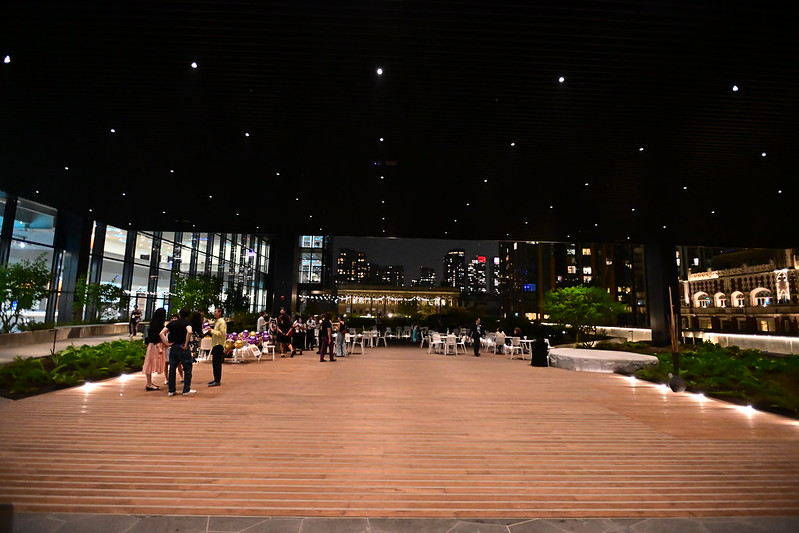
On Friday, Sept. 5, the UW Social at 4S will be held in the Garden Terrace at the Summit, a pollinator garden. Photo credit: Garden Terrace (Night), Summit (2025)

SEATTLE — More than 100 University of Washington faculty and students will present their research this September at Reverberations, the 50th Annual Meeting of the Society for Social Studies of Science (4S), a leading interdisciplinary conference for scholars engaged in social studies of science, technology, and medicine (a field often referred to as STS).

To mark the occasion, Society + Technology at UW is inviting all 4S attendees to register to attend the UW Social, to celebrate UW’s contributions to the field of STS and to foster connections and stoke curiosity.

UW Social

The party will be on Friday, September 5, from 8:30 to 10:00 p.m. on the Garden Terrace (third floor) of the Summit at the Seattle Convention Center. Reverberations will take place at the Sheraton Grand Hotel and the Summit at the Seattle Convention Center from September 3-6, 2025. 

“This is an exciting opportunity to acknowledge the tremendous and ongoing work in this interdisciplinary field happening at UW across all three campuses,” said Monika Sengul-Jones, co-host of the UW Social with Daniela Rosner, a professor in Human Centered Design and Engineering and Co-chair of Reverberations.

“And it’s in a pollinator garden, which is a gesture to our intention with the party: to be a space to pollinate and to strengthen the assemblages that animate STS as a field of creation and critique.”

Who can attend?

The UW Social is free for registered 4S attendees, though separate registration for the party is required. Register online and pick up your paper UW Social ticket at the registration desk in the foyer of the Sheraton Hotel starting on Thursday at 1:00 p.m.

The first 150 guests to register and collect their paper ticket will receive a complimentary drink sticker they can redeem at the party; additional refreshments will be available for purchase.

Co-sponsors of UW Social include: Society + Technology at UW, hosted by the Tech Policy LabUniversity of Washington Press4SScience, Technology & Society at UW Bothell, the Department of Philosophy, the Department of Cinema and Media Studies, the Science, Technology and Society Studies Graduate Certificate Program, the Department of Communication, CommLead, Human Centered Design and Engineering, and DXARTS.

Attending 4S? Register for the UW Social

Last STSS/S+T at UW Mixer of the academic year

Roses, Thorns, Buds | Thursday, June 12 | 3:00–4:30 PM | The Truly House, UW Bothell

As the quarter winds down, STSS faculty and affiliates are invited to the final mixer of the academic year—an informal gathering at the historic Truly House at UW Bothell co-hosted by Society + Technology at UW.

Roses, Thorns, Buds
Thursday, June 12, 2025
3:00–4:30 PM
The Truly House, UW Bothell
Add the event to your calendar 

Enjoy snacks in an Adirondack chair in the rose garden or sit in the shade on the porch of the 100-year-old ranch house near the West Parking Garage. Join us to connect and reflect on the values, technologies, and ideas shaping our work now and going forward. The roses, the thorns, the buds.

Hosted by: Monika Sengul-Jones (Society + Technology at UW/STSS) and Kim Swenson (Center for Teaching and Learning, UW Bothell)

Questions? Email Monika at mmjones@uw.edu