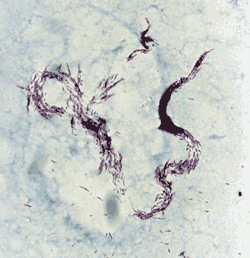
While Mycobacterium tuberculosis complex members are the most commonly known human pathogens, Non-tubercolosis Mycobacteria (also known as environmental mycobacteria, atypical mycobacteria and mycobacteria other than tuberculosis (MOTT)) are also implicated in tuberculosis-like disease, localized lymphadenitis, gastrointestinal disease, and disseminated infections. Acid fast bacilli can be very difficult to grow due to their nutritional requirements. Some specimens may never reveal the presence of a pathogen because of low abundance and/or lack of viability. The use of PCR to detect Mycobacterial DNA extracted directly from clinical specimens facilitates the identification of these pathogens.
For an accurate detection of the presence of Mycobacteria in clinical specimens, the UWMC Molecular Diagnosis Section utilizes a combination of several techniques. The detection of Mycobacterium tuberculosis and Mycobacterium avium complexes, for example, relies on fluorescence resonance energy transfer (FRET) probes in a nested PCR protocol that targets the heat shock protein 65 gene (hsp65). Utilization of MTB and MAI complex specific fluorescent probes on a real-time PCR platform facilitates rapid and highly sensitive detection of MTB and MAI complex DNA in clinical specimens.
For other Non-tuberculous Mycobacteria (including rapidly growing mycobacteria (RGM)) and Mycobacterium leprae, detection and speciation involves a multi-locus PCR strategy. Identifications are performed by DNA sequencing, which provides direct, unambiguous data and can distinguish medically relevant subspecific phylogenetic lineages.
In many specimens acid fast bacilli can be seen microscopy of tissue sections but are very difficult to grow due to their fastidious nature, or are not viable as a result of antimicrobial therapy. Some specimens may never reveal the presence of a pathogen because of low abundance and/or lack of viability. The use of PCR to detect this DNA extracted directly from clinical specimens facilitates the identification of these pathogens.
For interesting cases emplyoying this test methodology, please see our Clinical Significance page.
