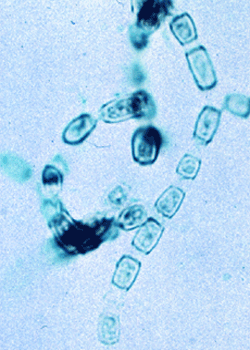
In many specimens, fungal elements can be seen by microscopy of tissue sections but are very difficult to grow due to their fastidious nature, or are not viable as a result of antifungal therapy. Some specimens may never reveal the presence of a fungal pathogen because of low abundance and/or lack of viability. Often, fungal elements are seen on paraffin embedded tissue when a fresh tissue specimen is no longer available. The use of PCR technology to detect fungal DNA within the total DNA extracted directly from clinical specimens facilitates the identification of these pathogens. Using both fungal 28S and Internal Transcribed Spacer sequence (ITS) DNA as targets we have set up PCR assays to detect fungal pathogens. Sequences of amplified DNA are analyzed to identify the fungal pathogen present in the specimen.
For interesting cases emplyoying this test methodology, please see our Clinical Significance page.
