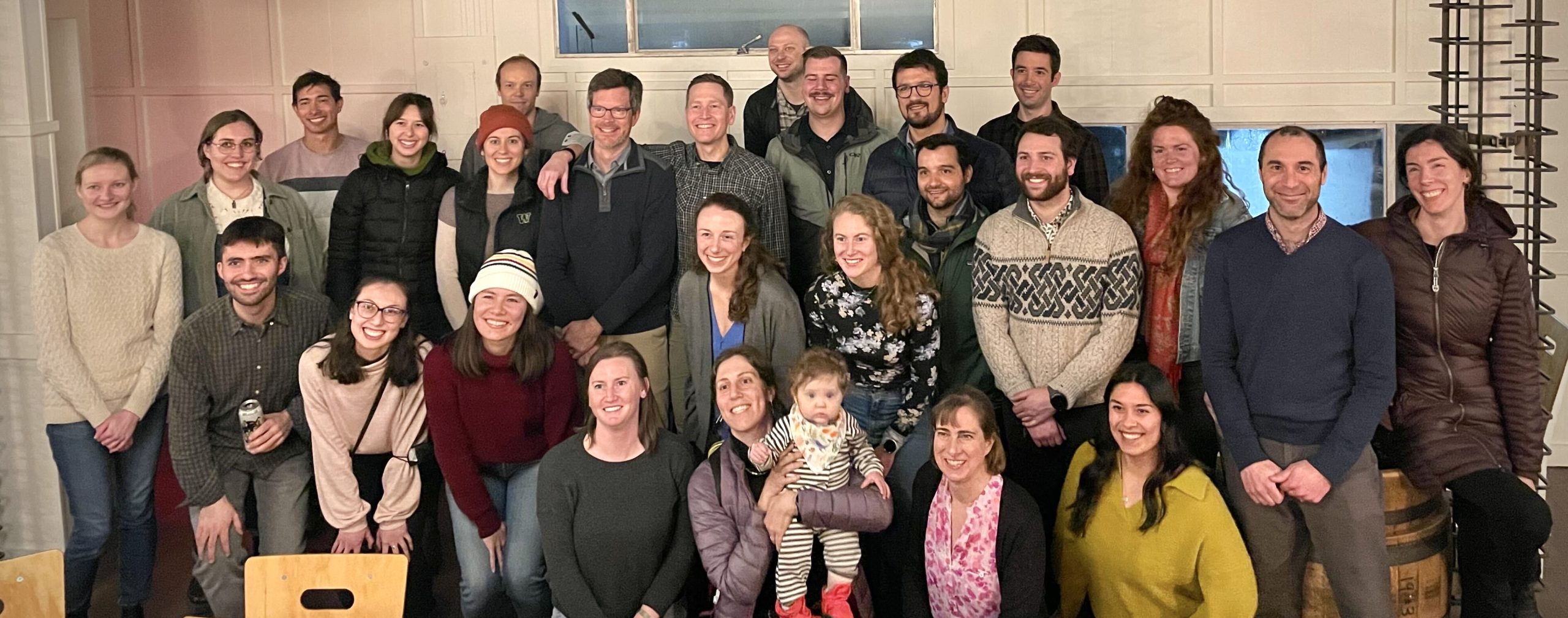
The EFM group brings together researchers from across UW interested in the fluid mechanics of rivers, lakes, and oceans. The students, postdocs, faculty, and staff in the group are committed to creating and upholding a diverse, collaborative, and inclusive environment.
Our Research
The goal of the Environmental Fluid Mechanics group is to advance impactful, rigorous research to serve society and understand environmental change. The research within this group spans a wide range of applications in the environment, from theoretical models of turbulence to coastal management questions. We foster open access in our research, including sharing ideas, methods, and results in accessible formats. Our group meets weekly to discuss technical aspects of research as well as to build community and just have fun.
Diversity and Inclusion
We recognize that the geosciences are among the least diverse fields in the US, a result of racist systems, structures, rules, language, expectations, and guidelines in science itself. These conditions cause Black, Indigenous, and Hispanic people to leave the field at higher than average rates. In the EFM group, we seek to address the inequitable, unjust discrimination faced by many scientists– discrimination that reduces the effectiveness and impact of all research. We know that the diversity of a research team improves the research itself. The EFM group is committed to building more equitable recruiting practices of both faculty and students and to working to make the community more inclusive, so that underrepresented members feel welcome, heard, and seen.
Education, Outreach, and Stakeholder Engagement
As a group, we aim to support the exchange of ideas and knowledge within the wider university community and beyond. To address this goal, we commit to:
- Integrating environmental and social justice into courses
- Exploring ways to improve our teaching methods
- Engaging with K-12 students through outreach events, such as the UW Discovery Days and the Pacific Science Center’s Curiosity Expo
- Offering opportunities for undergraduate students to engage in research through REUs
- Encouraging graduate students to seek mentorship from a diverse group of scientists and activists
- Seeking out research that serves disadvantaged and under-served communities
- Engaging with stakeholders in all stages of our research, from the initiation of projects to the completion and sharing of findings and data
EFM Group Expectations and Norms
Respect
We expect all members to be respectful of one another. Our EFM community is a safe place to express ourselves, learn, and grow as scientists and humans. Disagreeing is a normal part of research, and our aim is to disagree respectfully in a way that encourages fruitful discussion. We use inclusive language and avoid sexist, racist, ageist, ableist, and other biased language and actions. We assume everyone acts from good intentions and know that unintentional acts of disrespect may happen. We acknowledge the impact of these incidents, move forward, and learn from them. Resources to report bias and harassment incidents include Safe Campus, CEE representatives, and union contract enforcement.
Participation
We value participation in our group, including at our weekly meetings, no matter the topic. A strength of our group is its interdisciplinary nature, and we all benefit from exposure to a wide variety of research topics. Group members participate by listening actively, respecting others, and contributing when able. Everyone’s voice is important and valuable to the conversation. Notice patterns of participation. We encourage members to step up if they tend to process silently or step back if they are verbal processors. We value humor and socializing outside of formal meetings and often have lunches, happy hours, and retreats. We create a fun and inclusive environment for all of our members!
Community
We build our community by welcoming all members and visitors across a broad spectrum of backgrounds and disciplines. Our community values sharing ideas and time together in both academic and social settings. Our goal is to recognize and support each other as the whole person, and to help our members see themselves in the larger Seattle community. As individuals, we value participation and broader engagement in all aspects of life in Seattle and beyond. As researchers, we recognize a responsibility to share knowledge with and to learn from our community. We strive for this through outreach and engagement with research stakeholders and fellow educators.
Presentation
Our presentations are a place for students to give informal talks to share their work or practice upcoming talks to a familiar audience. We also host visitors to give seminars, as well as conduct skill building workshops, DEI discussions and more. Students are encouraged to give presentations yearly during all stages of their work (not necessarily results). Research updates, challenges, and new directions – all are welcome! Respectful questions are encouraged. We recognize contributions and acknowledge others for their work.
Learning
Our priority is learning. We build individual knowledge as well as collective knowledge by sharing about our diversity of research topics. Learning requires engaging with interesting and challenging problems. We celebrate successes and embrace setbacks as learning opportunities. We encourage student questions, and we extend our science and teaching beyond the classroom through outreach activities.
These norms were last revisited and updated by the EFM group in Autumn 2025.