Bioethics Training
ADVANCED TRAINING IN HEALTHCARE ETHICS (ATHE)
Online Certificate! 
We offer an online certificate program in clinical ethics. ATHE students gain foundational knowledge and skills to broaden their competency in patient cases, clinical ethics, and ethics consultation. The program consists of three online courses in ethical theory, clinical & organizational ethics consultation, and methods (for 18 Continuing Education credits) and a multi-day online Summer Seminar in Healthcare Ethics (approximately 19.5 CE credits). Students are welcome to take individual courses.
BIOMEDICAL RESEARCH INTEGRITY PROGRAM (BRI)
The UW School of Medicine - Office of Research's Biomedical Research Integrity Program (BRI) offers training for the responsible conduct of research as defined and required by NIH. The BRI program is offered annually June through September.
Ethical Decision Making
"It should be noted that ethical decision-making is a process rather than a specific correct answer. In this sense, unethical behavior is defined by a failure to engage in the process of ethical decision-making. It is always unacceptable to have made no reasonable attempt to define a consistent and defensible basis for conduct.”
BODEMER INTERPROFESSIONAL ETHICS LAB
In collaboration with the UW Center for Health Sciences Interprofessional Education, Research & Practice, these evening seminars feature current ethical issues in healthcare and science with small group breakout discussions.
SUMMER SEMINAR IN HEALTHCARE ETHICS 
In collaboration with UW Continuing Education, we host a multi-day online CE seminar that provides an intensive, interactive introduction to the analysis of ethical problems in clinical care. The annual seminar takes place in late July/early August, and is directed to physicians, nurses, social workers, chaplains, attorneys, teachers, and other professionals involved in the care of patients or the education of providers. This year's conference will take place August 3-6th, 2026. Click here to register.
SURGICAL ETHICS CONFERENCE 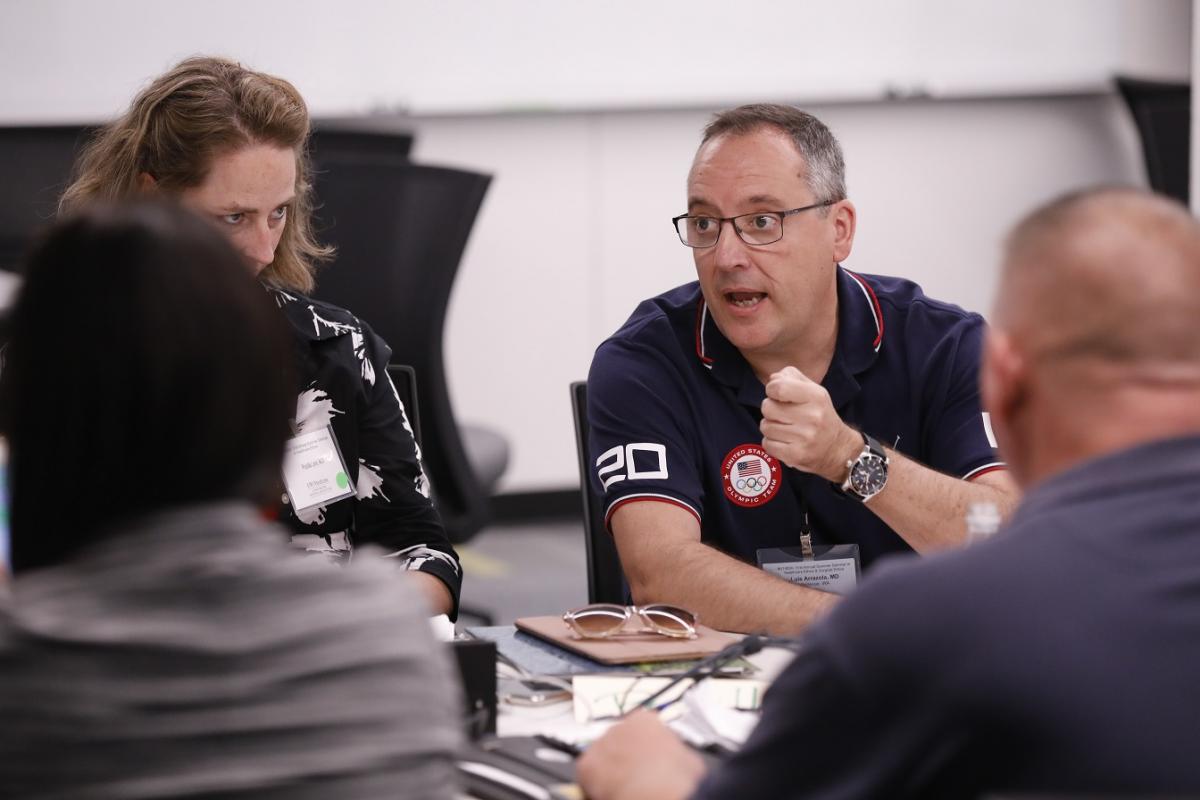
We partner with the UW Department of Surgery to host this annual CE conference that employs the methods of ethical analysis taught in the Summer Seminar to analyze bioethics topics of special interest to surgeons, anesthesiologists, surgical nurses, physician assistants, social workers, and hospital administrators. Details for this year's Surgical Ethics Conference is TBA.
PALLIATIVE CARE GRADUATE CERTIFICATE 
The interprofessional Graduate Certificate in Palliative Care is jointly offered through the UW Schools of Nursing and Medicine and is co-sponsored by the Cambia Palliative Center of Excellence. It is designed for health care providers from nursing, medicine, social work, spiritual care and other disciplines seeking to deliver high quality, integrated, person-centered palliative care.
The target audience includes clinicians providing specialty palliative care (for example, consult services) or primary palliative care for patients with serious illness. Members of a current team applying together will receive priority for admission, but all eligible clinicians are welcome.