Make lifesaving cancer-risk genetic testing accessible to all Americans
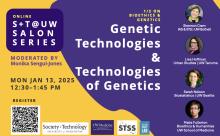
Dr. Deb Bowen, Professor of Bioethics & Humanities, and her colleages Dr. Elizabeth Swisher (UW Professor of Obstetrics and Gynecology) and Dr.
Speakers:
Claire Creutzfeldt, MD, Assistant Professor, Neurology
Denise M Dudzinski, PhD, MTS, Professor and Chair, Bioethics & Humanities
James A Fausto, MD, Associate Professor, Family Medicine; Medical Director, Palliative Care
Location: UW Medical Center, Plaza Cafe A/B, 1959 NE Pacific St #110, Seattle, WA 98195
This course is an examination of the ethical problem of allocating scarce medical resources. We will emphasize the fundamental principles of justice that support alternative health policies. Offered jointly with PHIL 411. The first part of the course introduces theories of justice, and considers the support these theories lend to the idea of a right to health care.
This course examines the moral grounds for the view that social inequalities in health are unjust using contemporary literature from moral philosophy and bioethics, case studies, and film. We explore basic questions integral to determinations of social injustice as well as moral constraints on the pursuit of health equity.
This course introduces students to select biotechnology innovations and invites consideration of the ethical and policy implications surrounding their development and potential use.
This course examines the history of ideas, policies, and practices associated with eugenics and human genetics from the late nineteenth century to the present in American society and other national contexts.
This course examines problems in bioethics from diverse global standpoints, including East Asian, Sub-Saharan African and Western. Our emphasis is on developing a deeper understanding of the cultural assumptions that lie just beneath the surface of bioethics debates. Readings are from contemporary philosophy, film and literature. We recommend prior course work in ethics, philosophy, or global health. Offered jointly with G H 419.
This course studies the major normative ethical theories, including both teleological and deontological approaches. We emphasize moral philosophy during the eighteenth and nineteenth centuries, as well as contemporary commentary. Offered jointly with PHIL 412.
This course offers a case-based approach to ethical topics in medicine, such as abortion, genetic testing, physician-assisted death, and euthanasia. We emphasize utilizing ethical principles and methods of case analysis.