Direct Observation and Quantitative Analysis of Mobile Frenkel Defects in Metal Halide Perovskites Using Scanning Kelvin Probe Microscopy
Abstract
Ion migration is seen as a primary stability concern of halide perovskite-based photovoltaic and optoelectronic devices. Here, we provide experimental studies of long-distance, reversible ion migration in methylammonium lead iodide (MAPbI(3)) and formamidinium lead iodide (FAPbI(3)) films. We use time-resolved scanning Kelvin probe microscopy on insulator-coated lateral electrodes to probe the dynamic redistribution of charged Frenkel defects over micrometer distances after application of an electric field. We combine these dynamic measurements with drift-diffusion simulations that yield self-consistent pictures of the sign, distribution, mobility, and activation energy of the associated, mobile Frenkel defects. This comprehensive approach is applied to study the impact of an organic cation on ionic mobility in metal halide perovskites, which we find to be significantly reduced in the case of FAPbI(3) films compared to MAPbI(3) films.

Rajiv Giridharagopal
Chief scientist at the Ginger lab
Raj is the ‘Cheif Scientist’ and a senior research coordinater at the Ginger lab
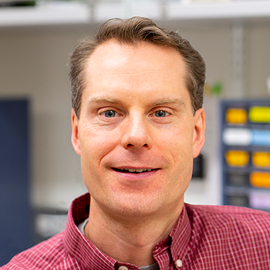
David Ginger
B. Seymour Rabinovitch Endowed Chair in Chemistry
David Ginger is the the B. Seymour Rabinovitch Endowed Chair in Chemistry at the University of Washington, and the PI of the ginger group