There’s a lot we miss these days. I miss helping people find books. My favorite part of my job, ordinarily, is selecting and supplying books to our colleagues who run summer day camps and outdoor preschool classes at the Arboretum. Since 2017, as Washington Park Arboretum Summer Camp and Fiddleheads Forest School programs have grown at the UW Botanic Gardens, Education staff have relied on the Miller Library to supply a weekly selection of age-appropriate books on their curricular themes.
To help prevent the spread of COVID-19, the UW Botanic Gardens 2020 summer programs reduced class sizes, serving only the youngest age groups in an 8-week summer session. We knew it would be especially helpful to have a method of safe book delivery from the Miller Library this year, with Seattle and King County’s public libraries still closed. But the Miller Library remains closed, too, with no scheduled reopening date. By the middle of June, teachers and library staff all wondered: could we still supply the needed books?
Sending a library staff member into the building to collect the books would require approval from the University’s Environmental Health and Safety team. I drafted a safety plan showing why the visit was necessary and how it could be accomplished with social distancing. All required precautions would be taken, including physical distancing, the wearing of a mask and frequent hand-washing. To minimize contact, we would supply all needed books for the entire summer session in one delivery, rather than sending books on a weekly basis. Books would be checked out to the teachers for the rest of the summer and then boxed for delivery to the Arboretum staff’s car or other safe, no-contact location. When delivered, the box would be marked “do not open before {date/time}” with the date and time 72 hours in the future, in line with the current recommendation to quarantine books as a sanitizing precaution.
Working from home, I used our online catalog to create lists of books based on the teachers’ needs. Fiddleheads Forest School’s summer outdoor preschool curriculum required books on Indigenous people and native plants, as well as some books on making friends and building forts. Teachers specifically requested
A Walk in the Forest by Maria Dek and
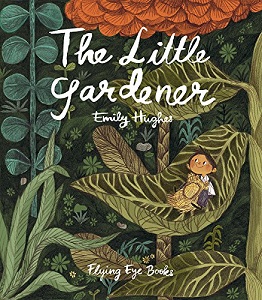
The Little Gardener by Emily Hughes, among others. I found several new books to supplement their list, including Julie Flett’s
Birdsong, Hannah Viano’s
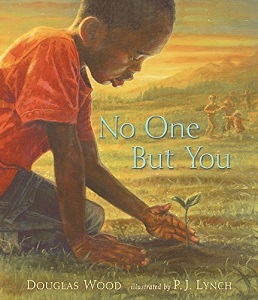
S is for Salmon and Douglas Wood’s
No One But You.
Meanwhile, Summer Camp instructors had prepared curricula for three separate day camps, all for ages 6-8: Aquatic Adventures, Nature Spies, and Quercus Academy of Nature Magic. I really enjoyed selecting books to fit these themes. The first two were familiar from previous years, and the teachers mentioned particular books they wanted to use again: Doreen Cronin’s
Diary of a Worm, Lynne Cherry’s
The Great Kapok Tree, Jannell Cannon’s
Stellaluna, and Susan Grigsby’s
In the Garden with Dr. Carver. I added some new items as well:
Water is Water by Miranda Paul and
Pond Circle by Betsy Franco for the aquatic adventurers, and George Shannon’s
White is for Blueberry and Margarita Engle’s
Summer Birds: the Butterflies of Maria Merian for the nature spies, who would be looking for birds and insects during their time at the Arboretum. For the nature magic theme, I selected enthralling favorites old and new: Donald M. Silver’s
Cave, Cicely Mary Barker’s
Flower Fairies of the Summer, Holly Grant’s
Wee Sister Strange, Elise Gravel’s
The Mushroom Fan Club, and Eliza Wheeler’s
Miss Maple’s Seeds, among others.
Getting Health and Safety clearance for my day in the library took longer than anticipated. Summer programs started June 29, the day before my building access was granted. Collecting a whole summer’s worth of books in one day felt like a major achievement. After I dropped off the boxes at the Arboretum that afternoon, the teachers sent messages conveying their excitement about using the books the following week, after the required quarantine period had elapsed. It’s satisfying to know that now they can read aloud to their young participants and enliven their outdoor lessons with fresh resources from the Miller Library.
In all, we delivered 97 books to the Arboretum's outdoor education programs this summer, working together in a time of extraordinary challenges.



%20from%20Mushroomobserver_org.jpg)