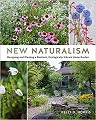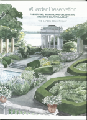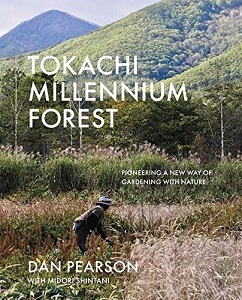
I have always wanted to travel to Japan to experience the bustling energy of Tokyo and the serenity of ancient Buddhist temples in Kyoto. Now after reading about Tokachi Millennium Forest I know I have to include the northern island of Hokkaido in my itinerary. Why did the owner of a private parcel comprised of second growth forest and former agricultural fields hire a British garden designer? Because the lofty goal of creating a carbon sequestering ecological park that would be sustainable for 1,000 years, while also charming urban Japanese visitors required cross-cultural collaboration. Designer and author Dan Pearson's expertise is creating ecologically sensitive, naturalistic landscapes. He worked with Japanese landscape architect Fumiaki Takano to fulfill the vision of site owner and newspaper magnate Mitsushige Hayashi starting in 2000. In a nutshell, Hayashi's vision is to rekindle the visitors' connection to nature in order to instill an ethic of environmental responsibility and love for the mountains and forests. Head gardener and co-author Midori Shintani – profiled in Jennifer Jewell's
The Earth in Her Hands – joined the team in 2008.
The book is elegantly designed with beautiful color photographs. The opening chapters relay how Pearson first traveled to Japan and how he was introduced to the project. It includes a brief history of the island, mountains and forest, and the reason behind Tokachi Millennium Forest. Pearson writes the main body of text while Shintani contributes essays on Japanese culture and how the culture is manifested at Tokachi. Pearson conveys high level design concepts such as sense of place and ecology, purpose and mission. He also includes very specific horticultural details such as how the native, yet aggressive
Sasa bamboo is cut back in the forest every spring in order to give other native plants a chance to regenerate.
The following chapters describe each of the park's main regions, such as the Forest or the Earth Garden with its waves of grassy, sculpted landforms that relate to the looming mountains. The Productive Garden contains vegetables, herbs and fruits for the café as well as roses to delight visitors. Native flowers mix with carefully selected cold hardy perennials from temperate regions of the world in the Meadow Garden. Pearson and Shintani continue to meet for a week every year to discuss and plan maintenance strategies and required edits. The editing process means perennials that are too dominant either get deadheaded so seeds don't spread or potentially removed entirely, while less vigorous or short-lived plants are encouraged to reseed or are propagated and replanted the following spring. For example,
Thermopsis lupinoides was edited out while
Verbascum 'Christo's Yellow Lightning' was added later. I question how the complex, perennial-filled Meadow Garden will be sustainable for 1,000 years given the work required to keep it looking presentable through the short growing season, but I am eager to see it in person. It must be magnificent to walk through the flower-filled Meadow with the mountains framing the scene. The book concludes with a complete list of plants used in the Meadow Garden with notes on which ones failed to thrive or were removed for being too dominant.
Editor's note: keep an eye on the Miller Garden website for news about this year's Miller Lecture, which will be an online event featuring Dan Pearson.





![The native pollinator habitat restoration guide : best management practices for the Puget Sound lowlands / Matthew B.
Schwartz [and] Nelson Salisbury.](http://depts.washington.edu/hortlib/graphix/nativepollinatorhabitatrestorationguide.jpg "The native pollinator habitat restoration guide : best management practices for the Puget Sound lowlands / Matthew B.
Schwartz [and] Nelson Salisbury.")