In my childhood home, we had a window seat off the living room. But it wasn’t for sitting. Instead, it displayed my mother’s beloved cacti collection. Facing south, the lighting was perfect and the plants thrived.
As an adult, my houseplant collection has very few cacti, but I learned early the value of these plants and other succulents in an indoor garden. Sound interesting? The new book
Cacti and Succulents by Sarah Gerrard-Jones will help you get started or make sure the collections you already have are thriving.
In the last 10 years, the publishing of houseplant books has boomed; this is one of the best. The many selections are skillfully described in both text and photos. Each entry, and the extensive introduction (100 pages!), provide all the details you’ll need. Lighting, temperature, feeding, water, soil or substrate are precisely and easily explained. It’s hard to go wrong.
Other related topics are introduced, including growing cacti outside, public gardens to visit for seeing large collections, and places where plants grow in the wild. This last section is followed by insights on the seriousness of poaching; many of these selections are endangered.
This is more than just a technical manual. Gerrard-Jones easily shares her enthusiasm, and profiles several other avid growers. One is Tyler Thrasher, whose collection in Oklahoma numbers in the thousands, and has good advice for any plant parent: “Be forgiving when you lose a plant.” Mellie Lewis has the UK’s National Collection of the tender succulent
Aeonium. Her advice on watering? “Follow the three Ds: drench, drain, dry.”
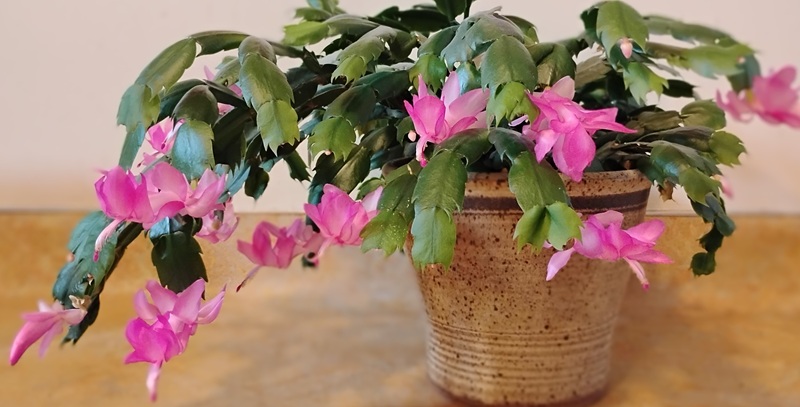
One lesson I learned is the distinction between sun cacti and forest cacti, the latter including the popular Christmas cactus
(Schlumbergera species and hybrids). A venerable example is “Granny”, an 80-year-old, four-foot-wide centerpiece passed down to Sara Blanchard in Vermont from her grandmother. From December to May it is covered in fuchsia-colored flowers.
I can relate. I also have a
Schlumbergera passed down from my mother. Not quite as large as “Granny”, but still vigorous and equally cherished.