College of the Environment | University of Washington Block W Logo
Library Home | Catalog | Calendar | College Home
Volume 5, Issue 9 | September 2018
Understanding: 4 Muses-4 Materials
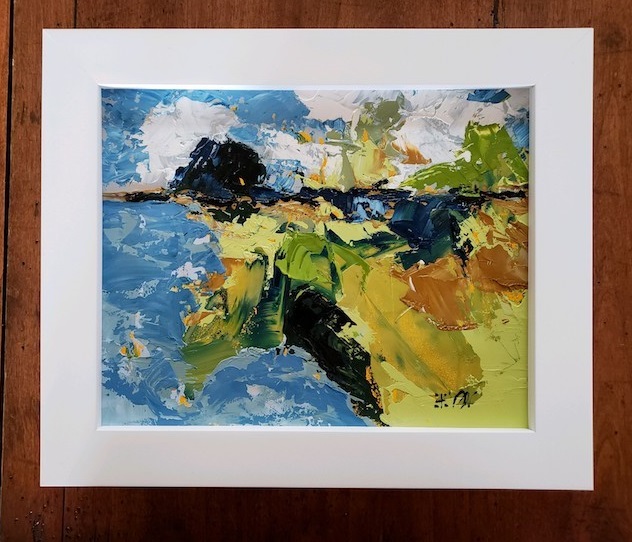
APLDWA group show September 5-28

“Je crois que je commence à y comprendre quelque chose.”* ~P.-A. Renoir

Join APLDWA (Washington Chapter of the Association of Professional Landscape Designers) member artists as they celebrate the beauty of the garden in unique and inspiring ways. For a chance to meet the artists, please attend an opening reception from 5 to 7 pm on Thursday, September 6.

For millennia—perhaps as early as 15,000 BCE—the garden has been an integral thread in the fabric of the human experience. From the ancient Chinese and Egyptians to Instagram and Pinterest, we humans observe, admire and record the landscape.
 
Today’s world has only increased our desire to connect with nature, and the beauty of the botanical world continues to feed the magic of artists’ imaginations.

*”I think I am beginning to understand something about it.”
What are those moss balls at the Nordic Museum, anyway?
researched by Rebecca Alexander
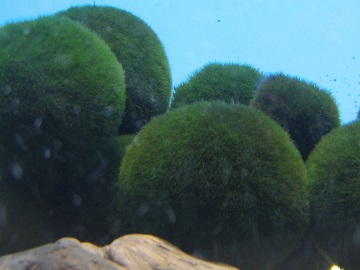
underwater marimo (Wikimedia commons) Question: I saw some moss balls for sale in the gift shop of the new Nordic Museum. What type of moss is used? Is it native to Nordic countries? How do I care for one indoors?

Answer:
The "moss" is actually a type of freshwater alga, Aegagropila linnaei, found in only a small number of northern hemisphere lakes. Other common names are lake ball or Cladophora ball. In Japan, they are called marimo (meaning a bouncy ball that is in water). The Ainu people of Hokkaido hold an annual Marimo Festival at Lake Akan to celebrate these charming lake goblins.

Iceland's Lake Mývatn once had the world's largest colony of lake balls but pollution has been altering the ecosystem there, and the mats of algae balls (colloquially called round sh*t or muck balls by the fishing community) began dying out. Their disappearance was first noted in 2013. There are some recent signs that the nutrient imbalance of the lake (caused by fertilizer runoff, and accumulation of bacteria) is correcting itself and that the ecosystem of the lake is bouncing back to better health.

To grow marimo inside, you will need a container that holds water, and a spot where the algae receive indirect sunlight. They prefer cool locations in nature, so they will do best if they do not get too hot (don't put them near a heat source, and if it gets hot in your home, you can cool them off in water in the refrigerator). To keep the balls floating, squeeze out some of the water from time to time. To propagate the algae, use scissors to divide the marimo in half after squeezing out some of the water (you can repeat this process and cut into fourths or eighths). Use thread to wrap the cut algae back into a rounded shape, tie the thread close to the ball, and put back into the water. Some people combine them with other plants and tiny shrimp in indoor aquascapes.

Panayoti Kelaidis presents From Denver to Seattle:
a Shared Gardening Tradition
Elisabeth C. Miller Lecture at Meany Hall September 13
An open invitation to the community from the Pendleton and Elisabeth C. Miller Charitable Foundation:

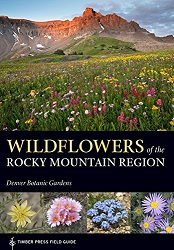
We are pleased to have noted plantsman Panayoti Kelaidis, Senior Curator and Director of Outreach for the Denver Botanic Gardens, presenting the 24th annual Miller Memorial Lecture.

Panayoti has extensively explored the Rocky Mountain range and has traveled the world looking for plants that will thrive in the gardens of the interior mountain region. He is notable for his support of native flora as well as the introduction of numerous species and cultivars of top garden performing plants. Panayoti’s travels have brought him to the Northwest several times allowing him the chance to experience our unique climate and several of his plant introductions have thrived in our maritime conditions.
  • Meany Hall doors open at 6:30 pm, lecture at 7:00 pm
  • A free plant for the first 600 attendees
  • Request free tickets at info@millergarden.org  or by calling (206) 362-8612
Tickets will be emailed within 3 days of your request.
visit the library
Starting September 8, the library be open Saturdays from 9 am to 3 pm. Starting September 24 we will be open Mondays from 9 am to 8 pm. The library remains open 9 am to 5 pm Tuesday through Friday, and until 7 pm on select Wednesdays and Thursdays for Northwest Horticultural Society meetings and library exhibit events. We will be closed on Saturday, September 1 and Monday, September 3. Check the full calendar on our website.
New to the library 
cover image     cover image    cover image    cover image
cover image   cover image    cover image
cover image    cover image     cover image    cover image
cover image    cover image    cover image    cover image
cover image     cover image      cover image    cover image
cover image      cover image     cover image
  give     Miller_LibraryLogo293px.gif    
Facebook    Twitter    Instagram    Pinterest
Contact Us   |   Privacy   |   Terms
© 2018 University of Washington Botanic Gardens