College of the Environment | University of Washington Block W Logo
Library Home | Catalog | Calendar | College Home
VOLUME 11, ISSUE 1 | January 2024
Nature and Health resource display through winter quarter
This academic quarter we explore the connections between nature and health with a broad-ranging resource display including titles on the physical and mental health benefits of time in nature, therapeutic and restorative gardens, plants affecting human health, urban farming, food forests, and other landscapes designed to support health. With a few exceptions that are always here for library use, these are available for borrowing at the Miller Library.

Find the display near the magazine racks in the northwest corner of the library. You can browse the covers visually on our website or find the list in our online catalog.
Nature and the Book exhibit January 4-30
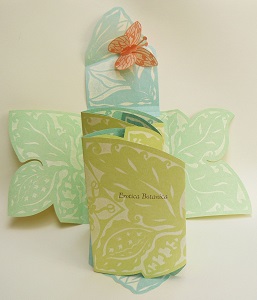
Erotica botanica by Catherine Alice MichaelisPuget Sound Book Artists (PSBA) is pleased to sponsor the Nature and the Book exhibit at the Miller Library January 4-30. PSBA is a non-profit educational organization founded in 2010 for the purpose of creating a spirit of community among book artists and those who love books. Members use a wide variety of creative means and methods to create interactive artist books that delight the viewer, convey an idea, communicate an experience, express a concern, spark a conversation, and/or tell stories. The group offers free membership for students and strives to encourage support for emerging book artists. For more information about PSBA, please visit their website: https://pugetsoundbookartists.wildapricot.org.

From the artists: In this exhibit, we are pleased to share the work of a number of accomplished local artists. Artists have always been interpreters for and often advocates of issues that affect our world. Striving to protect our natural world, celebrate the joy of nature, and revel in the beauty of our environment, the books on display showcase how artists have used the format of the book to express their love of nature and our environment.   

Over 19 featured artists take the viewers on a journey; for example, a walk in a local meadow, an exploration of bark beetles, an examination of local native plants, an understanding of the emerging ecosystems of Mt. St. Helens. These works showcase the enduring power of the book as a powerful catalyst for sharing ideas and inspiring us through the integration of text, images, and three-dimensional interactive structures.

Readers are invited for a reception and remarks Saturday, January 20, from 12 to 2 pm.

A Rare Book Room mystery
Researched by Rebecca Alexander

Tree of the Sad Night postcardThe Miller Library has Augustine Henry’s own copy of the seven-volume The Trees of Great Britain and Ireland (co-written with Henry John Elwes, 1909-1913), and we discovered his handwritten note referring to the tree of the Noche Triste (Sad Night) in Mexico, citing an 1896 article describing the Tree of the Sad Night as Cupressus mexicana. We wanted to know what a note about Cupressus was doing in among the Taxodium pages (instead of in volume 5, with Cupressus species, including C. mexicana).

The placement of that note turns out to be meaningful, because the classification of C. mexicana has fluctuated over the years and in 1906, Henry himself was responsible for naming Taxodium distichum var . mucronatum, which was at one time called Cuprespinnata mexicana, with common names such as Mexican cypress or Montezuma cypress. The scientific name is still contested: “Most authorities continue to call the ahuehuete Taxodium mucronatum, although there is also widespread support for the name T. distichum var. mexicanum due to molecular studies showing an extremely close similarity between all taxa of Taxodium.” The tree’s name in Nahuatl is ahuehuete, meaning old man of the water, and there are some specimens of impressive vintage in Mexico. The reference to water reflects the ability of this tree to thrive in swampy conditions.

The night in the tree’s name is June 30, 1520, when the Spanish conquistador Hernán Cortés failed to overcome the Mexica warriors, and was said to have sat down and wept by this tree in Popotla. It is worth noting that conflicts are often complex: Cortés had allies among the Indigenous Tlaxala, who were captured or killed along with the Spaniards. The tree was renamed Árbol de la Noche Victoriosa in 2021, marking the 500th anniversary of victory over the Spanish. The preserved remnants of the tree may or may not belong to the tree of legend, but it continues to be an important symbol of Mexican identity.
ASK A LIBRARIAN
The Miller Library's Plant Answer Line provides quick answers to gardening questions.
You can reach the reference staff at 206-UWPLANT (206-897-5268),
hortlib@uw.edu, or from our website, www.millerlibrary.org.
Digital resources
   UWBG pine cone logo
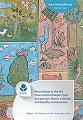
XIII International People Plant Symposium: Plants, Cultures and Healthy Communities  Miller Library book and flower logo
New to the library
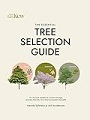
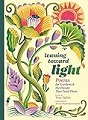
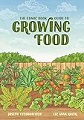
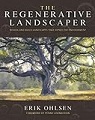
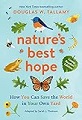
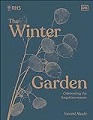
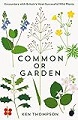
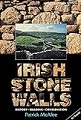
cover image     cover image     cover image
cover image    cover image
cover image     cover 
image    cover image
cover image    cover image    cover image
cover image    cover image     cover image
cover image    cover image
Donate to the Miller Library Fund    Miller_LibraryLogo293px.gif
  Facebook    Twitter    Instagram     Pinterest
Contact Us   |   Privacy   |   Terms
© 2024 University of Washington Botanic Gardens