David Fairchild founded the USDA's Office of Seed and Plant Introduction in 1898 on a shoestring budget and an obsession with finding novel, better plants for American farmers. He traveled by steamship to ports around the world seeking food plants. His expedition benefactor, travel companion and lifelong
— if prickly
— friend Barbour Lathrop encouraged and funded the early years of exploration. Lathrop was generally restless and always wanted to keep moving. That meant young David would only have a day or two in a given tropical locale to convince locals to show him new fruit and allow him to take a few cuttings. Occasionally he spirited away a cutting without permission.
We learn how Fairchild was introduced to Alexander Graham Bell through exclusive events held by the National Geographic Society. Bell then invited Fairchild to a private dinner to introduce his daughter, Mabel. The two later married, had children and established a home with property outside of Washington, D.C. where Fairchild could show off some of the beautiful ornamental cherries he had acquired in Japan. According to Stone, it was Fairchild's encouragement that eventually led to the 1912 gift of cherry trees from the mayor of Tokyo to the American people. These are the flowering cherries that famously grow along the Tidal Basin today.
The First World War made exploration difficult and even more dangerous. It also coincided with the growth of isolationist sentiment in American politics. Fairchild's childhood neighbor and later nemesis, Charles Marlatt, was an entomologist also working for the USDA who sounded the alarm over potentially damaging insect pests hitching a ride on exotic imported plants. Marlatt may have exaggerated the threat, but he made a convincing argument that all imported plants must be sent directly to Washington, D.C. for inspection. Congress agreed and passed a law that required inspections, causing new introductions to slow to a trickle. Fairchild was baffled and saddened at this development, but was proud of the foods he introduced, even if not all of them were embraced by American eaters, including his favorite fruit
—the mangosteen.
Fairchild Tropical Botanic Garden, the garden that bears his name in Coral Gables, Florida, was a retirement passion project where he was a primary contributor of tropical trees and plants.
Journalist Daniel Stone's accessible writing interweaves stories of relationships, travel, plant introduction, and governmental bureaucracy. Readers who enjoy biographies with elements of botanical exploration and the history of food will find this book interesting.


 Supported by a 4Culture Art Project Grant,
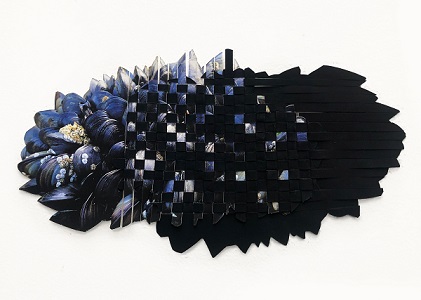
 New works since 2020 explore these emerging shifts, focusing on hybrids and extinctions which result from the movements of new organisms through human distribution. Additional works explore the unknowns within mundane landscapes, exploring recent changes in landscapes through photographic records and obfuscation through the use of paper weavings.
 Thanks to a generous 2019 grant from Unit 86 of the Arboretum Foundation and months of volunteer and staff efforts, we have cataloged and organized our