COVID-19 Literature Situation Report
COVID-19 Literature Situation Report is a daily (M-F) newsletter that provides a succinct summary of the latest scientific literature related to the COVID-19 pandemic.
The scientific literature on COVID-19 is rapidly evolving and these articles were selected for review based on their relevance to Washington State decision making around COVID-19 response efforts. Included in these Lit Reps are some manuscripts that have been made available online as pre-prints but have not yet undergone peer review. Please be aware of this when reviewing articles included in the Lit Reps.
Click the SUBSCRIBE button in the right-hand column to subscribe to daily reports delivered to your inbox.
July 1, 2020
COVID-19 Literature Situation Report July 1, 2020

Patient-collected lower nasal specimens had diagnostic equivalence to healthcare worker-collected lower nasal and oropharyngeal specimens for detection of SARS-CoV-2 by RT-PCR.
June 30, 2020
COVID-19 Literature Situation Report June 30, 2020

Only 27% of Colorado residents who tested positive for SARS-CoV-2 prior to the March 26 stay-at-home order reported a known contact with a confirmed COVID-19 case, another 30% had contact with a person with fever or respiratory symptoms, and the remaining 43% reported no known contacts. The most common potential exposures were gatherings of >10 people, domestic travel, working in or visiting a health care setting, and using public transportation.
June 29, 2020
COVID-19 Literature Situation Report June 29, 2020

A seroprevalence survey from six US states and regions found seroprevalence in serum collected for routine clinical purposes ranged from 1.1% to 7.9%. The authors concluded that in five out of the six US sites, there have been >10-times more SARS-CoV-2 infections than cases reported.
June 26, 2020
COVID-19 Literature Situation Report June 26, 2020

Based on the experience of 4 European countries, there is some evidence that school closures led to declines in the epidemic growth rates of COVID-19. Reopening of schools for all students in countries with low community transmission (Denmark and Norway) has not resulted in a significant increase in the growth rate of COVID-19 cases. Return of most students to school in countries with higher levels of community transmission (Germany) has been accompanied by increased transmission among students, but not school staff.
June 25, 2020
COVID-19 Literature Situation Report June 25, 2020

An online survey of a nationally representative US sample found that the level of perceived risk of contracting and dying from COVID-19 was positively associated with health behaviors like handwashing and social distancing.
June 24, 2020
COVID-19 Literature Situation Report June 24, 2020

A college spring break trip resulted in SARS-CoV-2 infection in 60 (28%) college-aged travelers and their contacts included in the outbreak investigation, one-fifth of whom were asymptomatic at the time of testing.
June 23, 2020
COVID-19 Literature Situation Report June 23, 2020

Surgical mask use reduced the proportion of droplets and aerosols with detectable virus among patients infected with seasonal coronavirus and influenza virus, but not among those with rhinovirus infection (common cold).
June 22, 2020
COVID-19 Literature Situation Report June 22, 2020

Asymptomatic people with SARS-CoV-2 infection had a longer duration of viral shedding and lower virus-specific IgG levels than a comparison group of people with symptoms, suggesting that they may have a weaker immune response to SARS-CoV-2 infection.
June 19, 2020
COVID-19 Literature Situation Report June 19, 2020
A composite test for both SARS-CoV-2 virus and antibodies shows promise for rapid diagnosis with high test validity.
June 18, 2020
COVID-19 Literature Situation Report June 18, 2020
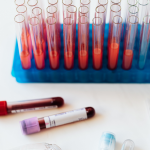
A genome-wide association study identified two separate loci associated with genetic susceptibility to severe COVID-19 disease. One of the loci coincides with the ABO blood group locus. The genetic results found blood group O was associated with lower risk of COVID-19 while blood group A was associated with higher risk of severe disease.
Previous page Next page