Staff
Julia K. Parrish, Executive Director
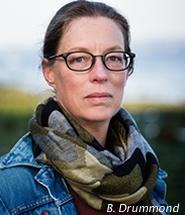
As Executive Director, Julia focuses at the intersection of communicating about the great science (natural and social) COASST does, managing our people resources, and writing that next grant that keeps the office vibrant. What to explore how you can help COASST sustain great science and expand our programming? Contact Julia.
Hillary Burgess, Science Coordinator
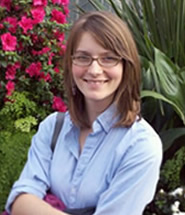
As Science Coordinator, Hillary interfaces directly with all of our data users, and science and resource management partners. She is also continuously refining the marine debris module, managing the day-to-day science of the beached bird module, and working with our IT partners to keep our database and data entry portal running smoothly. Want to explore using COASST data, or partnering with COASST on a project? Got a question about the marine debris protocol? Give Hillary a shout!
Jackie Lindsey, Participant Coordinator
As Participant Coordinator, Jackie has the largest reach of anyone in the COASST office as she sets up trainings, refreshers, and other COASST events; works through the sign-up process personally with each new participant; and keeps the COASST intern program buzzing with activity. When she has a spare moment, Jackie edits our e-newsletters and website. Got a question about data entry, need a new partner or running low on supplies? Call Jackie!
Charlie Wright, Data Verifier
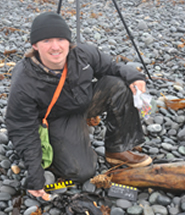
Our beached bird verifier, Charlie is the acknowledged expert on marine bird (and, well, any bird) identification who looks at the data from each and every one of the marine bird entries COASST participants submit annually. Wondering whether you’ve got it right? Send a note to Charlie!
Tim Jones, Postdoctoral Researcher
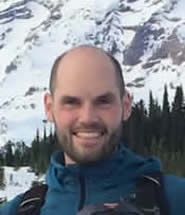
The COASST quantitative postdoctoral fellow, Tim spends his workdays literally digging in and mining our data for pattern. When not steeped in modeling or statistical analysis, or working with partner scientists from across the West Coast, Tim keeps the interactive data apps on the COASST website humming.
Yurong He, Postdoctoral Researcher

The COASST social science postdoctoral fellow, Yurong spends her time pondering the COASST people. What motivates and interests our participants? How do people learn? How can we make COASST a better experience? Yurong’s research helps us be the best citizen science program we can be.
Jazzmine Allen, PhD Student
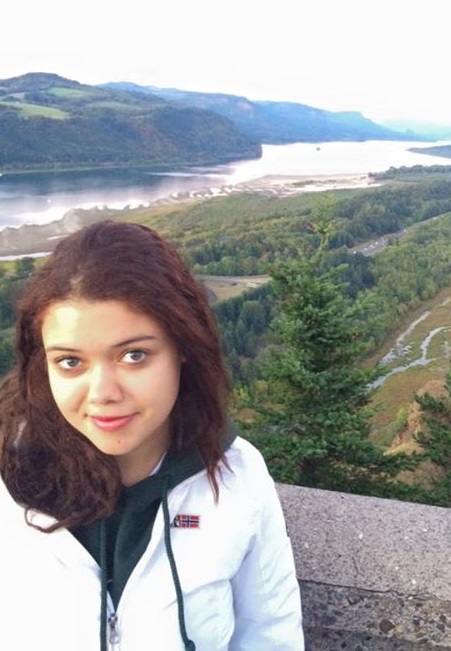
A PhD graduate student in the Biology Department, Jazzmine is working on a range of projects tied to the long-term COASST database. With an interest in how environmental factors - like a warmer ocean, El Niño or an especially stormy winter – can affect marine bird mortality, Jazzmine is using the COASST database to understand what forces affect seabird populations.
SPECIAL PROJECTS
Shawn Rowe, Principal Investigator
 Shawn is currently working with COASST on social science research projects funded
by West Coast Sea Grant and by the National Science Foundation. He is an Associate Professor at Oregon State
University with a background in applied linguistics (that is, studying how humans learn languages) and
developmental psychology in education. Most of his work is with museums looking at family group interactions
and at how exhibitions are structured to support or undermine certain kinds of learning. His Sea Grant
Extension position combines academic work on free-choice learning with practice-based research in the OSU
Hatfield Marine Science Visitor Center.
Shawn is currently working with COASST on social science research projects funded
by West Coast Sea Grant and by the National Science Foundation. He is an Associate Professor at Oregon State
University with a background in applied linguistics (that is, studying how humans learn languages) and
developmental psychology in education. Most of his work is with museums looking at family group interactions
and at how exhibitions are structured to support or undermine certain kinds of learning. His Sea Grant
Extension position combines academic work on free-choice learning with practice-based research in the OSU
Hatfield Marine Science Visitor Center.
Heidi Ballard, Principal Investigator
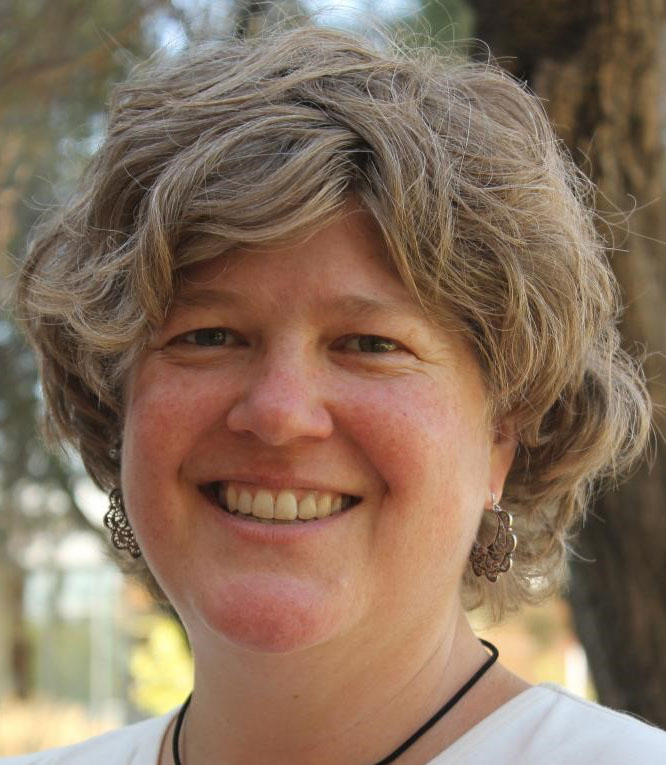 Heidi is currently working with COASST on social science research project funded by West
Coast Sea Grant. She is an Associate Professor at UC Davis who is interested in environmental education that
links communities, science, environmental action and learners of all ages. She is particularly interested in
what and how people learn through public participation in scientific research (PPSR) as a form of informal
science education to ultimately better conservation and natural resource management. Heidi is interested in
COASST because it takes advantage of large spatial and temporal datasets, and is also completely intimate,
localized, and hands-on in terms of training and working with volunteers, keeping people informed and excited,
and making sure everyone knows the results of their efforts.
Heidi is currently working with COASST on social science research project funded by West
Coast Sea Grant. She is an Associate Professor at UC Davis who is interested in environmental education that
links communities, science, environmental action and learners of all ages. She is particularly interested in
what and how people learn through public participation in scientific research (PPSR) as a form of informal
science education to ultimately better conservation and natural resource management. Heidi is interested in
COASST because it takes advantage of large spatial and temporal datasets, and is also completely intimate,
localized, and hands-on in terms of training and working with volunteers, keeping people informed and excited,
and making sure everyone knows the results of their efforts.
Eric Fegraus, Principal Investigator
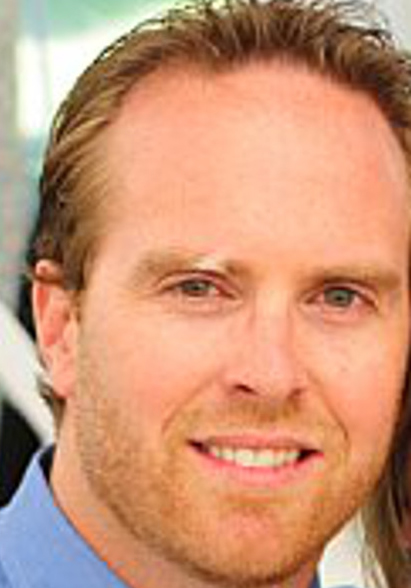 Eric is working with COASST on new developments funded by the National Science Foundation.
Eric is the Director of Information Systems for Conservation International’s Tropical Ecology Assessment and
Monitoring (TEAM) Network. TEAM provides near real time data that helps to inform conservation decisions
regarding the effects of global climate change in 16 countries in Africa, Asia and Latin America. Eric is
interested in technologies that can advance our capacity to quantify and monitor Earth’s natural systems and
understand their interaction with socioeconomic factors. He has previously worked as an environmental
consultant, a software engineer, and a research scientist.
Eric is working with COASST on new developments funded by the National Science Foundation.
Eric is the Director of Information Systems for Conservation International’s Tropical Ecology Assessment and
Monitoring (TEAM) Network. TEAM provides near real time data that helps to inform conservation decisions
regarding the effects of global climate change in 16 countries in Africa, Asia and Latin America. Eric is
interested in technologies that can advance our capacity to quantify and monitor Earth’s natural systems and
understand their interaction with socioeconomic factors. He has previously worked as an environmental
consultant, a software engineer, and a research scientist.
CONSULTANTS
Cindy Char, Educational Consultant
 Cynthia is an Independent Educational Consultant
with over 35 years of experience in the design and evaluation of educational programs and products. She is
working with COASST as a consultant and evaluator for research funded by the National Science Foundation.
Prior to founding her consulting firm, Char Associates, Cindy was a Senior Researcher at the Education
Development Center (EDC) and at Bank Street College’s Center for Children and Technology. She has conducted
numerous evaluations for science, mathematics and technology projects for K-12 schools, universities, and
community-based organizations, such as museums, libraries and after-school clubs. Cindy has served as a
Principal Investigator and Senior Research Advisor on more than 22 NSF projects, and is currently advising
COASST on their latest endeavors.
Cynthia is an Independent Educational Consultant
with over 35 years of experience in the design and evaluation of educational programs and products. She is
working with COASST as a consultant and evaluator for research funded by the National Science Foundation.
Prior to founding her consulting firm, Char Associates, Cindy was a Senior Researcher at the Education
Development Center (EDC) and at Bank Street College’s Center for Children and Technology. She has conducted
numerous evaluations for science, mathematics and technology projects for K-12 schools, universities, and
community-based organizations, such as museums, libraries and after-school clubs. Cindy has served as a
Principal Investigator and Senior Research Advisor on more than 22 NSF projects, and is currently advising
COASST on their latest endeavors.
COASST INTERNS
Addie Biesel
Hi, my name is Addie and I’m a junior at UW studying Oceanography with a minor in marine biology. I am particularly interested in marine pollution. I am so excited to be a part of the COASST team to learn more and be more involved in this field of study. I love to travel, adventure, and try new things, but also love staying at home and watching a good movie with friends. Excited to meet you all!
Ellie Davis - Marine debris research assistant

In my free time I like to read, cross-stitch and spend time outdoors. I love animals and learning about them, and I hope to have a career focused on conservation.
Allison DeKerlegand - Marine debris research assistant
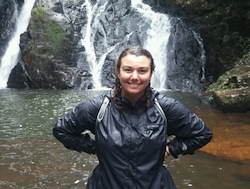
I'm studying Environmental Science and Resource Management. I love anything to do with the outdoors including backpacking, hiking, snorkeling, and gardening! Since all of my hobbies and passions are based on the environment, I want to do everything in my power to try and protect it, including monitoring marine debris and sea birds with COASST!
Rachel Ellison
Native to Seattle. Almost a graduate! Rachel is getting back into the natural sciences after taking a break from school. She is a lover of marine mammals, Seattle breweries, and water polo. She is excited to gain experiences in the marine debris program and to carry that on to a future in education.
Megan Ewing
I am a sophomore studying Marine Biology. I love spending time outdoors and think fish are the coolest. I hope to one day go to the Galapagos Islands to study marine life there. In my free time I play rugby, hike, go kayaking, and cook. I can also make really good guac.
Bailey Gilbert
 My name is Bailey and I am in
Aquatic and Fishery Sciences. I am also minoring in Marine Biology and Environmental Studies. I am excited to
work on the COASST team and help support education and outreach about the conservation of our marine
environment. In my free time I volunteer at the Seattle Aquarium and I am a member of the Husky Marching Band
so come visit me at the Aquarium or at various Husky sporting events!
My name is Bailey and I am in
Aquatic and Fishery Sciences. I am also minoring in Marine Biology and Environmental Studies. I am excited to
work on the COASST team and help support education and outreach about the conservation of our marine
environment. In my free time I volunteer at the Seattle Aquarium and I am a member of the Husky Marching Band
so come visit me at the Aquarium or at various Husky sporting events!
Jane Green - senior intern
 I’m Jane and I’m
studying Environmental Studies. I love learning about people and the world we live in, especially
sustainability on personal, local, and broader levels. In my free time, I like being outdoors, whether on a
hike, volunteering with restoration groups, watching UW football games, or just spending time with family and
friends.
I’m Jane and I’m
studying Environmental Studies. I love learning about people and the world we live in, especially
sustainability on personal, local, and broader levels. In my free time, I like being outdoors, whether on a
hike, volunteering with restoration groups, watching UW football games, or just spending time with family and
friends.
Juli Hoza
I’m a freshman at UW, and I’m majoring in environmental science. I spent much of high school volunteering, doing trailwork restoration, and citizen science on pigeon guillemots and forage fish. These citizen science projects with Nisqually Reach Nature Center inspired me to get involved with citizen science at UW too, which is why I’m so excited to be interning with COASST!
Emily Oven
I joined COASST to learn more about how citizen science works in addition to learning more about local marine environments. Outside of school I enjoy anything having to do with the outdoors. Some of my favorite things to do include going to the beach, hiking, skiing, and gardening. I am excited to be a COASST intern this quarter!
Colin Piwtorak - Marine debris research assistant

I joined COASST to learn more about our native marine environment and to explore how citizen science programs are run. Insects are my absolute favorite thing to talk about, but to be more accessible to the public I also enjoy growing plants, listening to podcasts, and anything to do with superheroes.
Jess Quinn
My name is Jess! I’m a sophomore at the UW from Spokane, WA. During high school I spent two years at eastern Washington University through the Running Start Program. I play mellophone for the Husky Marching Band! I love to perform and create music with fellow musicians.
Hana Ra
I am a biology major studying at the UW. I am very excited to be a part of COASST and I am looking forward to contributing to COASST’s mission. In my free time, I enjoy volunteering, playing the violin, and cooking.
Kylie Sahota
I’m a freshman studying Aquatic and Fishery Sciences from Battle Ground, WA (near Portland, OR). I obtained my AA in Biology through Running Start, so I only have two years left in my program. I love to SCUBA dive, ride horses, eat good food, and spend time with my family, friends, and dog.
Daniel Selke
I am Daniel Selke, studying Microbiology at UW. I grew up in Redmond, WA. I really loved the ocean ever since I was young. Every city I visit I have to visit their aquarium.
Kristina Vogt Randrup
I am a senior at UW majoring in Environmental Science and Resource management with a focus on wildlife conservation. I hope to pursue a graduate degree focusing on quantitative analysis and modeling of ecosystems and populations, so COASST provides an exciting change to work with data outside of the classroom. Outside of UW I race anything from the 10k to the 50-mile on trails and roads, and hope to make a national team someday!
Kyra Woytek
I’m a sophomore at UW, and I’m from Chicago. I have a pet turtle (who’s in Chicago) and I’m really passionate about the environment and learning about plants and animals as well as different ways to combat climate change. I play the clarinet, piano, and alto saxophone, and in my free time I like to read, play video games, watch just about anything on Netflix, and volunteer at outdoor environmental events. I’m also involved with WashPIRG, a student-run grassroots activism group on campus, and I’m the campaign coordinator for Wash PIRG’s 100% Renewable Energy Campaign, trying to get UW to commit to 100% renewable energy by 2050.